Romans 15:4 "For whatever was written in earlier times was written for our instruction, so that through perseverance and the encouragement of the Scriptures we might have hope."
“Oh, who are the people in your neighborhood? In your neighborhood? In your neighborhood? Say, who are the people in your neighborhood? The people that you meet each day.”
At social events, doctors and nurses and Lawyers and Accountants and other professionals like auto mechanics are often pulled aside by people who have health-related, legal, bookkeeping, money investment and car repair questions.
Likewise, building contractors, electricians and carpenters are often asked for free simple inexpensive FIY advice about people’s home improvement projects.
In a similar way, pastors and laity are drawn into spiritual conversations at sporting events, on airplanes, in marketplaces, in restaurants, and around campfires in summer, or at the ends of freshly shoveled driveways in winter.
Reading and studying the Bible shows that Jesus used every time and place as an opportunity to witness to his faith, his hope, his love in His Father in Heaven.
Sometimes his conversations happened at night, as with Nicodemus (John 3).
In today’s verses from Dr. Luke’s Narrative, the Pharisees and teachers of the law criticized Jesus for mingling and talking with Tax Collectors and hanging out with “sinners” too unclean to even associate with. Jesus sternly reminded them just as doctors tend to the sick, he came to call ‘broken’ sinners to repent.
Some of us would much rather leave spiritual conversations to pastors. As laity we would rather “remain anonymous on vacation” “fly under the radar” about being a Christian who is always supposed to be ready to share of their hope in God. (1 Peter 1:13-14, 1 Peter 3:14-16)
A Christian tradesman cringed when a fellow contractor walked up to him from behind and then asked if he was “one of those ridiculous “bible thumpers.”
The contractor was teasing, and testing and his tone was very disrespectful.
Standing up straight, the tradesman looked into the eyes of the contractor, took the opportunity to smile and say, “Yes, I’m a Christian, thank you for asking!”
And then later over their lunch breaks a meaningful conversation followed.
Let us all remember that we are sacred space, in the Holy Presence of God.
In the name of God, the Father, and of the Son, and of the Holy Spirit. Amen.
To whom will God show himself through you today? The Spirit of Christ calls us to be ready to give an answer anytime, anywhere (1 Peter 3:15). Are you ready?
Luke 5:27-32Amplified Bible
Call of Levi (Matthew)
27 After this Jesus went out and noticed a tax collector named Levi (Matthew) sitting at the tax booth; and He said to him, “Follow Me [as My disciple, accepting Me as your Master and Teacher and walking the same path of life that I walk].” 28 And he left everything behind and got up and began to follow Jesus [as His disciple].
29 Levi (Matthew) gave a great banquet for Him at his house; and there was a large crowd of tax collectors and others who were reclining at the table with them. 30 The Pharisees and their scribes [seeing those with whom He was associating] began murmuring in discontent to His disciples, asking, “Why are you eating and drinking with the tax collectors and sinners [including non-observant Jews]?” 31 And Jesus replied to them, “It is not those who are healthy who need a physician, but [only] those who are sick. 32 I did not come to call the [self-proclaimed] righteous [who see no need to repent], but sinners to repentance [to change their old way of thinking, to turn from sin and to seek God and His righteousness].”
The Word of God for the Children of God. Gloria! In Excelsis Deo! Alleluia! Amen.
The gospel teaches us to help those who are suffering especially from sin and ignorance. Instead of blaming and shaming others for their shortcomings and weaknesses, we are challenged to lead them to the way, the truth and the life.
Imitating and Modeling Jesus, our lifting their spirits up by acknowledging, teaching and showing good deeds is one of the teachings of today’s gospel.
With these acts, the one who stumbles and gets up and the one who teaches and helps both receive blessings from our Heavenly Father.
Matthew 10:40-42Amplified Bible
The Reward of Service
40 “He who receives and welcomes you receives Me, and he who receives Me receives Him who sent Me. 41 He who receives and welcomes a prophet because he is a prophet will receive a prophet’s reward; and he who receives a righteous (honorable) man because he is a righteous man will receive a righteous man’s reward. 42 And whoever gives to one of these little ones [these who are humble in rank or influence] even a cup of cold water to drink because he is my disciple, truly I say to you, he will not lose his reward.”
By our Baptism, with all of who we are, we freely enter into God Neighborhood.
By our Baptism, with all of who we are in our Savior Jesus Christ, we reluctantly, begrudgingly, enter into our own neighborhoods, into our own communities.
By our Baptismal Covenant, as Christians, we are challenged to actively express our faith, hope and love in the gospel which depicts possessing zeal for service.
With “cups and bottles of Living Water” in hand, we are expected, we are each covenanted to God to impart our knowledge especially regarding our mission to those who are incapable and unfortunate, even “while we are on our vacations.”
In addition, through serving and witnessing, leading others with and towards excellence should be one of our main goals. With this, we are able to share the blessings we have received and at the same time express our gratitude to God.
Matthew 9:36-38Amplified Bible
36 When He saw the crowds, He was moved with compassion and pity for them, because they were dispirited and distressed, like sheep without a shepherd. 37 Then He said to His disciples, “The harvest is [indeed] plentiful, but the workers are few. 38 So pray to the Lord of the harvest to send out workers into His harvest.”
Rabbi Jesus’ religious adversaries frequently criticized him for deliberately associating with people who were suspect in their eyes.
The man, Rabbi Jesus, however, had a reason for this behavior.
He wasn’t associating with sinners to be popular, weird, bizarre, or hip.
The Lord associated with all kinds of people because he acknowledged and loved all kinds of people! He came to redeem the enslaved, find the lost, mend the broken, and reclaim the sinner. Can we, as Jesus’ bodily presence today, strive for anything less than this and still call ourselves Jesus’ Church?
Every single day we look out into the great expanse of God’s own neighborhood.
How much time and effort do we make and take to look into the great expanse, length, depth, height, and width, of our own neighborhoods and communities?
How can we come alongside and engage and help even one of our neighbors who are, or might be, greatly suffering from a lack of faith and hope and love?
Shall we remain “on spiritual vacation” physically silent, let our consciences create its noise or shall we provide ‘presence’ amongst ourselves and others?
In the name of God, the Father and God the Son and God the Holy Spirit,
Let us Pray,
Forgive me, God, my Father, when I opt for security in my acquaintances, and I avoid potentially messy entanglements between my Baptismal Covenant and in my relationships. Please open my eyes to see the lost, the lonely, the forgotten, and the needy all around me. Please use me to lead them to your grace and to help them find their family with your people. In Jesus’ name, I pray. Amen.
There is a song whose lyrics go something like this,
“Shyness is nice, and Shyness can stop you from doing all the things in life You’d like to… Coyness is nice, and Coyness can stop you from saying all the things in life you’d like to. So, if there’s something you’d like to try. If there’s something you’d like to try. Ask me, I won’t say no, how could I?”
Rather cute lyrics, to a lovely and funny and very interesting song.
…I love the people who are courageous enough to ask me…
But where are the people who are courageous enough to ask me?
Summer Vacation? It is that long awaited time and season of the year.
Spread all over the globe.
Spread all over God’s creation having their own special and unique kind of fun.
We are never shy about our having our fun. We want and need our family time.
Yep! We are never shy about having our fun. We earn our fun – are entitled to it!
“Shyness is nice, and Shyness can stop you from doing all the things in life You’d like to… Coyness is nice, and Coyness can stop you from saying all the things in life you’d like to. So, if there’s something you’d like to try. If there’s something you’d like to try. Ask me, I won’t say no, how could I?”
Rather cute lyrics, to a lovely and funny and interesting and intriguing song.
…I love the people who are courageous enough to ask me…
But where are the people who are courageous enough ……
To ask me about MY SOUL and the Gospel of our Lord and Savior Jesus Christ?
2 Timothy 1:3-12Amplified Bible
3 I thank God, whom I worship and serve with a clear conscience the way my forefathers did, as I constantly remember you in my prayer’s night and day, 4 and as I recall your tears, I long to see you so that I may be filled with joy. 5 I remember your sincere and unqualified faith [the surrendering of your entire self to God in Christ with confident trust in His power, wisdom and goodness, a faith] which first lived in [the heart of] your grandmother Lois and your mother Eunice, and I am confident that it is in you as well. 6 That is why I remind you to [a]fan into flame the gracious gift of God, [that inner fire—the special endowment] which is in you through the laying on of my hands [with those of the elders at your ordination]. 7 For God did not give us a spirit of timidity or cowardice or fear, but [He has given us a spirit] of power and of love and of sound judgment and personal discipline [abilities that result in a calm, well-balanced mind and self-control].
8 So do not be ashamed to testify about our Lord or about me His prisoner, but with me take your share of suffering for the gospel [continue to preach regardless of the circumstances], in accordance with the power of God [for His power is invincible], 9 for He delivered us and saved us and called us with a holy calling [a calling that leads to a consecrated life—a life set apart—a life of purpose], not because of our works [or because of any personal merit—we could do nothing to earn this], but because of His own purpose and grace [His amazing, undeserved favor] which was granted to us in Christ Jesus before the world began [eternal ages ago], 10 but now [that extraordinary purpose and grace] has been fully disclosed and realized by us through the appearing of our Savior Christ Jesus who [through His incarnation and earthly ministry] abolished death [making it null and void] and brought life and immortality to light through the gospel, 11 for which I was appointed a preacher and an apostle and a teacher [of this good news regarding salvation]. 12 This is why I suffer as I do. Still, I am not ashamed; for I know Him [and I am personally acquainted with Him] whom I have believed [with absolute trust and confidence in Him and in the truth of His deity], and I am persuaded [beyond any doubt] that He is able to guard that which I have entrusted to Him until [b]that day [when I stand before Him].
The Word of God for the Children of God. Gloria! In Excelsis Deo! Alleluia! Amen.
Personal Shyness can be excruciating debilitating at times.
It has definitely affected and impacted my life negatively over the years. How many times has shyness stopped me accepting the invitation of life, too many?
Some folks might find this hard to believe, but I can be embarrassingly shy. It takes me time to feel comfortable enough to be myself in new environments.
There is a very definite and palpable shyness about me.
I’m better than I used to be.
Or at least I like to believe I am ….
Or maybe I am still playing myself for the king’s fool ….
Doing better or doing worse?
Some days it is almost impossible for me to tell myself there is a difference.
I’m sure folks who see me in my day-to-day stuff find this hard to believe, but it is true all the same. It takes me time to feel comfortable in my own being, in new company, with my neighbors and new situations. Thank God though that, by His Grace alone, these days it rarely leads me to turn down the invitation.
There have been times when I have hidden myself from view, literally hidden my face, afraid to pop my head above the parapet for fear of being shot down.
My mother and my kindergarten teacher knew this and saw how different and silent I was towards my fellow students on my first days at elementary school.
She took us all to school on our first days, but I reacted differently from my siblings who just so easily ran and freely joined the other children. I did not,
I walked through the doors of my new classroom, swallowed hard and sat down in the corner utterly overwhelmed and bewildered by it all. I did in time adjust and found a level of comfort in the crowd, but it took time. It has been the same throughout my life. I do eventually become a part of the whole, but it takes time.
I do not seriously believe I am alone in these feelings; in fact, I know I am not.
We all experience shyness in some form or another, especially when invited and take the first steps into something new, particularly if is something that might be wonderful, but will definitely make them feel uncomfortable and vulnerable.
By the way we are always uncomfortable, vulnerable, that is the nature of life.
Think about the first time and that last time you walked into a new community, a new neighborhood or a new school or new classroom you became a part of. It takes time to feel you belong and can be wholly yourself. I know it does for me.
For those about to go to college, away from home, for the first time, far away in another state or in another state – you are moving into the university’s dorms, about to move in with another human being who will be your roommate for the four years or even more – yes! shyness can be good – In the beginning of it all.
Shyness is a beautiful thing, so long as it does not stop or short circuit us from doing those things our hearts and our souls’ desire. It’s ok to feel the trembling excitement of shyness, but it can become unhealthy if it burdens, enslaves us.
The Irish Poet David Whyte writes that “Shyness is the sense of a great unknown, suddenly about to be known. It is the exquisite and vulnerable frontier between what we think is possible and what we think we deserve”.
This is an exciting feeling actually. Yes, there is fear there, but perhaps also an excited kind of anticipated joy too. It is not in and of itself a negative feeling.
To me these feelings are the essence of the spiritual journey, which is not a safety-first way of living and breathing by the way.
No, it compels us to deal with powerful feelings and discover new ways of being in the world. This can feel quite daunting at times but should not cause shame.
It is natural, healthy and necessary actually. To just brashly step into anything without any shyness can lead to problems not only for ourselves but others too.
These uncomfortable feelings are needed as we explore the great new mysteries life is offering us. This is the invitational nature of life and the Gospel of Jesus.
That said we are not alone in these feelings, no matter how alone we might feel, this is why it is so vital, so critical, to be a part of a community that journeys on through these adventures, inviting us onto the great unknown that is our lives.
2 Timothy 1:7-8 Amplified Bible
7 For God did not give us a spirit of timidity or cowardice or fear, but [He has given us a spirit] of power and of love and of sound judgment and personal discipline [abilities that result in a calm, well-balanced mind and self-control].
8 So do not be ashamed to testify about our Lord or about me His prisoner, but with me take your share of suffering for the gospel [continue to preach regardless of the circumstances], in accordance with the power of God [for His power is invincible],
Spiritual shyness is that uncomfortable feeling or sense of anxiety that grips you and me when we have an opportunity to talk with someone about the Lord.
We have all been there, haven’t we?
The opportunity presents itself, even on vacation, but we choke under pressure.
We are on vacation to have fun, relax, decompress from all the stress of work.
We need to be with our family and our friends to quite simply: max out our fun!
Most everyone we encounter – campers etcetera, are there to do the very same!
We are the last ones who want or desire to interrupt our fun and someone else’s.
We do not want, nor do we desire to be a “killjoy” of someone else’s fun times.
We kind of tell God the Father, Son and Holy Spirit “its ok to take a break, find Shalom, take several Sabbath Days or weeks of rest from having to deal all of the time with all of our moaning, groaning, perpetual bent towards sinning.”
It is okay, God! Take Your Rest! Because that is exactly what we are going to do.
We take our rest! We seek or Shalom! and gave God permission to seek His Rest!
So, we then unexpectedly encounter that “stirring deep within our souls.”
Our hearts subtly, suddenly, become “strangely warmed” by a close encounter.
It is God who refused our “invitation” to go on His much-deserved vacation.
God is whispering into our pursuit of Shalom:
“HOW IS IT WITH YOUR SOUL?”
“HOW IS IT WITH “YOUR NEIGHBORS” SOUL?” sitting alone with their drink at the bar, with their feet propped up on the ottoman by the nice warm fire?
And we effectively – DO NOTHING to respond to the stirring within our souls.
Spiritual shyness afflicts all of us at times.
In these situations, we never quite get around to asking someone “the big question” about their soul or offering “the invitation” to come, seek Jesus.
Matthew 10:40-42Amplified Bible
The Reward of Service
40 “He who receives and welcomes you receives Me, and he who receives Me receives Him who sent Me. 41 He who receives and welcomes a prophet because he is a prophet will receive a prophet’s reward; and he who receives a righteous (honorable) man because he is a righteous man will receive a righteous man’s reward. 42 And whoever gives to one of these little ones [these who are humble in rank or influence] even a cup of cold water to drink because he is my disciple, truly I say to you, he will not lose his reward.”
Back in the early 1900s, Henry Ford purchased a large insurance policy for all his employees. A newspaper got wind of the story and publicized the details.
One of Ford’s close friends, who was an insurance salesman, read about it and became quite upset. He called Ford and asked why he hadn’t purchased a policy from his company. Henry Ford simply replied, “Because you never asked me.”
How many of our family, friends, coworkers, and acquaintances could say to us, “I never believed in Jesus because you nor anyone else never dared asked me to?
“I never joined God’s family because you never invited me to.”
What is our vacationing God trying to communicate to us about our neighbor nursing their drink all alone at the bar or with both their feet up, by the fire?
Paul reminds us “God did not give us a spirit of timidity, but a spirit of power.”
God is the One who can be on vacation and at the same time “tame” our fears about whatever it is we are fearful of or whatever it is we believe we are being shy about. With prayer and discipline, we can vacation as an effective witness.
“Shyness is nice, and Shyness can stop you from doing all the things in life You’d like to… Coyness is nice, and Coyness can stop you from saying all the things in life you’d like to. So, if there’s something you’d like to try. If there’s something you’d like to try. Ask me, I won’t say no, how could I?”
In the name of God, the Father and God the Son and God the Holy Spirit,
Let us Pray,
Here we are again, Lord,
At thy Invitation, we are here again ……
With much timidity and with much trembling ……
on our knees, trying, pleading, seeking thy Face, Crying mercy. Mercy for our souls, Mercy for one another, Mercy for our churches, Mercy for our nation, mercy for our world.
Here we are again, at thy invitation, Standing in your presence in awe of you your holiness, your otherness, your mystery, and your incarnation
With much Timidity and with much Trembling,
seeking Your Holiness,
seeking to be more like You
and less and less like our true and embarrassingly timid selves,
Acts 1:8 Amplified Bible
8 But you will receive power and ability when the Holy Spirit comes upon you; and you will be My witnesses [to tell people about Me] both in Jerusalem and in all Judea, and Samaria, and even to the ends of the earth.”
From my wholehearted timidity into and unto thy resurrection courage ……
Give “thy teeth” today unto, into my prayer and my affirmation of faith ……
A Covenant Prayer in the Wesleyan Tradition
I am no longer my own, but thine. Put me to what thou wilt, rank me with whom thou wilt. Put me to doing, put me to suffering. Let me be employed by thee or laid aside by thee. Exalted for thee or brought low for thee. Let me be full, let me be empty. Let me have all things, let me have nothing. I freely and heartily yield all things to thy pleasure and disposal. And now, O glorious and blessed God, Father, Son, and Holy Spirit, thou art mine, and I am thine. So be it. And the covenant which I have made on earth, Let it be ratified in heaven. Amen.
“Cause and effect” are a relationship between events or things, where one is the result of the other or others. This is a combination of an action and a reaction.
Something happens (a cause) that leads to an effect.
For Example ……
Cause: As we were waiting for a bus, we received 7 inches of rain in 4 hours.
Effect: My Umbrella did not keep me dry. The roadways were flooded.
Cause: I flipped the light switch.
Effect: The light came on and I saw the mess I made last night all over again.
Cause: The boss was busy.
Effect: Their secretary rolled their eyes skyward, took a telephone message.
THE REALITIES OF CAUSE AND EFFECT
From the time you are a child until you die, you understand cause and effect.
“Cause” is the action that produces a result or consequence.
And “effect” is the product, result, or consequence of that action.
As a baby you learn that if you cry, mom or dad will change you, feed you, or hold you.
As you grow into a toddler you learn that if you drop something from your highchair, somebody will pick it up.
As a kid working your way through school, you learn that if you study hard, you will earn good grades and increase the likelihood you will receive scholarships.
As a college student you learn that if you study hard, you increase the likelihood of receiving great grades and Latin Honors and the likelihood of that great job.
As a young adult you learn that hard work pays great dividends and increases the likelihood you will gain an excellent reputation and promotions on the job.
As an adult, you also learn that if you are not a particularly hard worker and are making excuses, chronically late to work, you get into trouble and lose your job.
Proverbs 24:30-34 The Message
One day I walked by the field of an old lazybones, and then passed the vineyard of a slob; They were overgrown with weeds, thick with thistles, all the fences broken down. I took a long look and pondered what I saw; the fields preached me a sermon and I listened: “A nap here, a nap there, a day off here, a day off there, sit back, take it easy—do you know what comes next? Just this: You can look forward to a dirt-poor life, with poverty as your permanent houseguest!”
This thought comes to King Solomon after he considers the fields of a lazy man:
The field is overgrown and in general disrepair.
He sees the danger in staying in bed too long, although most of us might enjoy more of this practice. Poverty and lack attack if this behavior is not conquered.
There is always a cause and effect.
This same principal is found in the kingdom of Heaven:
The Cause: God loves you with an everlasting love. God gave His Son as a sacrifice so that you could be reconciled to Him. Love has victory over death.
The Effect: You experience the love of our Father, which fulfills you in a way that nothing else can. You share in His victory over death. You desire to share God’s love with others, so they, too, will experience His 100% love for them.
There can be no effect without a cause. God’s love for you should always be the cause for your walking with, for Him. If it’s not, then your work will be in vain.
Without faith in God, it is impossible to please God.
Without hope in God, it is impossible to please God.
Without love for God, it is impossible to please God.
Without faith, hope and love in and for God, it is impossible to walk with Him.
Walking with God does not lead to God’s favor, but God’s favor leads to walking in favor with God. If I walk with the world, can I genuinely say I walk with God?
Deuteronomy 5:32-33Amplified Bible
32 Therefore you shall pay attention and be careful to do just as the Lord your God has commanded you; you shall not turn aside to the right or to the left [deviating from My commandments]. 33 You shall walk [that is, live each and every day] in all the ways which the Lord your God has commanded you, so that you may live and so that it may be well with you, and that you may live long in the land which you will possess.
Deuteronomy 5:32-33 The Message
32-33 So be very careful to act exactly as God commands you. Don’t veer off to the right or the left. Walk straight down the road God commands so that you’ll have a good life and live a long time in the land that you’re about to possess.
The Word of God for the Children of God. Gloria! In Excelsis Deo! Alleluia! Amen.
After Moses instructed God’s people in the Ten Commandments, he added the Cause: they must walk “obediently in God’s way.” Then added the Effect, he said, God would bless them richly and make them prosper in the promised land.
To interpret this promise wisely, we need to know that prosperity in the Bible has more to do with spiritual blessings than material or physical things.
All over the world there are people who interpret God’s blessing mainly as a promise to make them healthy and wealthy and wise. But that is a mistake.
While some people do experience blessings of “never having spent a day in the hospital” or “never worrying about how to pay the bills.”
There are also those who have experienced the blessing of “having spent time in an ICU Bed, an Oncology ward or other long term care facility, their health in a critical state of flux: of life versus death.” Likewise, there are those who have experienced day to day struggles with how to pay the bills and feed their kids.
Trying to survive on our own strength and our own wit and wisdom is costly.
Frankly, genuinely walking with God can be even more significantly costly.
So many have lost their jobs and their health and their marriages. Have found themselves struggling through circumstances in life for which only the biblical Patriarch Job could Identify with, give the best counsel for surviving day to day.
Yet, amazingly, these same Christians will declare that in the midst of deep sacrifice they were blessed. Even Job declared his blessings. (Job 1:20-22)
When we walk with God, we live in community with our Lord. We feel God’s delight in all things good, and we sense his pain in the face of sin and evil. Such a close walk with God is itself a blessing. The joys and peace that flows from our relationship with God far outweigh the cost of being a follower of Jesus Christ.
Living our lives with God in it, makes things easier and gives us hope.
We may not be the most cognizant.
We may take God for granted, not realize it, not consider it for one moment, not pray over it, but walking with God is so much better than walking without him.
and here is why.
1. Walking With God Makes Things Possible
The Lord never said that our lives here on earth would be easy.
We are all absolutely going to go through hard times, and we are absolutely going to have our struggles. But our time here on earth will be worth it.
We are here to spread the Truth of God’s Gospel, the Truth of God’s love and light to others and spread the absolute greatest news ever that he is our Savior.
When we walk with God, it may not make things any easier, but it certainly and surely makes them infinitely more possible.
Walking with him gives us blessed assurance of his presence and power in our lives. Our God is powerful! With him all things are possible. We can endure trials and heartache. Because of Christ’s resurrection power in us, we can overcome.
“I will also walk among you and be your God, and you shall be my people” – Leviticus 26:12
2. He Is Our Comfort
The Lord is always walking beside you.
The Lord is always walking beside me.
He is going through every situation with you.
He is going through every situation with me.
He loves and cares for you and will always stand by your side.
He loves and cares for me and will always stand by myside.
Walking with Him will give you and me the absolute comfort of knowing that He is always there for you and me. He is always with you and me when we need someone to lean on and a shoulder to cry on; He is always there with open arms.
“Even though I walk through the darkest valley, I will fear no evil, for you are with me; your rod and your staff, they comfort me.” – Psalm 23: 4
3. He Will Help You
No matter what you and I are going through, God will help you and God will help me. We can always cry out to him for help. When we are frustrated and angry, cry out to him. When we are upset, feel like we cannot go on any longer, cry out to him. He will always be there to pick us up and move us ever forward.
“For we do not have a high priest who is unable to empathize with our weaknesses, but we have one who has been tempted in every way, just as we are—yet he did not sin. Let us then approach God’s throne of grace with confidence, so that we may receive mercy and find grace to help us in our time of need.” – Hebrews 4:15-16
4. Walking Without Him Is an Unnecessary Struggle
When we are not walking with God, we are going to struggle even more because we are completely on our own. We feel we have no other choice but to just figure things out for ourselves, we are the only ones with all the right questions, all the correct, viable answers, and it will be much more difficult than it should be.
God is the only genuine light illuminating our path.
He will show us the way, but without him, we have to find our way through the darkness. Why do we permit the struggle, when we can have God to guide us?
“When Jesus spoke again to the people, he said, “I am the light of the world. Whoever follows me will never walk in darkness but will have the light of life.” – John 8:12
Hebrews 11:1-6Amplified Bible
The Triumphs of Faith
11 Now faith is the assurance (title deed, confirmation) of things hoped for (divinely guaranteed), and the evidence of things not seen [the conviction of their reality—faith comprehends as fact what cannot be experienced by the physical senses]. 2 For by this [kind of] faith the [a]men of old gained [divine] approval.
3 By faith [that is, with an inherent trust and enduring confidence in the power, wisdom and goodness of God] we understand that the worlds (universe, ages) were framed and created [formed, put in order, and equipped for their intended purpose] by the word of God, so that what is seen was not made out of things which are visible. 4 By faith Abel offered to God a more acceptable sacrifice than Cain, through which it was testified of him that he was righteous (upright, in right standing with God), and God testified by accepting his gifts. And though he died, yet through [this act of] faith he still speaks. 5 By faith [that pleased God] Enoch was caught up and taken to heaven so that he would not have a glimpse of death; and he was not found because God had taken him; for even before he was taken [to heaven], he received the testimony [still on record] that he had walked with God and pleased Him. 6 But without faith it is impossible to [walk with God and] please Him, for whoever comes [near] to God must [necessarily] believe that God exists and that He rewards those who [earnestly and diligently] seek.
We know very little about Enoch.
His father was Jared, and his son was Methuselah, who lived longer than anyone else.
The most surprising thing about Enoch is that he did not die.
“By faith Enoch was taken from this life, so that he did not experience death: ‘He could not be found, because God had taken him away.’ For before he was taken, he was commended as one who pleased God.”
Enoch was one of two people in the Bible who never experienced death.
The other was Elijah. (See 2 Kings 2:1-14.)
Enoch’s walk with God made him stand out from the crowd.
Only a few generations later, God would send a flood to wipe away a humanity that no longer understood what it meant to live close with God.
Only Enoch’s great-grandson Noah and his family would be spared so that human beings could make a new beginning.
God’s special gift to Enoch reminds us walking with God is the way to true life.
Of course, unless the Lord returns in our lifetime, we will all face death.
But Jesus, who identifies himself as the way to God (John 14:6), also said,
“I am the resurrection and the life. Anyone who believes in me will live, even though they die” (John 11:25).
Then Jesus turns that belief around and against us – “Do we Believe this?”
With Faith pleasing to God ….
With Hope pleasing to God ….
With Love pleasing to God ….
Do we believe the cause: walking with God in faith has this effect: puts us on a level road that moves us forward and takes us beyond death to life eternal?
In the name of God, the Father and God the Son and God the Holy Spirit,
Let us Pray,
God, my Guide and my Guardian,
Take me to task today,
Search me, and know me …..
Hold me accountable to thy Gospel Truth,
I am no longer my own, but thine. Put me to what thou wilt, rank me with whom thou wilt. Put me to doing, put me to suffering. Let me be employed by thee or laid aside for thee, Exalted for thee or brought low for thee. Let me be full, let me be empty. Let me have all things, let me have nothing. I freely and heartily yield all things to thy pleasure and disposal. And now, O Glorious and blessed God, Father, Son, and Holy Spirit, Thou art mine, and I am thine. So be it. And the covenant which I have made on earth, Let it be ratified in heaven. Amen
And the congregation answered enthusiastically, “By example!”
In that sermon, I had quoted Albert Schweitzer, saying, “Example is not the main thing in influencing others. It is the only thing.”
Rabbi Jesus taught by example what he expects from us. Facing the cross, he illustrated submission and leadership at the last supper with his disciples when he washed their feet and said they should now serve one another (John 13:3-17).
The concept of submission is often misunderstood.
It isn’t a matter of allowing others to walk all over us.
As Paul applies it to marriage in Ephesians 5, submitting means that both the husband and wife seek their partner’s well-being. It’s 100% not a hierarchy!
It’s not about authority but about being subject to one another, serving one another—doing so “out of reverence for Christ,” who gave his very life for us.
When Salome the mother of James and John asked for places of authority for her sons in Jesus’ kingdom, Jesus explained that lording it over others is not the way of the kingdom. He urged them to follow his example: “The Son of Man did not come to be served, but to serve, and to give his life as a ransom for many.”
Whom can you serve and build up, for Jesus’ sake, today?
Matthew 20:20-28 Amplified Bible
Preferred Treatment Asked
20 Then [Salome] the [a]mother of Zebedee’s children [James and John] came up to Jesus with her sons and, kneeling down [in respect], asked a favor of Him. 21 And He said to her, “What do you wish?” She answered Him, “Command that in Your kingdom these two sons of mine may sit [in positions of honor and authority] one on Your right and one on Your left.” 22 But Jesus replied, “You do not realize what you are asking. Are you able to drink the cup [of suffering] that I am about to drink?” They answered, “We are able.” 23 He said to them, “You will drink My cup [of suffering]; but to sit on My right and on My left, this is not Mine to give, but it is for those for whom it has been prepared by My Father.”
24 And when the [other] ten heard this, they were resentful and angry with the two brothers. 25 But Jesus called them to Himself and said, “You know that the rulers of the Gentiles have absolute power and lord it over them, and their great men exercise authority over them [tyrannizing them]. 26 It is not this way among you, but whoever wishes to become great among you shall be your servant, 27 and whoever wishes to be first among you shall be your [willing and humble] slave; 28 just as the Son of Man did not come to be served, but to serve, and to give His life as a ransom for many [paying the price to set them free from the penalty of sin].”
The Word of God for the Children of God. Gloria! In Excelsis Deo! Alleluia! Amen.
Let’s just go ahead and ask the question no one asks: Why Be a Servant at all?
I wonder how many of us are just as interested in Service.
My guess is that few are genuinely enthusiastic to learn more about Service, and a typical response would be,
“Why should I be a servant?
“What is so good about serving?”
“I don’t have time for it, and it’s not really my cup of tea.”
“Let those who enjoy serving and who have the time for it get involved in it.”
Well, do these responses come from someone more devoted to following Christ their Savior or do they come from one more devoted to following the world?
Perhaps it is not a “fair question” to ask in these divided times and seasons when churches are struggling as much as they are just to stay open and viable.
“Why be the church, anyway?” is a question I have seen asked so many times and in so many different ways – each way expressing more and more angrily.
I ask because we also live in a secular world where more people strive diligently for high positions of power and leadership, and for more fame and recognition.
We live in a world where few people want to be servants – after all where is the glory and the honor and the nice paycheck for the server in serving someone.
And if there are people who do serve, they serve only because of the prospect of personal gain – in terms of money, honor, power, prestige or recognition.
That is the way things are done in the world.
It is considered demeaning to serve others, and it is considered foolish to serve for nothing. But in our Gospel narrative, Christ requires us to take a very radical and vastly different view of service, and this can be seen in Matthew 20:20-28.
The passage begins with a personal request made by the mother of James and John, who were two of the twelve disciples of Jesus.
She came to ask Jesus to let her sons have the best positions in His kingdom – second only to Jesus Himself: One son to be His ‘right hand man,’ and the other son to be His ‘left hand man.’
I think we can all understand why she had made such a bold request from Jesus:
Does not every loving mother want only the absolute best for her precious sons?
However, the parallel passage in Mark 10:35-37 reveals that it was her sons who had engineered this request!
James and John were the ones vying to get the top positions for themselves.
Perhaps what Jesus said to the disciples a little earlier had stirred up their ambitions – “Verily I say unto you, that ye which have followed me, in the regeneration when the Son of man shall sit in the throne of his glory, ye also shall sit upon twelve thrones, judging the twelve tribes of Israel.” (Matthew 19:28)
Their minds were so captivated with this coming glory that they hardly paid any attention to what Jesus said in the two verses just before our passage:
“Behold, we go up to Jerusalem; and the Son of man shall be betrayed unto the chief priests and unto the scribes, and they shall condemn him to death, and shall deliver him to the Gentiles to mock, and to scourge, and to crucify him ….”
All this talk about humiliation somehow did not register at all in their minds, as they were so preoccupied with the glory they wished for.
So, perhaps what James and John did was to get their mother to help them so that it might look more like her request than theirs.
She gladly followed their script closely, bowing down to Jesus and saying,
“Grant that these my two sons may sit, the one on thy right hand, and the other on the left, in thy kingdom.” (v.21)
I want you to note the important phrase, ‘in Thy kingdom’ at the end of this verse. Whose kingdom is this? Christ’s kingdom.
These disciples mistakenly thought that the mark of greatness in Christ’s kingdom was to be in the highest positions of honor.
If that were true, then Christ’s kingdom would be no different from the world’s kingdoms where authority and prestige and power matter most.
This provides the background for what Christ said in vv.25-27,
“Ye know that the princes of the Gentiles exercise dominion over them, and they that are great exercise authority upon them. But it shall not be so among you: but whosoever will be great among you, let him be your minister. And whosoever will be chief among you, let him be your servant.”
Jesus shows the disciples how radically different it is to be great in His kingdom.
It is to be a servant.
This gives us the first reason why we ought to be servants:
1. Being a Servant Is the Distinguishing Mark of Greatness in Christ’s Kingdom (vv.25-27)
Since we who are saved are now in Christ’s kingdom, our thinking about greatness has to change radically.
We are not to be conformed to the world in our thinking anymore but be transformed by the renewing of our mind (Romans 12:2).
What the world esteems most like riches, fame and power are of no value to us.
They do not make us great at all.
What would make us great in Christ’s kingdom are the things that the world despises most, like humility, weakness, giving, submission and selfless service:
These are the things that matter most of all in Christ’s kingdom.
The world rewards those who put themselves at the top.
But the kingdom of Christ rewards those who put themselves at the bottom.
In the ancient world, kings and princes were at the top-most rung of society while slaves were at the very bottom-most rung of society.
Christ tells us where we should be in v.27, “…whosoever will be chief among you, let him be your servant.”
The word ‘servant’ that Christ used here is translated from the Greek word “doulos” which literally means ‘slave.’
Now, I don’t think anyone here would like to be called a slave, because of its negative connotations of forced servitude and loss of personal rights.
But that is how Christ wants us to see ourselves – we are no better than others, because we are nothing more than lowly slaves!
We have to get used to thinking of ourselves this way and make it a point to begin each day reminding ourselves that we are not kings but slaves!
Having this mind-set will change the way we relate to others.
It will make us more approachable and accommodating.
We will be more willing to see things from their point of view and not insist that everything must be done our way.
We will want to serve rather than to be served.
We will even go the extra mile to serve others.
When we see ourselves as nothing more than servants or slaves it becomes a lot easier for us to submit to others willingly.
Whenever we write formal letters, we use certain conventional endings before signing off, e.g. ‘yours sincerely,’ and ‘yours truly.’
But do you know that these endings actually originated from much longer ones?
In letters that were written way back in the 1800s, the standard ending that was used was: “I beg to remain your most humble and truly obedient servant.”
Over time this has become shortened to: “yours truly.”
And so, the next time you write ‘yours truly,’ please remember how Christ wants you to regard yourself.
One reason why nobody wants to be a slave is that slaves do not own anything.
They and everything they have belong to their master.
In the same way, the servant mind-set requires us to regard ourselves and everything we have as God’s property, which are to be used in His service.
In Luke 12:48 God’s Word says, “For unto whomsoever much is given, of him shall be much required.”
God has every right to expect much from us, because He has invested ever so much into our lives.
What has God invested in us?
He has invested Time, Talents, Treasures, and Opportunities in our lives.
God has entrusted these to us to be used for His glory.
In the parable of the Talents in Matthew 25:14-30 the Lord spoke about three servants who were entrusted with their master’s assets.
The first two servants doubled their talents by working hard, and so they were commended when the master returned.
But the third servant received a stern condemnation because he merely buried his talent and returned it intact to the master.
This parable teaches us to be good stewards of all Christ has entrusted to us.
One day we will have to give an account to Him of how we used them.
Will you be like the servant who buried his talent in the ground?
Do you spend a lot of your time and money in your own leisure and activities, and things that are unnecessary?
How should you spend your time, talents and treasures now, if you know that you will have to give an account for them?
How would you spend your time, talents and treasures now, if you know that you will have to give an accounting of them?
How could you spend your time, talents, and treasures now, if you know that you will have to give an account of them?
Will you put them to good use so that Jesus will say to you, “Well done, thou good and faithful servant, enter thou into the joy of thy Lord”?
One passage that reveals what will happen at the Judgment Seat of Christ is
1 Corinthians 3:12-14 – “Now if any man builds upon this foundation gold, silver, precious stones, wood, hay, stubble; Every man’s work shall be made manifest: for the day shall declare it, because it shall be revealed by fire; and the fire shall try every man’s work of what sort it is. If any man’s work abides which he hath built thereupon, he shall receive a reward.”
Brothers and Sisters, do you genuinely, sincerely, absolutely look forward to receiving a blessed reward from our Savior Lord Jesus Christ?
You must.
All your efforts in serving Him now will be amply compensated when you receive your reward from Christ.
With this reward in view, let us be faithful in serving Him well.
We have just seen that being a servant is the distinguishing mark of greatness in Christ’s kingdom.
Let us return now to our passage to see another reason why we ought to be servants.
This is found in verses 27,28 which says,
“And whosoever will be chief among you, let him be your servant: Even as the Son of Man came not to be ministered unto but to minister…”
Please take note of the words ‘even as.’
They tell us why we must be servants.
And it is plainly this – Our Lord Jesus Himself was a servant.
Thus, the second reason why we ought to be servants is:
2. It Is the Disciples’ Means to Follow Christ’s Example (v.27-28a)
Christ became a servant in His ministry on earth.
Philippians 2:6-7 tells us that Jesus,
“…being in the form of God, thought it not robbery to be equal with God: But made himself of no reputation, and took upon him the form of a servant, and was made in the likeness of men.”
One passage that displays Christ as a servant is John 13:1-13.
This happened when the disciples had the Last Supper with Christ the day before His crucifixion.
In those days it was customary for the host to assign his lowest slave to wash the feet of his guests when they came into his house for a meal.
After walking in sandals on the streets their feet would be caked with mud and manure and would need a good washing.
But no one had done this.
The basin, water and towel were all there, but none of the disciples was willing to get up and use them.
Then something quite unexpected happened. Jesus rose up, laid aside His garments; took a towel, girded Himself, then proceeded to wash their feet.
This must have taken them all by surprise.
Perhaps they thought that Jesus would appoint one of them to do the work.
But now they were stunned as they saw Him doing it!
How can their Master be washing their filthy feet?
They should be the ones washing His feet!
But now with His outer garments laid aside, His body stooping down and His hands washing and wiping their feet, Jesus practically became their servant.
Then He said to them in vv.14,15
– “Ye call Me Master and Lord: and ye say well: for so I am. If I then, your Lord and Master, have washed your feet; ye ought to wash one another’s feet. For I have given you an example, that ye should do as I have done to you.”
Since Christ has given us such an example, how can we follow Him without being a servant?
Brothers and Sisters, being a servant is our means to follow Christ’s example.
It makes us more like Him.
Here is a story about two wash basins.
One was a plain copper basin that Jesus used to wash His disciples’ feet, while the other was a beautiful gold basin Pontius Pilate used to wash his own hands.
Christ used one basin to carry out a responsibility that not His.
Pilate used the other basin to deny a responsibility that was his.
One basin shows us that Christ sought to serve, while the other basin revealed that Pilate ought to serve but refused.
Whose washbasin will you choose?
Christs or Pilate’s?
If you want to follow Christ, then choose His wash basin and be a servant.
This is a very compelling reason why we ought to be servants.
But there is an even more compelling reason.
It is found at the end of v.28 – “…and to give His life a ransom for many.”
This teaches us that being a servant…
3. It Is the Divine Mode for Edifying Christ’s People (v.28b)
Christ gave His life on the cross as a ransom for many, and the many here refers to us, the people He has saved from sin and eternal death.
But His ministry to us did not stop there.
Christ is still giving Himself for us through His unceasing intercession in Heaven, and through the work of the Holy Spirit on earth.
And the Holy Spirit bestows spiritual gifts on us so that we can build up the body of Christ by using them well.
Our service to God’s people is the mode by which He accomplishes this work.
Brothers and Sisters, every one of us has a role to play in this work of building the Body of Christ. But exactly how well have we all been fulfilling our role?
During the time of the prophets Zechariah and Haggai the Israelites were spending too much time and effort building their own houses while the house of God was laid waste.
Some problems had come up during the Temple building project and the work was stopped for 15 years.
But people conveniently used this as an excuse to leave God’s work undone.
So, God sent His prophets to rebuke them, and also withheld many blessings from them.
In our present time, the situation is still the same.
Many Christians spend much time and effort pursuing their own ambitions, while God’s work is left undone, or is left in the hands and hearts of a few who are struggling to do it all alone.
I have heard it said that 20% of the people do 90% of the work.
Why is it that the rest of us are not serving in Life Church?
Maybe it’s because we always think that somebody else will do it.
Here is a clever poem that I found about this:
“There’s a clever young fellow named Somebody Else. There is nothing this fellow can’t do. He’s busy from morning till very late, just substituting for you. You’re asked to do this or asked to do that. And what is your ready reply? “Get Somebody Else. He’ll do it much better than I.” So much to do in this weary old world; so much and the workers are few. And Somebody Else is weary and worn just substituting for you. Next time you’re asked to do something worthwhile, just give this ready reply; If Somebody Else can give time and support, well then, so can I.”
Perhaps too many of us have been content to let Somebody Else do the work.
The problem with this is that there aren’t that many Somebody Elses out there.
And those there are, have grown weary and tired, and may even suffer from burnout soon.
Putting more money into the offering bags will not help.
The way to resolve this is that for every Lifer who wants what James and John wanted from Jesus, to remember their roles in Christ’s Kingdom, assume his or her role of service, however small it is, and be used by Christ to edify His people.
Is there in your church’s newspaper a subject heading “Where Can You Serve?”
Read it and I bet you will see there are many great and wonderful needs that can only be met if we are willing to give priority to serving the Lord and His people.
I predict that the article provides a list of ministries in the life of the Church, their needs and the person to contact to find out more about them.
Please ask the Lord to lead you to an area of service.
If you feel any reluctance, please remember the 3 reasons why you should be a servant according to our passage of Scripture:
Being a Servant
(1) Is the distinguishing mark of greatness in Christ’s kingdom;
(2) It is the disciples’ means to follow Christ’s example, and
(3) It is the divine mode for edifying Christ’s people.
And after you decide to start serving, there are some guidelines you need on how to serve:
Firstly, check your motives for serving.
Our passage shows how easy it is to have the wrong motives.
James and John were interested in glory, position and rank.
They wanted to be higher than anyone else.
And though their mother came to Jesus in worship, her real motive was to seek out the best places for her two sons.
Our Love for Christ should always be our sole motivation for everything we do for Him.
Some serve the Lord to win the praises of men.
They like to be at the forefront where others can see how busy they are for the Lord.
When asked to pray, they will pray the longest and most impressive prayers.
Like Jehu in the Old Testament, they would say,
“Come with me and see my zeal for God.” (2 Kings 10:16)
And they love to talk about what they have done for the Lord.
But once they no longer feel appreciated, they may just as likely go elsewhere to have their deflated egos uplifted again.
Brothers and Sisters, let us be careful not to be like that.
Every time we serve the Lord, we should ask ourselves, “Who am I doing this for? For the praises of the Lord or for the praises of me, myself and I?”
There are many in churches who work quietly behind-the-scenes.
They are unsung heroes – serving the Lord faithfully and diligently in their own areas of service.
Those who prepare the elements for Lord’s Supper.
Those church secretaries who keep the pastor informed and the clerical work and the church organizational work in order and incoming and outgoing.
There are the Boards of Trustees responsible for the upkeep of the church.
I think of our church pianists and organists and choir directors, the sound folks who avail themselves not only for their church’s worship services but even for prayer meeting, baptism’s, consecrations, weddings, vigil and funeral services.
You know, for the amount of time, effort, expertise and service that they put in, they would probably be paid quite well if they were doing it in the secular world.
But here they do it for nothing, or next to nothing. In fact, oftentimes, they would put in their own funds for any expenses incurred in their service and would not make any extra claims from the church.
I thank God for all the sacrifices they have made, and trust that they will be encouraged to continue to serve the Lord well. So let us serve because we want to please no one else but God. Let us serve because we love Him.
The second guideline you need to observe about serving is to put others before self. Serving the Lord is always done together with others.
The biblical pattern for service is teamwork.
In 1 Corinthians 12 the apostle Paul describes believers as being parts of a body, and each of us has a different role to play.
God has graciously bestowed specific gifts on each of us.
But none of us can function without the rest, and we need one another’s gifts to serve the Lord together.
But there are potential problems in working closely together with others, especially when self gets in the way.
Some feel offended when their ideas are not used or when things are not done in their preferred way.
In our passage we notice that when the other ten disciples of Jesus saw what James and John were trying to do, they reacted, as v.24 says, “…they were moved with indignation against the two brethren.”
The spiritual attitude of these ten disciples was not any better than that of James and John.
In order to preserve good working relationships, we must always be humble, considerate, forbearing and forgiving towards our co-labourers with Christ.
We will find much greater joy in our service to God if we learn a little bit more about spiritual growth and maturity, to put others before self in our service.
Another guideline that you need to observe is to be ready to serve whenever and wherever you can.
If it is something that you have never done before, be willing to learn how to do it. If you are approached to serve in some areas do not be so quick to say, ‘No thanks, but I can’t commit myself to it.’
If you count it a great honor to serve Christ, rearrange your other commitments to make way for it.
Servants must be both accountable, available whenever the master calls for them.
Please make sure that you are available. Remember this: Availability is the greatest ability!
A good servant is also alert to the needs of others.
In Psalm 123:2, the psalmist said,
“Behold as the eyes of servants look unto the hand of their masters, and as the eyes of a maiden unto the hand of her mistress; so, our eyes wait upon the Lord our God, until that He have mercy upon us.”
When the master moves his finger in command, the servant simply obeys.
A good servant is one who has learned to subdue the defiant autonomy of self, to subject his ego and his will to the wishes of another. Whatever God says goes.
When God says, “Jump,” we and our wills should say, “How high, Lord?”
However, there is a vast difference between doing what God wants you to do and doing all that you or others want you to do.
Don’t try to do everything, or else you will end up being too busy, doing things that God never intended you to do.
Sometimes you have to say ‘No,’ and encourage others who are doing nothing to help share the load.
And now we come to the last guideline for service:
Be willing to do whatever it takes to do whatever is needed.
Serving the Lord will not always be easy.
There will be times when you may have to endure hardship and suffering.
Some of the tasks that need to be done are tasks that nobody wants to do at all because they are unpleasant, tedious or boring.
You may have to beautify the church grounds outside under the hot sun, or clean and sweep and mop the floors and the toilets after VBS or camp or spend hours organizing and putting together bulletins and music slides for worship.
Our Lord Jesus has set the example.
He had to give His own life to be a ransom for many.
Are you and I ready, willing, able, to submit our lives fully unto the Lord?
Perhaps our Lord would ask you the exact same question that He asked both James and John in v.22 – “Are ye able to drink of the cup that I shall drink of, and to be baptized with the baptism that I am baptized with?”
Well, both of them did suffer for their service as Christ’s apostles.
Recall, James became the first apostle to be martyred, and John had to endure the longest recorded time of persecution because he lived until deep into the first century time of the cruel Emperor Domitian.
Only God knows what you and I will have to endure in your service to Him.
When we ask ourselves for the same things James, John and their Mom did,
When we try to bargain with our God and our Savior Jesus for all the best,
Ask, “Why should I want to be a servant in these divided times and seasons?”
Please, Pray! let us always make it a point therefore to seek out God’s grace to endure any difficulties, so we may be able to glorify Him through your service.
May the Lord speak to all of us and help us to be ever faithful servants.
In the name of God, the Father and God the Son and God the Holy Spirit,
Let us Pray,
The Wesley Covenant Prayer
“I am no longer my own, but thine. Put me to what thou wilt, rank me with whom thou wilt. Put me to doing, put me to suffering. Let me be employed by thee or laid aside for thee, exalted for thee or brought low for thee. Let me be full, let me be empty. Let me have all things, let me have nothing. I freely and heartily yield all things to thy pleasure and disposal. And now, O glorious and blessed God, Father, Son, and Holy Spirit, thou art mine, and I am thine. So be it. And the covenant which I have made on earth, let it be ratified in heaven. Amen.”
The Apostle Paul calls his fellow Christians to imitate God in order to live up to the reputation of God’s family.
He challenges generations of believers: “walk in the way of love,” as Christ did.
This is about our loving the way Jesus loved.
This is about our modeling love the way Jesus modeled love.
And Jesus always acted in line with the Father’s will.
The love of Jesus embraced outcasts, pardoned sinners, healed the hopeless, challenged the complacent, and willingly sacrificed everything so that we sinners could be reconciled with God.
Modeling Sacrificial love is our most visible and defining family trait.
The only reason we are in the family of God in the first place is because of God’s extravagant love.
As Paul calls us to imitate God’s love, he reminds us that we are defined by it—we are “dearly loved children.”
Our own love emerges from the depths of that eternal love.
Our love is an overflow of the love God has personally shown to each of us. Love is the DNA test that determines paternity with our Father God (1 John 4:7-8).
God loves you because you are his child, you are his child because he loves you.
Children of God are called: “be caught up into the infinite circle of God’s love.”
We are most like our Father in Heaven, most godly, when we allow that love to flow into us from above and flow like a river from us into the lives of others.
Ephesians 5:1-2 The Message
Wake Up from Your Sleep
5 1-2 Watch what God does, and then you do it, like children who learn proper behavior from their parents. Mostly what God does is love you. Keep company with him and learn a life of love. Observe how Christ loved us. His love was not cautious but extravagant. He didn’t love in order to get something from us but to give everything of himself to us. Love like that.
The Word of God for the Children of God. Gloria! In Excelsis Deo! Alleluia! Amen.
Theologian Brennan Manning spoke a challenging truth, when he wrote,
“How I treat a brother or sister from day to day, how I react to the sin-scarred wino on the street, how I respond to interruptions from people I dislike, how I deal with normal people in their normal confusion on a normal day may be a better indication of my reverence for life than the antiabortion sticker on the bumper of my car.”
Treating our neighbors and ourselves as eminently valuable is not easy.
And this leads us to the next thing we learn from Jesus ….
How could Jesus communicate the reality of what he saw?
Well… I think Jesus also teaches us to…
3. Ho to exercise the power of initiating.
Referring back to the Narrative Luke 19:1-10,
Jesus does not sit back to see if Zacchaeus will come out and express his hope.
He is high up in a Sycamore tree…. It’s sort of obvious that he is only hoping to “see” Jesus from an “untouchable” distance. So, Jesus takes the initiative.
Jesus calls out to Zacchaeus. (Luke 19:5 Amplified)
5 When Jesus reached the place, He looked up and said to him, “Zaccheus, hurry and come down, for today I must stay at your house.”
Can you sense how significant that is? So many people can seek attention by becoming shy or fearful or by becoming dramatic and demanding …. but our demanding attention is entirely different than simply being given attention.
There is nothing more powerful than our initiative
…because it expresses what is really within us
…not merely responding to what we HAVE to respond to
…but what we WANT to respond to.
Love never just does what is required.
Love doesn’t just see people as an obligation
Love does not just see people … as a duty to fulfill when it is “required.”
Love initiatives: (1 Corinthians 13:4-8 Amplified)
4 Love endures with patience and serenity, love is kind and thoughtful, and is not jealous or envious; love does not brag and is not proud or arrogant. 5 It is not rude; it is not self-seeking; it is not provoked [nor overly sensitive and easily angered]; it does not take into account a wrong endured. 6 It does not rejoice at injustice but rejoices with the truth [when right and truth prevail]. 7 Love bears all things [regardless of what comes], believes all things [looking for the best in each one], hopes all things [remaining steadfast during difficult times], endures all things [without weakening]. 8 Love never fails [it never fades nor ends].
Our initiative speaks…… Are we risking it all trying to climb the Sycamore Tree?
Jesus makes a significant point of this when there is conflict in a relationship.
We won’t venture outside of our “comfort zones” into all that he teaches…
but the one striking element is that when… either … we should decide to stay on the ground, battle the crowds or should go… immediately, directly, to the tree.
And while we are deciding on whether we will “climb the Sycamore Tree” or if we will do what is always customary, stay on the ground battling the crowds,
If Christ is on our minds, if we reflect on our own…we realize he is teaching us how we treat another amidst life’s conflict… reflects how we will honor them… whether we can be trusted to care for their good and not just our protection.
It communicates whether they really matter to us.
The key word is “go” … we are to go pursue setting things right.
Do we realize we have the power of initiative with some people who are afraid?
And finally…we see from Jesus… the power to…
4. Embody the reality of grace with our presence.
If we step back and look at this scene… it was loaded for Zacchaeus.
The scene was full of hatred…. animosity … and judgment…
and Jesus took the initiative and stepped decisively, directly, into that space.
Imagine the awesome significance of Jesus looking beyond the crowds and calling out Zacchaeus…. then announcing he would be coming over for lunch.
Imagine what it communicated to everybody.
In essence… Jesus took the initiative, stepped into the line of fire… directly into harm’s way, he brought the power of his presence into the space of judgment.
And isn’t this the example Jesus was setting for us by doing it so frequently?
He was accused of being a friend of sinners…. because he didn’t join in practice and purpose of one group riling itself up, condemning, canceling one another.
It was the space he was unhesitatingly chose to be seen by everyone standing in.
When a woman was brought before him who had been caught in adultery.
When those who were disabled or diseased were shinned… or children told to be quiet… or a Samaritan woman deemed ethnically unclean.
It could lead some to think Jesus was either ignoring their sin… or ignorant of it.
The presence of Jesus was never one of ignorance…but of divine insight… he didn’t see less… he intentionally, innately saw more of our neighbors than us.
He didn’t worry about condoning their behavior…because he wasn’t.
Never with the slightest compromise of his own righteousness
In fact, what spoke volumes was he never saw these moments as a podium to speak about tax collecting… prostitution… or politics or government because the point was not that he didn’t see the outworking of sin…but that he saw more than the working of sin – but saw sinners for whom salvation was good news.
Some may recall that when he spoke to the Samaritan woman who had come out in the middle of the day to get water at the nearby well…
She said… “how is it that you a Jew speak to me a Samaritan… and a woman?”
She’s saying, “Don’t you see me like everyone else?”
She is saying, “Aren’t you as biased and prejudiced as everyone else?”
She is saying, “Are you here to try and cancel my life like everyone else is?”
Are you just that blind and ignorant …unaware of who I am, what I have done?
Jesus would answer that by asking her to go get her husband. And that opened up her heart to know he saw so much more… yet he did not simply reject her.
It was always clear if one looked… that Jesus was not PARTICIPATING in the behaviors of others…nor was he giving PERMISSION or CREDENCE to the behaviors of others…. He was simply being among, present, with such people.
What we can learn from Jesus …
is that our willingness to move away from what is “customary prejudices and biases” is simply to be among and present with those who presume judgment… can speak of our “above and beyond” efforts of imitating Jesus seeing “more.”
Jesus always risked his own reputation. In a world in which people rarely defy the obvious power of social reputation… Jesus showed the power to be trusted to truly, selflessly, serve the interest of others more than his own social interests.
If we want to love God, our neighbors and ourselves like Jesus… we will have to mature in being trustworthy… of being those who won’t just serve our social status… who will come be with someone who our friends may look down upon.
Are we or are we not someone who someone else can share their fears and failures with…and know that we won’t use it to serve our own personal gain?
This is essential to becoming safe people.
So, we would do well and better to imitate and model Jesus: embrace the Love of the Father and power of our presence. We may need to enter the space of grace.
Luke 19:1-10Amplified Bible
Zaccheus Converted
19 Jesus entered Jericho and was passing through. 2 And there was a man called Zaccheus; he was a chief tax collector [a superintendent to whom others reported], and he was rich. 3 Zaccheus was trying to see who Jesus was, but he could not see [a]because of the crowd, for he was short in stature. 4 So he ran on ahead [of the crowd] and climbed up in a sycamore tree in order to see Him, for He was about to pass through that way. 5 When Jesus reached the place, He looked up and said to him, “Zaccheus, hurry and come down, for today I must stay at your house.” 6 So Zaccheus hurried and came down and welcomed Jesus with joy. 7 When the people saw it, they all began muttering [in discontent], “He has gone to be the guest of a man who is a [notorious] sinner.” 8 Zaccheus stopped and said to the Lord, “See, Lord, I am [now] giving half of my possessions to the poor, and if I have cheated anyone out of anything, I will give back four times as much.” 9 Jesus said to him, “Today salvation has come to this household, because he, too, is a [[b]spiritual] son of Abraham; 10 for the Son of Man has come to seek and to save that which was lost.”
That day… so many people could not fully see all that was going on around them. When someone (Jesus) saw more… someone came down from a tree….
I believe that each of us have a desire to help people both climb up to see Jesus, come down from hiding in the trees… where they hope nobody will see them.
The visual exchange between Zacchaeus and Jesus is unique in some respects…
People aren’t looking at us as the Messiah… if they did, they may not be so quick to look for us or to receive us… or to change with us…. but it DOES capture what our world needs. It captures how we can climb, mature grow in loving like Jesus.
It speaks to how we receive God.
It speaks to how we receive our neighbors.
It speaks to how we receive ourselves.
It speaks to how we experience God’s love through resurrected Jesus Christ.
It speaks to how we experience the love of God and model it for our neighbors.
It speaks to how I experience the Love of God and become inspired to share it.
it speaks to how others approach God,
It speaks to how willing our neighbors are to approach God and approach us.
It speaks to how our neighbors are to approach the Christ in us
It speaks to how willing our neighbors are to experience the Christ in us.
It speaks to how approachable we are… how safe we are.
It speaks to how approachable God is.
It speaks to how approachable Jesus is.
It speaks to exactly how worthy Jesus is to be the model of our maturing lives.
Ephesians 5:1-2Amplified Bible
Be Imitators of God
5 Therefore become imitators of God [copy Him and follow His example], as well-beloved children [imitate their father]; 2 and walk continually in love [that is, value one another—practice empathy and compassion, unselfishly seeking the best for others], just as Christ also loved you and gave Himself up for us, an offering and sacrifice to God [slain for you, so that it became] a sweet fragrance.
Christ as Our Only Example …
When we read a passage like the one in our Scripture for today, we recognize that God is totally different from us.
Christian teachers sometimes talk of God as being “wholly other.” That teaching reflects the words of God himself through Isaiah the prophet:
“To whom will you compare me?
Or who is my equal?” says the Holy One…
“I am the LORD,
and there is no other.” (Isaiah 40:25; 45:18)
Although the Spirit works in us to make us more like Christ (2 Corinthians 3:18), believers do not become divine. We cannot become God, but in God’s strength alone we can become godly. Sadly, in this life we still remain sinful, but through God’s charity, forgiveness and redemption we are reconciled to our Maker.
Except for the example of Jesus, who is divine as well as human, there is no human achievement that provides an adequate example for us.
So, we must rely on what God himself has done in Christ by his Spirit.
He showed us what love is.
God the Father has provided for our salvation, and Jesus, the Son of God, has given himself as the penultimate sacrifice in our place to be our Savior.
The Holy Spirit helps us to receive and live out that love.
So, all three persons of the Trinity work together for our salvation, for our good.
I imagine that there is someone in each of our lives…. who we can help climb up and come down from a tree… out of the place of not feeling safe in how we live.
Is there someone in your life that may need to know that you see more than others see….
More than they can, see?
Are there people in your life that need to experience that you are safe?
And how about ourselves?
Do we know that we can both climb up, come down from the Sycamore Tree?
In the name of God, the Father and God the Son and God the Holy Spirit,
I want to offer all of us a short prayer that has been serving me to take hold and stay ahold of life in God.
God, I see the Sycamore Tree Zacchaeus Climbed.
What should I do now? Climb into its heights or chop it down for my firewood?
If I choose to Climb, … what then?
Do I hide in it, remain anonymous or make myself known to Jesus from it?
I know Jesus is coming down the road …
I see the dust rising up from where he is approaching the crowds and me.
Do I fight against the crowds to see him, to touch the fringes of his garment?
I see the Sycamore Tree again ….
I see its branches inviting me to come forward ….
Do I stay on the ground or do I risk everything to climb into its heights?
God, I belong to you.
May your will become my will.
May your love become my love.
May your neighbor become my neighbor.
Today, may I be a better imitator and model of the life your Son has given to me.
Lord, grant us the love to serve others with such selfless devotion that our kindness will help transform their lives and draw them to Jesus, the source of all love. In his name we pray. Gloria! In Excelsis Deo! Alleluia! Alleluia! Alleluia! Amen.
I begin today’s devotional by asking each of us to reflect for a moment.
Are you a safe person?
I don’t mean are you likely to become violent… I mean… do you believe you are safe for other people to approach….and relate to? Do you relate to other people as a potential threat you need to defend against…. or as God’s gift to be opened?
What kind of space do you create for others?
Our Christian focus is on “being like Jesus,” on “imitating Jesus,” building better relationships… so this may be one of those most important questions.
This devotional is about building better relationships in every point of relating.
We are engaging the qualities that can help us develop better relationships with those “neighbors” we are just beginning to engage…as well as building better relationships with the family and friends who we have known for many years.
No matter what the state of our relational life is… we can all move further from self-isolation to His intimacy. We can all develop more meaningful connection.
It is incredibly, almost embarrassingly easy to say but it’s not ever so easy to do.
I hear the prophetic words of Isaiah’s Commission ringing through my soul.
Isaiah 6:8-10 Amplified.
Isaiah’s Commission
8 Then I heard the voice of the Lord, saying, “Whom shall I send, and who will go for Us?” Then I said, “Here am I. Send me!” 9 And He said, “Go, and tell this people:
‘Keep on listening, but do not understand; Keep on looking, but do not comprehend.’ 10 “Make the heart of this people insensitive, Their ears dull, And their eyes dim, Otherwise, they might see with their eyes, Hear with their ears, Understand with their hearts, And return and be healed.”
We do not love ourselves as naturally as we would all profess, we do
We don’t love our neighbors as naturally as we would all profess, we do
We do not love God as naturally as we would all like to profess, we do.
We do not imitate or model our Savior Jesus Christ as we all profess, we do.
So, now we are looking at the one who embodied the very nature of God…that is Christ Jesus, our Savior…and how he loved in this world…how the love of God was reflected within the patterns of his life…which we can embrace as our own.
Ephesians 5:1-2 Amplified Bible
Be Imitators of God
5 Therefore become imitators of God [copy Him and follow His example], as well-beloved children [imitate their father]; 2 and walk continually in love [that is, value one another—practice empathy and compassion, unselfishly seeking the best for others], just as Christ also loved you and gave Himself up for us, an offering and sacrifice to God [slain for you, so that it became] a sweet fragrance.
Ephesians 5:1-2The Message
Wake Up from Your Sleep
5 1-2 Watch what God does, and then you do it, like children who learn proper behavior from their parents. Mostly what God does is love you. Keep company with him and learn a life of love. Observe how Christ loved us. His love was not cautious but extravagant. He didn’t love in order to get something from us but to give everything of himself to us. Love like that.
The Word of God for the Children of God. Gloria! In Excelsis Deo! Alleluia! Amen.
Watch what God does, and then you do it …… like children who learn proper behavior from their parents.
Observe how Christ loved us. … then model Love like that. (1 John 4:7-12)
And today… the pattern we are about to be engaging is how to see others up to and including ourselves. Learning to see others EXACTLY as Jesus saw them.
Because (shamefully?) the way we see people determines how we treat people.
Most of us may fall into a dangerous snare: presume that we see people with respect and treat them well…like Christ treated us but what about if they aren’t being kind to us? What if they are being just plain annoying… or offensive?
Or, what if I am the one who is being just plain annoying?
Or, what if I am the one who is consciously or unconsciously giving offense?
Or worse… if I don’t see what they can do or me…maybe I don’t see them at all.
So how does God see people?
What did Jesus see?
As the Biblical account of Matthew describes…
Matthew 9:36? When he saw the crowds, he had compassion on them, because they were harassed and helpless, like sheep without a shepherd.
Matthew is telling us how Jesus saw the crowds.
How Jesus observed his neighbors – The crowds.
Not the select. Not the special. But the crowds which represent the common nature of people like you and I…and everyone else in this world.
We can assume such lives included the same annoying offensive attitudes and behaviors that are, even in our days and seasons, common among human life.
There is no sense that they held much that Jesus could get from them… as he seemed to have already understood how the hearts of humanity would turn on him when any sense of transactional desires for power were deemed done with.
He sees these common lives with compassion.
Compassion is not simply having pity for someone at a distance.
It’s a word that speaks of actual connection. The word used here… translated as compassion… speaks of exactly how another life is allowed to be taken in… and to affect us deep inside our hearts. It’s about bringing them in toward yourself.
It’s helpful to understand that it is not simply the opposite of seeing someone critically. It is not a matter of being blind to the problems in another person.
Seeing with compassion is about seeing more that simply seeing with critical eyes and souls. Seeing critically and seeing compassionately are not simply opposites but rather a matter of one being more fundamental than the other.
A parent may be deeply critical of their child’s behavior…but they are more defined as a parent than a judge… more given to restore than to condemn.
And this is what we see in Jesus.
Jesus said…
“I did not come to judge the world, but to save the world.” – John 12:47
Jesus doesn’t summarily dismiss the behavior of others… but he sees more than simply our behavior. He saw they were lost… they had wandered …gone astray… like sheep without a shepherd… leaving themselves harassed and helpless.
He didn’t come to simply pronounce the judgment we face…but to provide the grace, charity, forgiveness, to come home…. and be who they were meant to be.
We have a great example of how Jesus saw someone…and related differently… which we can read an account of in the Gospel narrative of Luke… 19:1-10Msg.
Zacchaeus
19 1-4 Then Jesus entered and walked through Jericho. There was a man there, his name Zacchaeus, the head tax man and quite rich. He wanted desperately to see Jesus, but the crowd was in his way—he was a short man and couldn’t see over the crowd. So, he ran on ahead and climbed up in a sycamore tree so he could see Jesus when he came by.
5-7 When Jesus got to the tree, he looked up and said, “Zacchaeus, hurry down. Today is my day to be a guest in your home.” Zacchaeus scrambled out of the tree, hardly believing his good luck, delighted to take Jesus home with him. Everyone who saw the incident was indignant and grumped, “What business does he have getting cozy with this crook?”
8 Zacchaeus just stood there, a little stunned. He stammered apologetically, “Master, I give away half my income to the poor—and if I’m caught cheating, I pay four times the damages.”
9-10 Jesus said, “Today is salvation day in this home! Here he is Zacchaeus, son of Abraham! For the Son of Man came to find and restore the lost.”
This encounter has long been a joy for me to imagine….and it captures how Jesus loved people in an “in your face” provocative and powerful way.
Jesus is once again nearing a city.
It’s the city of Jericho… which was no small town.
It was a town with plenty of merchant activity…and a choice spot for tax collectors.
Rome knew the best way to collect taxes was to employ some local Jews to do the work… which meant finding someone, or several someone’s willing to turn their hearts, souls and their backs on their own people and serve the oppressor.
And even worse…such tax collectors were known to use the opportunity to demand even more than Rome required…and to take for themselves…which made then hated by both their fellow Jews…and the Romans.
You can imagine the depth of hate the people felt towards one of their own both betraying his own people in service to the oppressor…and likewise, audaciously, cheating his own people out of sheer unadulterated greed.
A tax collector was the very definition of a moral outcast… the lost cause.
In fact, Jews of this time often use the phrase sinners and tax collectors… suggesting that the hated tax collectors were seen as a class of their own.
Jesus sees him… calls to him… invites himself over… and it becomes a complete reset for Zacchaeus.
In the end… a man came down from the tree in which he was hiding in shame.
How can we learn to “see’ people like Jesus?
How can we learn to “see’ people like Jesus… with compassion?
…. that allows us to model Jesus’ example and be “safe” and approachable?
The first thing we can learn from Jesus …is to….
1. Slow down… and maintain a margin for grace.
There’s a lot of people in this scene… and Jesus is just reaching his destination… so we can imagine for ourselves observing a biblical scene in which it’s time to first prioritize getting through the crowds and get a meal and some rest.
It’s the type of moment we only just want to get to what we immediately need.
But Jesus lived in what some call the pace of grace.
He never moved faster than the speed of love… and love requires slowing down.
We see how Jesus slowed down.
How slow?
Long enough to really see people.
How many of us know all too well that our professed busyness competes with how well we stop and care for others. We need to maintain a margin for grace.
As Carey Nieuwhof recently expressed,
“You are …the most kind when you have the most margin.”
Many of us have probably felt the challenge of being so rushed we are not really present amidst various exchanges we may go through.
We have a sense of the challenge to maintain a margin for grace.
Despite those pushing him through, Jesus was able to stop and look up …and see him…and though on his way… he used the rhythm of a meal… a break for lunch.
Amidst sharing such a meal with “Zacchaeus”… there is the ability to listen to your heart and soul…not just your head. The Holy Spirit is able to help us see.
Our head might raise walls of busyness and fear and judgment…but if we slow down… the Holy Spirit will intercede and allow compassion…. space for another.
What we first see… is the outward… and we make a thousand calculations to help manage life … it’s easier for our minds to simply create categories …… and then associate them unconsciously… with clothing… context… behavior… social status… moral nature…all in about a grand total of less than one second.
That is what labels serve… like “tax collector.”
Everyone knew how to see a tax collector.
And the shameful truth is that most of us have similar ways of seeing those who we “categorize” as homeless…old… young…healthy or disabled or handicapped.
If we hope to connect with our neighbors as Jesus connected with his neighbors … then it means we will have to 1000% slow down to actually see the individual.
Jesus didn’t lose sense about his destination… but he also didn’t stop seeing people through the eyes of God alone, as being His children, along the way.
Slowing down to become available… means becoming both physically and emotionally available.
We all know that it’s possible to be physically and spiritually close to, with, someone and yet not really giving much thought to paying attention to them.
Try to talk to someone who’s engaged with their smartphone or TV… you really don’t have their full attention.
How did Jesus know Zacchaeus’ name anyway? We can only imagine.
But at the center… a man is seen.
But at the center … a Child of God is seen!
We live amidst how many 100’s of millions of people… of our neighbors, and there are so many millions more who will just wish someone could see them.
And I would venture to say
… there is a part of every one of us…that may not feel seen.
Here’s a question that can be hard for us to ask of ourselves … but so healthy.
Would the people who know you best say you’re largely available or distracted?
See others beneath the outward behavior… to the soul that bears God’s image.
Without anything else within our sights…we (shamefully?) tend to see people’s outward appearance and behavior…in relationship to how that does or doesn’t serve our own shamefully, embarrassingly fragile, sense of our self-esteem.
How easily we tend to see people outwardly.
We can tend to see people as merely annoying …as those with needs which should be avoided.
We tend to see people as potential sources of “micro-aggression” “triggering.”
We tend to see people as an “offensive” threat to our own fragile sense of value.
We can tend to see people as reflecting some radical element which we can rush in headlong and headstrong to judge … as a means to feel a sense of superiority.
Fortunately for us, our Living Savior Jesus saw infinitely more than “just a tax collector.” He saw through the eyes of His Father, a sheep without a shepherd.
He did not go to the home of a tax collector…. he was not just relating to a tax collector…but to one who was created by God, to be and live as a God’s child.
This is where Jesus confronts our religious nature.
By that I mean our (shamefully?) human ways of trying to be “religious.”
“Religion” sees people as the enemy…and rushes to condemn them as sinners. Jesus sees sin as the enemy…and wants to reclaim all God’s Children by grace.
How easily Jesus could have joined the common way of seeing Zacchaeus… as a betrayer… a traitor… labels that speak of what he does… as if it is who he is.
But Jesus intentionally looked and saw beneath the behavior that had come to define people’s lives…he saw then with great compassion and understanding.
What great compassion and even greater understanding? He never excused what they did by speaking of them as simply victims of someone’s else will…but he also understood they had given themselves to a system of destruction…and that they could choose to turn back…and through him… be reclaimed, restored.
That is what Zacchaeus appears to have found in Jesus.
Jesus saw what was beneath the grime of their sin and our own.
Jesus said … “Stop judging by mere appearances…” – John 7:21, 24
How can we learn to see people, like Jesus did, with only the grace of God… to see beyond and through what may elicit judgment… and develop compassion?
Many might presume that Jesus was failing the way of righteousness.
Many only chose to see that Zacchaeus was “only” a tax collector… living in a life of sin…and he needed to feel the shame of the community to help provide a clear message. In their minds, “What didn’t Jesus understand about that?”
As best as I can understand in this moment… Jesus wouldn’t have dismissed the obvious association of him being a sinner….and even of Zacchaeus being faced with the consequences of that decision …. but Jesus bore the power to see more.
Zacchaeus as “only just a sinner” was not his first nature… his original existence… not what he most fundamentally was created to be… nor what should be accepted as the most basic truth, fundamental claim over his life.
What Jesus saw were lives created to live in the love and will of the Father.
Psalm 139:13-16The Message
13-16 Oh yes, you shaped me first inside, then out; you formed me in my mother’s womb. I thank you, High God—you’re breathtaking! Body and soul, I am marvelously made! I worship in adoration—what a creation! You know me inside and out, you know every bone in my body; You know exactly how I was made, bit by bit, how I was sculpted from nothing into something. Like an open book, you watched me grow from conception to birth; all the stages of my life were spread out before you, The days of my life all prepared before I’d even lived one day.
Sin was no one’s original nature… it was by nature a sheep gone astray… and making the decision to repent was to turn around back to the arms of God.
Savior Jesus doesn’t see people simply as sinners in the sense that sin is simply a behavior… seeking behavior modification. Sin is about identity… about what we ourselves are choosing to self-identify with and then choose to react upon.
We can (shamefully) (embarrassingly) tend to simply judge people only as good or only as bad… then rush in, condemn them to a state of value or lack of value.
Compassion sees the tragedy of sheep that have gone stray… needing to be found and led back. Jesus didn’t focus on the symptoms but rather of the cure.
The Love and Charity and forgiveness of Jesus represents the Father’s love for each and every single one of His children that have not come home. (John 10:16)
God is set on reclaiming lives, not rushing in headlong and headstrong to, like man is shamefully, embarrassingly apt to do – to condemn them. (John 8:1-11)
What the crowds could not see…and Praise God, what Jesus did…is that God was not even close to finished with Zacchaeus. And He is not finished with any of us.
If we are to build better relationships…we need to learn to see people like God does…and to treat them with compassion. This means we need to see what lies beneath and beyond how we may appear…and sees the sacred value of every life.
PART 2 – TOMORROW ….
In the name of God, the Father and God the Son and God the Holy Spirit,
Let us Pray,
Father God, you created our life, you gave the sacrifice, Jesus set the example, and you’ve given me your Word to light my path. Help me to imitate you with everything I do. Help my heart to be as forgiving, my words to be as loving, and my thoughts to be just as pure. Go with me as I follow your commands with the faith of a child – Your child. In your Son’s name I pray, Alleluia! Alleluia! Amen.
Maybe, you have heard this saying before. Parents, teachers, and others use it a lot. It comes from this passage written by the apostle Paul: “A man reaps what he sows”—and Paul himself drew it from other ancient wisdom (see Proverbs 22:8; Hosea 10:12-13). Life’s circumstances too often prove the warning true.
Sow vast fields of Selfishness – Reap even greater harvests of Selfishness.
Matthew 9:35-38 Message:
35-38 Then Jesus made a circuit of all the towns and villages. He taught in their meeting places, reported kingdom news, and healed their diseased bodies, healed their bruised and hurt lives. When he looked out over the crowds, his heart broke. So confused and aimless they were, like sheep with no shepherd. “What a huge harvest!” he said to his disciples. “How few workers! On your knees and pray for harvest hands!”
Jesus sowed seeds of selflessness in his enormously compassionate response to the complex multitudinous needs of the people he had encountered throughout his circuit in the marketplaces and meeting places in these towns and villages.
He automatically gave to the people everything he had – he held nothing back from them in teaching them, reporting kingdom news to them, healing them of “their diseased bodies, healing them of their broken, bruised and hurt lives. So utterly confused and aimless they were, like sheep without their Shepherd.”
Next, Jesus sets up His disciples to gauge their responses to what they have just witnessed as Jesus, without even thinking twice about it, gave them everything.
“What a huge harvest!” He said to His disciples (and anyone else within hearing distance of Jesus’ words) “How few workers!” “On your knees! Pray for more harvest hands!” Can you just guess right here that Jesus was testing the reality of the quality of each disciple’s (and ours today) hearts and souls for service?
Can you see the Word of God sowing the seeds of a conflict here within these men? The of conflict within their hearts, souls and spirits of choosing between choosing between living almost exclusively for themselves with occasional circuits, and forays into the towns, villages, neighborhoods where help was desperately needed? Sowing the seeds of the Gospel wherever the ground was.
Jesus gave quite literally everything he had. The Disciples could only give of their limited selves, reluctantly of their meager and limited resources of what they believed they possessed – limited time, and time limited commitments.
Our great hope, Paul writes in Colossians, is “Christ in you, the hope of glory.” Remember, Jesus was called Immanuel (“God with us”—see Isaiah 7:14; and Matthew 1:23). And eventually the Holy Spirit came to live in the hearts of all believers (Acts 2). This means God is sewing, recreating his image within us.
This calls for our cooperation. As the farmer must sow seeds, pull weeds, and fertilize and water his plantings to reap a harvest, so we must cooperate with the Spirit to grow the good fruit of Christlike living. Sowing to please the Spirit means our work is done out of love for God and our neighbors (Mark 12:30-31), love for one another (John 13:34-35), and even love for our enemies (Luke 6:35).
The Holy Spirit’s guarding, guiding, inspiring, sowing, sewing and weaving and working within us bears fruit that pleases God. We just need to learn how to sow and tend his crops. Spiritual self discipline practiced every day will grow a great harvest of good in us that will please our Lord. Are you ready to sow with God?
Galatians 6:7-8The Message
7-8 Don’t be misled: No one makes a fool of God. What a person plants, he will harvest. The person who plants selfishness, ignoring the needs of others—ignoring God! —harvests a crop of weeds. All he’ll have to show for his life is weeds! But the one who plants in response to God, letting God’s Spirit do the growth work in him, harvests a crop of real life, eternal life.
The Word of God for the Children of God. Gloria! In Excelsis Deo! Alleluia! Amen.
Apostle Paul writes to the Galatians: Our Selfishness destroys relationships!
It is the number one cause of conflict, arguments, divorce, and even war.
James 4:1 -3 Message says,
Get Serious
4 1-2 Where do you think all these appalling wars and quarrels come from? Do you think they just happen? Think again. They come about because you want your own way, and fight for it deep inside yourselves. You lust for what you don’t have and are willing to kill to get it. You want what isn’t yours and will risk violence to get your hands on it.
2-3 You wouldn’t think of just asking God for it, would you? And why not? Because you know you’d be asking for what you have no right to. You’re spoiled children, each wanting your own way.
Every trouble starts because …..
“we are spoiled children of our self-centeredness.”
“We want what we want, when we want it, we want it all exactly right now!”
How very easy is it for our selfishness to subtly creep into our relationships?
How easy is it for our selfishness to suddenly thrust itself into relationships?
When you start a relationship, you work really hard at being unselfish.
But as time goes on, selfishness begins to creep in. We put more energy into building relationships than maintaining them.
If selfishness destroys relationships, then it is selflessness that makes them grow. What does selflessness mean? It means less of “me” and more of “you.”
It means thinking of others before you think of yourself and putting the other person’s needs before your own (Philippians 2:4).
Philippians 2:1-4 The Message
He Took on the Status of a Slave
2 1-4 If you’ve gotten anything at all out of following Christ, if his love has made any difference in your life, if being in a community of the Spirit means anything to you, if you have a heart, if you care—then do me a favor: Agree with each other, love each other, be deep-spirited friends. Don’t push your way to the front; don’t sweet-talk your way to the top. Put yourself aside, and help others get ahead. Don’t be obsessed with getting your own advantage. Forget yourselves long enough to lend a helping hand.
Selfishness brings out the worst in us.
Selflessness brings out the best in others.
It edifies, it builds faith and hope, trust and love in relationships.
In fact, if you start acting selfless in a relationship, it forces the other person to change, because you are no longer the same person anymore, and they have to learn how to adapt themselves to it and learn to relate to you in different way.
I worked many years serving the multitudinous needs of homeless veterans.
I’ve actually witnessed it many times — some of the most unlovable of people nobody in their “right and selfish minds” wants to be around, are transformed when someone exhibits both subtle and sudden and genuine kind and selfless behaviors toward them and gives them what they need, not what they deserve.
How to Be Selfless: An In-Depth Guide for Selfish People
When I think of selflessness, I can’t help but think of my parents’ example.
My father worked hard to support my family financially and never missed a day of work. My mom was a Registered Nurse for well over 40 years, she was always there for the hospitalized patients under her care. She was available to talk and support my sisters and I through our most insecure and awkward years of life.
Together, she and my dad strived to love us and be there in every high and low.
As you read this, I hope and fervently pray you too can likewise remember those in your life who have shown you this kind of selfless love, whether it be a family member, a friend, a mentor, or some stranger who simply decided to take a few moments to care for you. These moments, and these relationships, are ones that get etched in our memories; they are powerful and impactful in our lives.
While we know this to be true, and may desire to be selfless ourselves, it can be easy likewise to draw a line in the sand that we are unwilling or afraid to cross.
Luckily God knows this about us and has given us great examples in the Bible to teach us how to be selfless.
We will look briefly, specifically at the example of Jesus as he provides a guide for us on how to be less selfish. In this, Jesus will provide for us a total of 9 tips for how we can selflessly follow, model the example of Jesus in our own lives.
Be inviting
Being inviting means acknowledging the sacred worth of all, welcoming, validating, and including others in our life, heart, and friendship.
It is not always convenient, but it is a powerful display of selflessness that can have a profound impact on those around us.
Jesus shows us this through his example below.
“Then they came to Jericho. As Jesus and his disciples, together with a large crowd, were leaving the city, a blind man, Bartimaeus (which means ‘son of Timaeus’), was sitting by the roadside begging. When he heard that it was Jesus of Nazareth, he began to shout, ‘Jesus, Son of David, have mercy on me!’
Many rebuked him and told him to be quiet, but he shouted all the more, ‘Son of David, have mercy on me!’ Jesus stopped and said, ‘Call him.’ So they called to the blind man, ‘Cheer up! On your feet! He’s calling you.’ Throwing his cloak aside, he jumped to his feet and came to Jesus.
‘What do you want me to do for you?’ Jesus asked him. The blind man said, ‘Rabbi, I want to see.’ ‘Go,’ said Jesus, ‘your faith has healed you.’ Immediately he received his sight and followed Jesus along the road.”
Mark 10:46-52 NIV
Jesus was not afraid to stop what he was doing (potentially inconveniencing himself) to selflessly invite others into a connection and relationship with him.
Nor was he afraid at all to be different from the crowd.
Jesus had an unconditionally compassionate and loving heart to be inviting.
While others around Bartimaeus just wanted him to go back to his customary roadside stand and stand down and be quiet, Jesus had reacted very differently.
He did not tell Bartimaeus to be quiet.
He did not tell him to return to where he came from and stop shouting.
He did not communicate that Bartimaeus was not good enough or that he was behaving wrong.
Jesus was inviting. He was interested. He was giving. He saw past Bartimaeus’s behavior into his heart. He asked Bartimaeus: “What can I do for you?”
Be admitting
‘Why do you look at the speck of sawdust in your brother’s eye and pay no attention to the plank in your own eye? How can you say to your brother, “Let me take the speck out of your eye,” when all the time there is a plank in your own eye? You hypocrite, first take the plank out of your own eye, and then you will see clearly to remove the speck from your brother’s eye.
Matthew 7:3-5 NIV
In this narrative passage, Jesus teaches us that we should focus on, own, and weigh the wrongs in our heart before pointing out the “specks” in others.
This is a critical and an essential element of selflessness: to care more about how we are impacting another person than how they are impacting us.
Admitting our own mistakes, sins, and weaknesses is actually a very important part of loving other people.
When we confess ourselves to God, admit the truth about ourselves, we not only protect ourselves from being self-righteous and critical of other people, but we also can more adequately heal those around us of the “specks” in their heart.
Instead of, rather than be motivated by self-protection, self-righteousness, or self-interest, or survival of the strongest and the fittest and the richest, we can serve, help others because of the care we have for those God has put in our lives.
Be forgiving
Once we confess ourselves unto God and admit to those places where we need His mercy, we are way far better able to forgive others for their shortcomings.
Being forgiving is a form of giving charity to others; it is a way of our selflessly clearing a debt in a relationship. Forgiveness is not something that can be faked but must be arrived at genuinely and honestly. (Isaiah 1:16-20 The Message)
There are times in marriage and relationships where I am convinced others have wronged me. I feel that I won’t be satisfied until the injustice is pointed out and thoroughly and rigorously and vigorously and selfishly dealt with.
This mindset only drags things out, heightens the emotions between me and my friends, and certainly doesn’t help us to resolve our arguments or feel close.
God teaches me, and I fervently pray He teaches you, that when we can admit our own faults, we will be more able to forgive, show mercy, and feel blessed.
Blessed are the merciful, for they will be shown mercy.
Matthew 5:7 NIV
Matthew 5:7 Amplified: 7 “Blessed [content, sheltered by God’s promises] are the merciful, for they will receive mercy.
God values and appreciates when we show mercy to those around us.
Mercy is something near and dear to God.
He decided to display his love to us through showing us mercy (Romans 5:8).
Since this is the way God loves us, we can model this love. We can love others in the same way, through showing them mercy and forgiveness the way Jesus did.
Be available
A critically important part of modelling selflessness like Jesus, is our decision to acknowledge, value another enough to be available and to be interested in them.
Modelling Christ-like availability communicates that we value another greater than ourselves. It is our act of self-sacrifice and selflessness that places oneself aside to like Christ, to listen to, consider, feel for, and understand someone else.
Now there is in Jerusalem near the Sheep Gate a pool, which in Aramaic is called Bethesda and which is surrounded by five covered colonnades. Here a great number of disabled people used to lie—the blind, the lame, the paralyzed.
One who was there had been an invalid for thirty-eight years. When Jesus saw him lying there and learned that he had been in this condition for a long time, he asked him, ‘Do you want to get well?’
John 5:2-3,5-6 NIV
Jesus often displayed his availability to others around him in a way that was shocking and ground-breaking. He unhesitatingly noticed people that others went out their way and ignored. He would touch people who were cast out.
In this passage, he interacted with and listened to the needs of a man who was paralyzed (and had no other friends – John 5:7). Jesus didn’t just speak to him but also took an interest in and helped him. Jesus was selfless in his availability to without hesitation, acknowledge to feel, talk, work with those around him.
Be serving
Being serving is a great way to give selflessly in humility.
It is a critically essential way to prioritize those around us, acknowledging, dedicating our thoughts and emotions to the needs and desires of others.
And as Jesus shows us, if we have any power or authority in a relationship, we should use this position to serve.
Jesus told them, ‘In this world the kings and great men lord it over their people, yet they are called “friends of the people.” But among you it will be different. Those who are the greatest among you should take the lowest rank, and the leader should be like a servant. Who is more important, the one who sits at the table or the one who serves? The one who sits at the table, of course. But not here! For I am among you as one who serves.’
Luke 22:25-27 NLT
Here, Jesus teaches us to not concern ourselves with our position, status, or performance. What matters is deciding to concern ourselves with serving the needs and desires of others. This is what it truly means to be a real friend.
Selfless friendship is the best kind of friendship because it is not predicated on getting our needs met but acting independently of how the other person treats us. When we love and give to others, our fulfillment comes from modelling and experiencing, knowing that serving is pleasing in God’s eyes. (Proverbs 27:17)
Here are some ideas of ways and means we can choose to be serving today:
Ask someone around you if there is anything you can do for them.
Prioritize the needs of others as if you feel the need for it yourself.
Do chores around the house without someone asking you (my wife likes this one for me – especially when I do the dishes without her telling me twice).
Pick up groceries for a friend or neighbor.
Drop off a friend’s favorite meal.
Volunteer in your community.
Be admiring
Admiring, praising, and encouraging those around us is a way to be selfless.
When we do this, we are able to subtly shift the focus from ourselves (our envy, our malignant competitiveness, or insecurities) and instead focus on admiring and encouraging and inspiring someone else.
Don’t be selfish; don’t try to impress others. Be humble, thinking of others as better than yourselves. Don’t look out only for your own interests, but take an interest in others, too. You must have the same attitude that Christ Jesus had.
Though he was God, he did not think of equality with God as something to cling to. Instead, he gave up his divine privileges; he took the humble position of a slave and was born as a human being. When he appeared in human form, he humbled himself in obedience to God and died a criminal’s death on a cross. Therefore, God elevated him to the place of highest honor and gave him the name above all other names
Philippians 2:3-9 NLT
In this scripture, Jesus’ example teaches me that my value and fulfillment do not come from my status, my success, or how I am seen by others.
Without moans, groans and complaints, Jesus gave up divine privileges, did not try to cling to status of any kind. Instead, he humbled himself, served others.
When we follow and model Jesus’ example, we won’t focus on the admiration and praise we can earn for ourselves or receive for our own behalf, but we will subtly start looking for ways to share encouragement with others around us.
Jesus lowered himself, so that he could elevate others.
He set an example for us to follow.
In the end God made sure that Jesus knew his value and was himself fulfilled.
To model and practice being “admiring,” think of people you otherwise envy, compete with, or have difficulty loving.
Choose to think of ways you admire them (example: what are their strengths or how can you learn from them?)
Text them words of encouragement.
Think of ways you can make them greater.
What do you learn about Jesus’ humility towards God and how did that translate to how he lived while on Earth?
Like Jesus did, how can you empty yourself and live to serve and love others?
Who is your mentor? That someone you know who is innately selflessly humble that you can admire and learn and model Christ from?
Be empathetic
Empathy is our ability to sense, understand, and imagine what another person is thinking or feeling. It is the ability to put ourselves in the spot of another to prayerfully perceive and understand what they may think, feel, need, or desire.
God and Jesus demonstrate this in the scripture below from Hebrews chapter 4.
When we see and are grateful for the empathy Jesus displays for us, we are able to do the same for others.
“Therefore, since we have a great high priest who has ascended into heaven, Jesus the Son of God, let us hold firmly to the faith we profess. For we do not have a high priest who is unable to empathize with our weaknesses, but we have one who has been tempted in every way, just as we are—yet he did not sin. Let us then approach God’s throne of grace with confidence, so that we may receive mercy and find grace to help us in our time of need.”
– Hebrews 4:14-16 NIV
God and Jesus see our thoughts, feelings, needs, and desires. They are able to understand and act in empathy and unconditional love toward us. This empathy produces in us confidence and Shalom as we rely on the graciousness of God.
In the same way, we can foster peace and confidence in others around us by practicing empathy ourselves.
When we model Christ in this way, we respond with gratitude for the empathy God always has for us, we are free, secure, confident to empathize with others.
This is the ripple effect of empathy.
Pray about God’s love for you and how God and Jesus have empathized with you
Pray about a few other people in your life and what they are going through. Ask God to help them with some of the things you think they might need. Praying for others not only helps us empathize with them, it’s also a way to spiritually serve by asking God to enter into their neighborhood and to meet their needs.
Be initiating
Jesus was a model leader, not just in his words or ability to move a crowd.
What really made Jesus a leader, and even attracted the crowds to him in the first place?
He would be the first to initiate giving to others who could not give back to him.
He repeatedly asked the beneficiaries of his love to say nothing to anyone else.
Other times he would leave before the person could even find out who he was.
In this way Jesus initiated by giving without expecting any return.
For Christ’s love compels us, because we are convinced that one died for all, and therefore all died. And he died for all, that those who live should no longer live for themselves but for him who died for them and was raised again.
2 Corinthians 5:14-15 NIV
Jesus died for us, knowing that many of us would not care and would rather choose to still live self-absorbed lives. But he did it anyway so that we could have the very real choice and very real chance to be free and live a new life.
When we see and believe this personally, it changes us. We become not only willing to live selflessly ourselves, but we desire to. We initiate giving unto others, not in any selfish expectation of any return, but really to thank God.
Try surprising your family, friends or a stranger with a gift, for no reason.
Be persevering
One way to examine the purity of our selflessness is to see whether or not we persevere in love even when it is difficult.
Oftentimes in my marriage, I am amazed and stunned by how it is that my wife continues to extend mercy to me and patiently encourages me along in change, even when I am being ridiculously stubborn, self-consumed, and unchanging.
I know her persevering love is rooted in her appreciation for God’s own persevering love, mercy, and patience in her life.
Let no debt remain outstanding, except the continuing debt to love one another, for whoever loves others has fulfilled the law.
Romans 13:8 NIV
No matter how often we feel it is not true, the Bible calls us to live as though we are always in debt to those around us in our love.
God loves us enough to pay the price for our sins, if we choose to accept it. We can never adequately repay this debt, but we can continually remember to love one another because of how much we have been loved. (John 3:16-17)
God urges us to not treat his love with contempt, but to respond in gratitude (Romans 2:4), modelling, living our lives as if we still have a debt remaining in our relationships with those family, friends and neighbors who are around us.
This is what it means to persevere in selflessness, even when impossibly hard.
Pray about someone you get tired of loving.
In the moments that it is difficult to love and reflect on how God loved you.
Decide to love those around you out of a love for God, not just based on your feelings toward the person.
We Reap what we Sow ….
We sow selfishness – we reap selfishness
We sow selflessness – we reap God in Christ Jesus in our neighborhoods.
In the name of God, the Father and God the Son and God the Holy Spirit,
Let us Pray,
Almighty and Charitable God,
we praise and thank you for making us children of God,
not through our own power and piety
but through our baptism into crucified and risen Lord Jesus Christ.
We turn daily to you,
and in that turning we find peace, courage and purpose.
Make your whole church a witness
to the great good news of Christ’s resurrection.
God, our Savior, hear our prayer.
Gloria! In Excelsis Deo! Alleluia! Alleluia! Amen.
It was defined as “a photo of yourself that you take, typically with a smartphone or webcam, and usually put on social media.”
Since then, we also got the word “Selfitis,” meaning “an obsessive-compulsive desire to take photos of oneself and post them on social media.”
June 21 is the national selfie day.
In 2022, the national selfie day happened on Tuesday. In 2023, the national selfie day will occur on Wednesday.
How many selfies do you think are taken in any given day?
How many selfies are taken a day?
According to Photutorial’s data, 92 million selfies will be taken daily across all devices in 2022. This number coincides with the fact that 2.3 billion photos are taken every day, 4% of which are selfies.
The Guiness Book of World Records currently recognizes the most self-portrait photographs (selfies) taken in three minutes as being 168 and was achieved by James Smith (USA) aboard the Carnival Dream cruise ship on 22 January 2018.
Our children are growing up in what has been dubbed “the selfie generation.”
Most photos kids take these days are of themselves.
The accessibility of digital cameras, the ease of taking self-portraits, and the rise of social media have all led to the popularity of “selfies,” the modern-day term for digital self-portraits.
Personally, I take my idea of “plenty” of selfies with the intention of sharing my life with my wife and our social media friends who are also people of faith.
When we take a selfie and post it, we let the world know what we are up to.
However, as many sociologists have noticed, the word selfie has taken on a meaning that goes far beyond the object of the camera lens. It’s not just in photos that children are often the focus — it can extend into their lives.
The selfie culture turns people’s focus onto themselves
— how they look, how many “likes” and “loves” and “hugs” they get on social media, what kind of clothing they wear, how much fun they all have, and so on.
However, what started out as a harmless, fun activity has now been linked to growing rates of depression — and certainly an increase in narcissism.
The great irony, of course, is focusing on ourselves doesn’t always equate to the idea “selfies make us happier; rather they can also serve to robs us of our joy.
Our worldview can become biased and divided, deeply prejudiced and skewed.
The challenge for parents today is teaching our children to take the focus off themselves and turn the camera around so they can see the diversity of others.
We need to teach ourselves and our children how to see the people around them.
First and foremost, this includes their friends, their siblings, their parents, and their teachers, those in the neighborhood with authority over them – the police.
But it extends beyond to the people they encounter in daily life: the bus driver, the janitor, the widow, the orphan, the homeless person on the street corner, people of all races and ethnicities, our world cultures and diverse nationalities.
Only when our children begin to see in others’ their God-Given intrinsic value and human ‘suffering’ can they begin to understand how they can help others.
When we take a selfie and post it, we let the world know what ‘joy’ we’re up to.
Whether we’ve just tried the new coffee shop on the corner, or decided to dye our hair red, the selfie shows who we are, what we are doing to the online world.
Selfies gives us a great view into the intensity of our “joyful” virtual existence.
However, “joyful virtual existences” are not the whole of God’s story in God’s neighborhood. His neighborhood is a good deal more “diverse,” and “ugly.”
The intensity of that “Virtual Reality of that “Selfie?”
The intensity of that diverse ugliness as put on full display …. indescribable!
The intensity of that diverse ugliness as put on full display … beyond impactful!
The intensity of that diverse ugliness as put on full display … highly dangerous!
Those are the “Selfies” we seldom see on social media – they are censored or come with the poignant warning – “may not be suitable for young audiences.”
I always had the thought “Selfies” are a lot like the Bible should be in our lives.
The Bible should be showing us who we are, what we ourselves are to be doing.
Consider taking this “Selfie” and spreading it all over social media ……
Matthew 5:13-16Amplified Bible
Disciples and the World
13 “You are the [a]salt of the earth; but if the salt has [b]lost its taste (purpose), how can it be made salty? It is no longer good for anything, but to be thrown out and walked on by people [when the walkways are wet and slippery].
14 “You are the light of [Christ to] the world. A city set on a hill cannot be hidden; 15 nor does anyone light a lamp and put it under a basket, but on a lampstand, and it gives light to all who are in the house. 16 Let your light shine before men in such a way that they may see your good deeds and moral excellence, and [recognize and honor and] glorify your Father who is in heaven.
The Word of God for the Children of God. Gloria! In Excelsis Deo! Alleluia! Amen.
OK, how many of us get really excited when we see that media ad with a person holding up a bag of potato chips or a box of crackers, saying “reduced sodium”?
Well, probably not too many of us – potato chips are considered “junk food.”
Because salt is delicious.
Salt is needed for many essential functions within our bodies – being our hearts and their need to keep beating and us alive plus our muscles and our kidneys.
It’s why chips and crackers, French fries and pizza and many other things taste good. Salt exists to make food better. That is one of its God-given purposes.
In this passage Jesus says
we are “the salt of the earth” . . . and “the light and also “the critically essential internal balances which keeps our bodies working in God’s much necessary and healthy harmony and our hearts beating so we can remain alive” of the world.”
He doesn’t say we “can be” or “should be” these things.
He says we already are, by way of our new identity in him. Jesus expects us to bless people, to build them up, and to do what we can to help meet their needs.
He expects us to use our words and our actions to stick out in this unhealthy, unbalanced, biased, divided dark world, pointing people to the kingdom of God.
This isn’t limited to formal ministry in the church.
The ways we treat our spouses, talk to our coworkers, and use our resources or engage with social media are all examples of how we are called to be salt and light. Every single sphere of life presents us with salt and light opportunities.
If we walk in step with Christ, putting his desires ahead of our own, we are like a welcome seasoning, a source of critically needed, critically essential balance to enhance the taste of food, or like a beacon of light shining in this dark world.
WHAT SELFIES TEACH US ABOUT OURSELVES, OUR ENGAGING GOD’S WORD
The Bible shows us who we really are. If we need a self-esteem boost, the Bible shows us our great worth to God. (1 Cor 6:20)
If we are afraid, the Bible shows us that we are bold. (Proverbs 28:1)
If we feel we can’t make it, the Bible shows us we can. (Phil 4:13)
Just like a selfie, the Bible shows us who we are.
We are Selfless Servants of God – Selflessly Sent into God’s Neighborhood.
Mark 10:35-45 Amplified
35 James and John, the two sons of Zebedee, came to Him, saying, “Teacher, we want You to do for us whatever we ask of You.” 36 And He replied to them, “What do you want Me to do for you?” 37 They said to Him, “Grant that we may sit [with You], one on Your right and one on Your left, in Your glory [Your majesty and splendor in Your kingdom].” 38 But Jesus said to them, “You do not know what you are asking. Are you able to drink the cup that I drink, or to be baptized with the baptism [of suffering and death] with which I am baptized?” 39 And they replied to Him, “We are able.” Jesus told them, “The cup that I drink you will drink, and you will be baptized with the baptism with which I am baptized. 40 But to sit on My right or left, this is not Mine to give; but it is for those for whom it has been prepared [by My Father].”
41 Hearing this, the [other] ten became indignant with James and John. 42 Calling them to Himself, Jesus said to them, “You know that those who are recognized as rulers of the Gentiles lord it over them; and their powerful men exercise authority over them [tyrannizing them]. 43 But this is not how it is among you; instead, whoever wishes to become great among you must be your servant, 44 and whoever wishes to be first and most important among you must be slave of all. 45 For even the Son of Man did not come to be served, but to serve, and to giveHis life as a [a]ransom for many.”
We might not do a very good job, or take that “quality selfie,” “separating our selfish selves, from our selfless selves” or by our “selfie we’re worth much, are bold, or we can make it, but our feelings don’t matter. What matters is what is true, and the truth is found in God’s word. God’s word shows us who we are.
Our best “selfie” both with and against God’s greatest “selfie” taken together with our engagement of God’s Word in His Neighborhood also shows us what we truly look like to ourselves against who we are serving, what we are doing and how well we are projecting ourselves, projecting our ‘selfies” plus God.
Reading the Bible can open your eyes to habits that you and I need to get rid of, or things in my life and your life that need to change. We should be constantly striving for “selfies” to be more like “selfies of God, Jesus Christ, Holy Spirit.”
So, when we take a “selfie” of an attitude or moral or an ethic in our life that doesn’t line up with the Bible, we truly need to address that habit or attitude.
A Selfless Call
The more we think of ourselves, the less we think of others, and the more self-centered we become.
Jesus tells us the GREATEST commandment is “Love the Lord our God, with all of thy heart, and with all of thy soul and all of thy mind.”(Matthew 22:37-38)
Jesus tells us that the second greatest commandment is to “love our neighbors as ourselves(Matthew 22:39).
Which means we “Love ourselves better, best, greatest – 100% LAST!”
Again, our default affection is for ourselves.
We love ourselves and care for our bodies by eating and sleeping. We rarely ignore our own needs. Jesus says to think of our neighbors with the same affection. We must care for them, give to them, and seek to meet their needs.
Paul, through the authority given to him by God, explains Jesus’ command further. Not only do we need to love our neighbors as ourselves, but we also need to value them more than ourselves. He says this in Philippians 2:3-4:
Do nothing from selfish ambition or conceit, but in humility count others more significant than yourselves. Let each of you look not only to their own interests, but also to the interests of others.
A Selfless Savior
How do we get past such self-centered thinking and lifestyles as we see (or post) selfie after selfie on our screens each day?
The ongoing self-glorification on social media may not have directly caused you to stumble into the sin of selfishness today.
But the social acceptability of this self-worship feeds our tendency to make light of such sin in our world today.
When we feed our minds constantly with thoughts of ourselves, we easily disregard others, justify our own sin.
Paul continues in Philippians 2 with this:
Have this mind among yourselves, which is yours in Christ Jesus,who, though he was in the form of God, did not count equality with God a thing to be grasped, but emptied himself, by taking the form of a servant, being born in the likeness of men.And being found in human form, he humbled himself by becoming obedient to the point of death, even death on a cross. (v.5-8)
To love our neighbors, think of them above ourselves as the Lord commands us to in Philippians 2:3-4, we must have the mind of Christ—a humble mind.
The way to fight the sin of selfishness is to ask God to renew our minds so that they become like Christ’s.
With “perfect joy,” in perfect selflessness, he regarded the greatest need of every human—forgiveness of sin and reconciliation with God—and the will of his Father as infinitely more important than his own glory, even to the point of laying down his life for us at the cross (Hebrews 12:2).
Turn Your Camera Around
Hebrews 12:3 Amplified Bible
3 Just consider and meditate on Him who endured from sinners such bitter hostility against Himself [consider it all in comparison with your trials], so that you will not grow weary and lose heart.
We must turn the selfie lens away from our faces—away from our needs and wants—onto others, and onto Christ. We must not grow weary and lose heart, pray that he will humble us enough to care for our neighbors above ourselves.
When turn our cameras around, our “selfies” point of fixation changes, we will start using our resources differently by uniting, inviting others into our homes, giving more than we receive, helping others succeed, admiring others’ beauty, and doing more GOD activities for the sake of lost souls, not just lost “likes”.
Humility will never be our default attitude on our own, but it is Christ’s.
Hebrews 4:14-16Amplified Bible
14 Inasmuch then as we [believers] have a great High Priest who has [already ascended and] passed through the heavens, Jesus the Son of God, let us hold fast our confession [of faith and cling tenaciously to our absolute trust in Him as Savior]. 15 For we do not have a High Priest who is unable to sympathize and understand our weaknesses and temptations, but One who has been tempted [knowing exactly how it feels to be human] in every respect as we are, yet without [committing any] sin. 16 Therefore let us [with privilege] approach the throne of grace [that is, the throne of God’s gracious favor] with confidence and without fear, so that we may receive mercy [for our failures] and find [His amazing] grace to help in time of need [an appropriate blessing, coming just at the right moment].
Let us discipline ourselves to study and ponder the Word of God muchly, keep running boldly to his throne of grace in our time of need and ask for help. We need help from the only one who is perfectly selfless, and he promises to give it.
So, the next time you raise a “selfie stick or two or three” snap a selfie or pick up your Bible let it be a reminder of how important the word of God is. God’s Word is living, powerful, can change our thoughts, actions if we let it. Challenge yourself today to go deeper into God’s word and let His words transform you.
In the name of God, the Father and God the Son and God the Holy Spirit,
Let us Pray,
Lord, as Your Children, we humbly pray that you would renew our selfhood as the People of God – we are not to be the remains of a goal-less club rather, the Body of Christ, the Church- the Bride of Christ, the King who is over all things.
Father God, through your power and through your people,
Let your kingdom come.
Help us to show the world the true “selfie” of your Church: by faithfulness to the Master; by love for him and his creations; by participating in his work of global mission and servant ministry giving flavor to the world, in his humility.
Father God, through your power and through your people,
Let your kingdom come.
We ask you to give us the privilege, through your grace, of regaining our role as renewers of our world, as the people who serve our neighbors, our community, heal our society, who improve our surroundings, who improve circumstances.
Father God, through your power and through your people, Let your kingdom come.
Give us the discipline to read and study and ponder your Word. Give us the power to obey your will for our lives, for each other, for others, in acceptance, that understanding comes by a spirit of obedience to you, and that the source of life is your salt and your light, your heartbeat, your blood which gives to us life.
Father God, through your power and through your people, Let your kingdom come.
Let us learn to make neighbors and how to love them. Let us expect great and miraculous things from you. Let us always learn; let us persevere through the process of extending and inheriting God’s kingdom; let us be called ‘repairers of the breach’ and ‘restorers of streets of our towns and cities to be lived in.’
Father God, through your power and through your people, Let your kingdom come.
“The world of the generous gets larger and larger; the world of the stingy gets smaller and smaller.”
“The one who blesses others is abundantly blessed; those who help others are helped.”
There’s a profound lie in our society today that tells us that if we get more, we will be happier. If we had more friends, we would be happier. If we had a better car, we would be happier. If we got those new shoes everyone else seems to have besides us, we’d be happier. We see it all around us. So many people are wearing themselves out pursuing “things” in a vain effort to make themselves happier.
About those two quotes above, (Actually from Proverbs 11:24-25 Message) God gives us a different perspective here in those verses. Basically, He’s saying that if we are primarily focused on serving only ourselves and keeping us happy and getting more “things” for ourselves that our world will be indescribably small.
When your focus is on yourself, your world will be small. And the reality is, the more you focus on yourself the unhappier you will be. God wants to use you. He wants to do big things through you and use you to bless the people around you.
However, in a worldly economic sense, if your main focus is on yourself, your world will be indescribably, impossibly, intolerably small.
Instead, in a heavenly economic sense, if you choose to invest your time in the people around you, in your “economic sphere of influence,” focusing on others, meeting the needs of those around you, you’ll not only be happier, but you’ll be more fulfilled, more heavenly rich and more earthly and worldly poor. You will know you are blessed being used by God to help those around you in a big way.
Proverbs 11:24-28 Amplified Bible
24 There is the one who [generously] scatters [abroad], and yet increases all the more; And there is the one who withholds what is justly due, but it results only in want and poverty. 25 The generous man [is a source of blessing and] shall be prosperous and enriched, And he who waters will himself be watered [reaping the generosity he has sown]. 26 The people curse him who holds back grain [when the public needs it], But a blessing [from God and man] is upon the head of him who sells it. 27 He who diligently seeks good seeks favor and grace, But he who seeks evil, evil will come to him. 28 He who leans on and trusts in and is confident in his riches will fall, But the righteous [who trust in God’s provision] will flourish like a green leaf.
The Word of God for the Children of God. Gloria! In Excelsis Deo! Alleluia! Amen.
In the mindset of this world, our economics is often about quickly making the greatest profit at the expense of others. It is based mainly on selfish greed and an unwholesome “me first, you last” attitude. Though it is sometimes called “the pursuit of happiness,” it will never satisfy our deepest needs and longings.
However, are we also aware that there is also something we might choose to call “heavenly economics.” It gives free rein to investing in generosity, in love, and in goodwill. It turns the selfish, vicious cycle of greed upon its head, and flashes of heavenly sunshine beam through, showers upon showers of blessings on us.
We can hear clear echoes of contrast between worldly economics and heavenly economics from deep within our ancient text from Proverbs 11:24-28 today.
In a Heavenly economic system, Generous people forgive debts, as they have been forgiven, ripples of love and service spread outward. That’s an example of God’s amazing grace amid worldly economics, building up treasure in heaven.
Maybe you have seen the old movie “It’s A Wonderful Life.”
It’s a story about George Bailey, whose savings and loan business lends out money at low interest so that low-income people can buy a home. But then something goes wrong: one day George’s uncle loses track of a bundle of money on the way to the bank, and that puts George in danger of going bankrupt.
In the end, George is rescued by the townspeople, who give him all the cash he needs because he always served from the heart and treated them with goodwill.
God’s Gospel in a nutshell:
Jesus’ Selfless Servanthood in God’s Neighborhood!
Matthew 27:38-44Amplified Bible
38 At the same time two robbers were crucified with Jesus, one on the right and one on the left. 39 Those who passed by were hurling abuse at Him and jeering at Him, wagging their heads [in scorn and ridicule], 40 and they said [tauntingly], “You who would destroy the temple and rebuild it in three days, save Yourself [from death]! If You are the Son of God, come down from the cross.” 41 In the same way the chief priests also, along with the scribes and elders, mocked Him, saying, 42 “He saved others [from death]; He cannot save Himself. He is the King of Israel; let Him now come down from the cross, and we will believe in Him and acknowledge Him. 43 He trusts in God; let God rescue Him now, if He delights in Him; for He said, ‘I am the Son of God.’” 44 The robbers who had been crucified with Him also began to insult Him in the same way.
They gathered by the hundreds, if not the thousands, watched Jesus dying on the cross. They could see Him suffering but could not understand His actions.
They expected that He would want to do anything to escape the pain and agony.
These observers assumed that Jesus was exactly like other people.
Like themselves.
Only interested in His own personal pleasures and well-being.
That, if He could, if he wanted what everybody else would want – long life, He would have freed himself, escaped the cross, saved Himself from certain death.
To them, the fact that He hung on a cross proved that He was an utter fraud and failure, precisely because, from their perspective, He would not save Himself.
How wrong they were!
He could have saved Himself. Before going to the cross, He had asked the Father to “remove this cup from Me” (knowing that all things were possible for Him). But, in the end, He knew that the cross was the Father’s will (Mark 14:35-36).
So, hanging there, totally vulnerable, in indescribable agony, dying, Jesus was demonstrating why He came to earth. He was showing us that He was totally selfless, willing to obey the Father, regardless of the consequences or cost.
He was not the least bit motivated by self-interest, pride, or self-preservation. He came to give UP His life, not to save it. To serve, not to be served. To die.
He achieved victory and success because for the JOY which was before Him, He freely died for each of us that we might be forgiven of our sins. He represented something totally new, totally heavenly:
Total absolute selflessness, total absolute sacrifice and total absolute service.
Completely, utterly seeking first, the Kingdom of God, quite literally, quite graphically, even to the point of death – only to be raised, to be resurrected!
His accusers represented the opposite:
Pure self-interest.
By their “economic” standards, He could only be successful by saving Himself.
In that exact moment, their “utter selfishness” was all they could understand.
In the world today, many are like those accusers.
Living for self.
Surviving for self.
Self – Preservation
Survival of the “strongest and the fittest, the quickest and the richest.”
Focusing nearly exclusively on their personal economic interests and pleasures.
But God calls us to be like Jesus.
Heavenly Economics – To surrender our lives to Him.
Selfless Servanthood – To die to self and serve Him in His neighborhood.
The Gospel in a Nutshell – Selfless Servanthood in God’s Neighborhood!
Totally committed to entering into our communities and our neighborhoods.
Heavenly Economics: Let our selfless servanthood follow God’s leading and live with His generosity and goodwill.
Our Worldly Economic view: our greed and selfishness can only lead to our ruin.
God is a giving and generous God.
He longs for his children to be like him in this grace.
Our place on earth is not to fill our barns and our silos with our grain, be hoarders or collectors of blessing, forgiveness, wealth, and opportunity.
No, following the lead of our Eternal Father, we are to be conduits of blessing, forgiveness, wealth, and opportunity.
As we are generous like our Heavenly Father God, we trust that he will in turn make sure we are heavenly blessed and refreshed in the ways that will draw us more and more into HIS character and more able to help others in the future.
In the name of God, the Father and God the Son and God the Holy Spirit,
Let us Pray,
Holy God, I thank you for all the great examples of heavenly generosity which have blessed and graced my life. Whether rich or poor, these conduits of your grace have taught me that I, too, can be .01% more like you in this way. Bless my heart with trust and faith as I seek to be more generous with others in my grace, forgiveness, finances, encouragement, and time. In Jesus’ name I pray. Amen.
It’s been said that “there’s no faster track for your soul to find satisfaction than on the path of servanthood.”
In truth, Jesus himself said, “Whoever wants to become great among you must be your servant” (Matthew 20:26).
Followers of Jesus should have a servant spirit that always looks “not to the best interest of themselves but to the greatest interests of others.”
Sometimes servanthood is poorly understood.
While everyone is equal in Christ, not everyone’s roles are equal. A servant-minded mother still has authority over her child. A servant-minded CEO never abandons the responsibility to lead. Ultimately, the attitude and actions of the Christian are characterized by servanthood, not the position that person holds.
A believer in Christ desires to imitate the servant spirit of Christ.
Since Jesus said, “Come to me, all you who are weary and burdened” (Matthew 11:28), God’s Goal for us: reach out to people who need rest, comfort, and help.
Their Goal? They serve as a channel of his grace to people who are lost in the cycle of poverty, or alcohol, drug addiction, violence, victims of violence, or devalued because of their skin color. If the quest for hope is universal, doesn’t it make great sense to share the joy and satisfaction we have received from Jesus?
Jesus served for the joy set before him. Christians too delight that other people will be privileged to taste heaven’s enduring grace through their service to God in God’s own backyard! Service to all of God’s Children in God’s neighborhood.
Hebrews 12:1-2 Amplified Bible
Jesus, the Example
12 Therefore, since we are surrounded by so great a cloud of [a]witnesses [who by faith have testified to the truth of God’s absolute faithfulness], stripping off every unnecessary weight and the sin which so easily and cleverly entangles us, let us run with endurance and active persistence the race that is set before us, 2 [looking away from all that will distract us and] focusing our eyes on Jesus, who is the Author and Perfecter of faith [the first incentive for our belief and the One who brings our faith to maturity], who for the joy [of accomplishing the goal] set before Him endured the cross, [b]disregarding the shame, and sat down at the right hand of the throne of God [revealing His deity, His authority, and the completion of His work].
The Word of God for the Children of God. Gloria! In Excelsis Deo! Alleluia! Amen.
When a person initiates a new, huge endeavor, his passion to succeed in that endeavor strengthens him to keep his eye on the goal in front of him.
For example, as an athlete starts a race, their desire and their goal to win that race helps them keep both of their eyes and feet fixed on the finish line.
While constructing a building, workers who keep their eyes on the architect’s finalized rendering are encouraged to sustain the momentum of the building process.
While we are reading and studying this book called the Bible, which we hold in our hands and our hearts, I have a daily goal of encouraging myself by keeping my sight fixed on God, my Creator and Jesus, the Author and Finisher of my faith!
With every new daily devotional entry I complete, I move closer and closer to that goal, and it gives me courage to keep writing every morning. As a result of my writing, staying on track, you are prayerfully reading this devotional today.
But what do you think Jesus focused on when He was hanging on the Cross and enduring the agony and shame?
You can imagine that He must have had moments when He thought, I don’t have to do this! I could call on legions of angels to deliver me! I could come down from this Cross! What do you think motivated Him to remain there until the job was done?
Hebrews 12:2 is clear what was motivating Jesus – Joy!
The Joy of Accomplishing the Goal set before Him by His Father.
The Goal: Revealing the Deity of His Father, His Authority, the Completion of the Work which God sent His Son into the World (John 3:16-17) to achieve.
2 [looking away from all that will distract us and] focusing our eyes on Jesus, who is the Author and Perfecter of faith [the first incentive for our belief and the One who brings our faith to maturity], who for the joy [of accomplishing the goal] set before Him endured the cross,[b]disregarding the shame, and sat down at the right hand of the throne of God [revealing His deity, His authority, and the completion of His work].
This verse says Jesus focused on “the joy” that was set before Him as He endured the Cross.
Just like a runner focuses on the finish line, like a builder forges ahead to view the completed building project, and an author anticipates the last written page of a book, Jesus was looking forward to “the joy” of finishing God’s work
I’m sure that somewhere in all of that indescribable agony, as Jesus hung on the Cross, He looked out across eons of time and saw the faces of people who would be saved because of what He was doing. He saw you! He saw me — but what else did He see that motivated Him to stay faithful to the end?
The word “joy” in Greek has a definite article, which means this wasn’t just joy in general, but it was a specific joy.
The verse goes on to describe that joyous “finish line” that Jesus set His face like flint toward: “…who for the joy that was set before him endured the cross, despising the shame, and is set down at the right hand of the throne of God.”
Jesus had His eyes of faith fixed on the empty throne at the right hand of the Father that was reserved for Him once His victory was complete.
Upon that throne, all enemies would be His footstool, and He would commence the next part of His high priestly ministry to intercede for everyone who would ever come to Him in time of need (see Hebrews 4:16).
Jesus had His eyes, His heart, His mind — His whole being — fixed on that highly exalted place.
That was the joy set before Him.
When sin and hell were defeated and Jesus was resurrected, that was the seat of authority He ascended into Heaven to occupy.
Ever since that time, from that highly exalted position, Jesus has been serving as Lord of the Church and as the High Priest and Intercessor for every believer.
What is the goal in front of you that keeps you motivated to move ahead even when things are difficult?
If you have no goal, it’s likely you’ll give up.
That’s why it is so important to know exactly where you are headed, what will happen when you get there, and what kind of victory you’ll experience when you attain that long-awaited position.
Just as Jesus had a joyous outcome set before Him, I guarantee that you and I have a joyous outcome placed before us too.
STRENGTH TO RUN THE RACE, FAITH, HOPE AND LOVE WHICH PERSEVERE
The Joy of the Lord is our Strength and our Stronghold: Nehemiah 8:9-10
Psalm 18:1-2: “I love You [fervently and devotedly], O Lord, my strength.” 2 The Lord is my rock, my fortress, and the One who rescues me; My God, my rock and strength in whom I trust and take refuge; My shield, and the horn of my salvation, my high tower—my stronghold.
BY OUR LOVE AND THROUGH OUR OBEDIENCE: THE ABUNDANT LIFE
Deuteronomy 30:19-20 Amplified19 I call heaven and earth as witnesses against you today, that I have set before you life and death, the blessing and the curse; therefore, you shall choose life in order that you may live, you and your descendants, 20 by loving the Lord your God, by obeying His voice, and by holding closely to Him; for He is your life [your good life, your abundant life, your fulfillment] and the length of your days, that you may live in the land which the Lord promised (swore) to give to your fathers, to Abraham, Isaac, and Jacob.”
How does all of this speak to our 2022 hearts. our souls and our servanthood?
Hebrews 12:2 Amplified Bible
2 [looking away from all that will distract us and] focusing our eyes on Jesus, who is the Author and Perfecter of faith [the first incentive for our belief and the One who brings our faith to maturity], who for the joy [of accomplishing the goal] set before Him endured the cross, [a]disregarding the shame, and sat down at the right hand of the throne of God [revealing His deity, His authority, and the completion of His work].
Looking away from all that will distract us and focusing our eyes on Jesus who is the Author and Perfector of faith ….
What are those distractions from which we need to avert our 2022 eyes?
What are those divisions we need to set aside, from which we need to Unite?
How do we come together in the Gospel, to grapple with, to debate, to discuss, challenge comprehend, understand, teach, preach – God’s Joy in our Koinonia?
God’s Goal which is Koinonia – “for the Joy of the Lord which is before us …”?
We are the Body of Christ – We are the Church in the World,
For the “JOY OF THE LORD” which is ever BEFORE US ….
What are you and I building with our lives?
What keeps you and I motivated to stay on “God’s track?”
What will it look like when you and I finish it?
What are you and I “writing” with our faith, our hope and our “love”?
What will the final chapter of our lives look like because you and I have come together, eyes focused on Jesus alone, done what Jesus has asked us to do?
What is the specific joy that is set before you and me?
Is there any genuine strength in our Koinonia goal of “Joy of the Lord?”
Sometimes when you are working hard to do what God has asked you to do, it can seem overwhelming, but progress is gained one step at a time.
The increments of forward movement might seem tiny, but no matter how big or small the steps, you can know that you are inevitably progressing toward the goal that God has set for our lives.
When I was a young man of 41, God showed me the purpose of my life, and that purpose has been in front of me ever since.
In times of hardship, I’ve kept my eyes focused on that goal which God set before me, because fulfilling that divine purpose is what my life is all about.
Sometimes it seemed like all I could do was take baby steps — yet each step has been a step in the right direction. That’s the way I have lived these last twenty years focused, moving in the direction of the purpose God has revealed to me.
If you get your eyes off the goal, start focusing on how small your steps are along the way, it is probable you’ll get discouraged, give up before you arrive.
So today I want to encourage you to lift your eyes and look beyond to the joy, the victory, and the utter fulfillment of what God has planned for your life.
Even Jesus possessed a goal to help Him stay focused as He underwent intense suffering and hung on that Cross.
So today I exhort everyone who koinonias, by the leading of the Holy Spirit, to make a fresh consecration before the Lord to submit to His will for your lives.
Then exercise your authority in Jesus’ name and resist the devil (see James 4:7)!
And as you and I move forward in obedience to the Lord’s voice, keep our eyes of faith, hope and love fixed on the prize Jesus has set before both you and me.
That is what will sustain our determination to stay in God’s place and stay on God’s track until we can finally shout, we have reached our God-ordained goal!
In the name of God, the Father and God the Son and God the Holy Spirit,
Let us Pray,
At the starting line of this day, we call on your name, God of grace. As we run the race you have set before us, help us to keep our eyes on your goals, not our own. When we falter, give us fresh strength and courage. When we are fleet-footed, let us give you the glory. Keep us from wanting to win at other’s expense or to count ourselves better than those at our side. All runners are your children. In the race You imagine, each one is a winner. Alleluia! Amen.

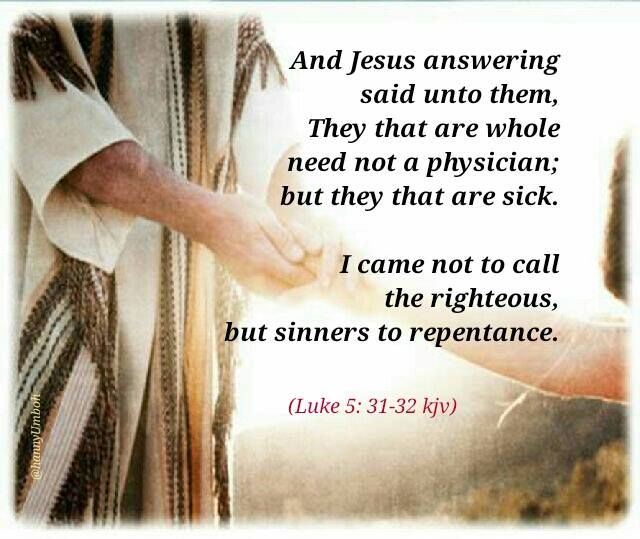



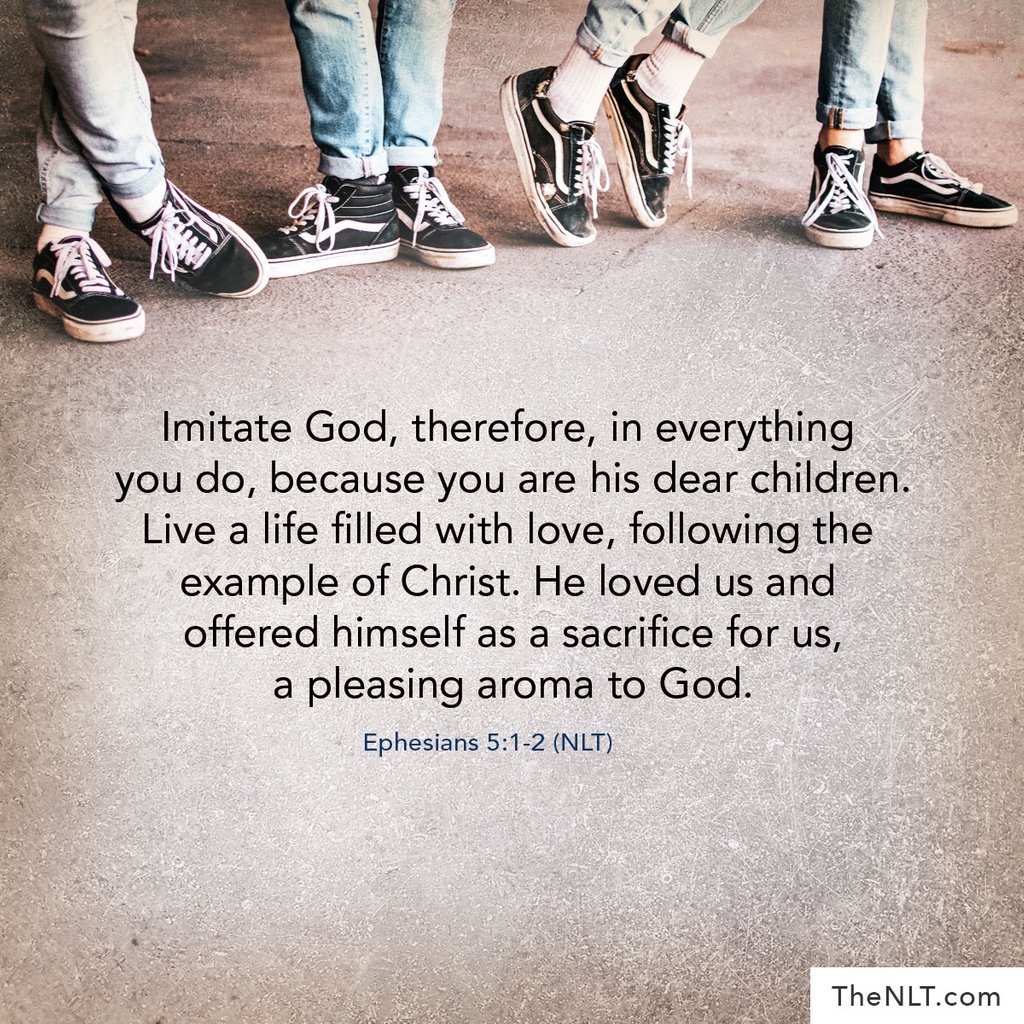


 Loving God, Living God, Loving Hope, Living Hope, Loving Living Life His Way! "Many things are possible for the person who has hope. Even more is possible for the person who has faith. And still more is possible for the person who knows how to love. But everything is possible for the person who practices all three virtues." - Brother Lawrence (1605-1691), Practicing the Presence of God (1692).