Romans 15:4 "For whatever was written in earlier times was written for our instruction, so that through perseverance and the encouragement of the Scriptures we might have hope."
The most prolific writer of the New Testament was the Apostle Paul as he wrote many letters to the church of his day.
How much he thought of the church that would be around in 2022 I don’t know, but the words he was inspired to write are eternal and they reach out to us right now just as powerfully as they did when he wrote them.
Paul had come a long way, from being one who persecuted the church, to being converted on the road to Damascus and being filled with the Holy Ghost prior to stepping out onto the pages of church history as the Apostle to the Gentiles.
But Paul was a Jew who had been trained in the greatest schools of Israel on the Law of Moses.
At one place he refers to himself as a Pharisee among the Pharisees, meaning that no one could best him at the knowledge of the Law and how to force men to comply to it.
He was a great debater, even at one point taking on the seekers of mysteries among the great thinkers of the Greeks on Mars Hill, where he declared unto them the Lord Jesus Christ as the one, they knew only as “The unknown God”.
One thing Paul had was a heart after God.
When he was converted, he “got the real thing”.
This gospel was no plaything to him.
When he gave his heart and soul to Jesus, he did so without reservation, committing his life to the preaching of the gospel at all costs, and counted everything as loss in this world, so that he might comprehend all that he could about Jesus and have a greater revelation of the power of the Holy Spirit.
One man, fully committed and sold out to God, under the anointing of the Holy Ghost, laid the foundation of the church upon the same foundation that Jesus had laid for there is no other foundation that will stand the test of time and eternity. The words that he spoke revealed the very heart and nature of Jesus to a world that was lost and dying in the sin of darkness.
As I look around today, I still see that same world! It’s a lost and dying world, steeped in idolatry and wandering around without eyes to see, ears to hear, and unable to come to the Truth of the gospel which has the power to see men free.
Romans 10:3-4 J.B. Phillips New Testament
How Israel has missed the way
10 1-4 My brothers, from the bottom of my heart I long and pray to God that Israel may be saved! I know from experience what a passion for God they have, but alas, it is not a passion based on knowledge. They do not know God’s righteousness, and all the time they are going about trying to prove their own righteousness they have the wrong attitude to receive his. For Christ means the end of the struggle for righteousness-by-the-Law for everyone who believes in him.
The Word of God for the Children of God. Gloria! In Excelsis Deo! Alleluia! Amen.
God’s righteousness and our righteousness are polar opposites.
Apart from Christ our right standing with God is impossible.
It was Isaiah who said that our righteous acts are like filthy rags (Isaiah 64:6).
He was talking about self-righteousness (the things we do to try to make us right with God). Self-righteousness looks great on the outside and people do genuinely take the time and the season to notice it and then comment upon it.
Like the Israelites our churches are filled with people who look holy but solely trust in themselves to be good enough for God. They are seeking him based on their righteousness and what they can accomplish for God. However, God does not grade on a curve, our righteousness in no way possible compares to his.
Paul said in today’s passage that the Israelites didn’t know God’s righteousness and so they tried to establish their own.
What is God’s righteousness? His righteousness is the uprightness that He ascribes to. It is who HE is – in thought, word and deed.
I pray you and I can see; this is a polar opposite of who we are as humans. God is so holy, completely just and true, in every sense of the word. It is impossible for us to approach God on the basis of what we’ve done, even though all of it seems good in the natural realm. In our own self sufficiency and sinful state, we would not even be able to stand in His presence because of the ugliest effects of sin.
Paul said in Romans 5, “before the law was given, sin was in the world. But sin is not taken into account when there is no law” (Romans 5:13). So, sin existed, but God was not crediting it to the accounts of mankind before the law was given.
So, they mistook his forbearance with sin to be his acceptance of it. Sin became more and more ugly and prevalent in the world, so in contrast, a life lived holy looked pretty good in contrast and comparison to the corruption that existed.
Therefore, the law was given to the Jews, and it outlined hundreds of rules and guidelines on how to live. God did this to demonstrate his righteousness to them. Compared to the nations around them, they assumed they were good enough but in comparison to God’s righteousness, the law showed them it was impossible to fulfill on their own.
The law came with both blessings and curses (Deuteronomy 28), and they were subjected to those by how they lived. The law was never intended to be a plan of salvation. The law was intended to show us our inability to earn our way to heaven and to reveal our need for a savior.
This is a major truth in the Bible; we cannot earn our way into heaven by our good deeds. If we are relying on what we do for God and our own self-righteousness, then Paul says that we remain under the curse of the law.
“All who rely on observing the law are under a curse, for it is written: “Cursed is everyone who does not continue to do everything written in the Book of the Law.” Clearly no one is justified before God by the law, because “The righteous will live by faith” (Galatians 3:10-11).
God knew it was impossible for us to fulfill the law, so he provided another way to be justified before him through Jesus. This comes about by faith and those who are righteous before God live by faith.
He went on to answer the question on everyone’s mind,
“What, then, was the purpose of the law? It was added because of transgressions until the Seed to whom the promise referred had come” (Galatians 3:19).
Romans says it this way,
“no one will be declared righteous in his sight by observing the law; rather, through the law we become conscious of sin. (Romans 3:20).
And again, Paul said in Galatians,
“the law was put in charge to lead us to Christ that we might be justified by faith (Galatians 3:24).
In other words, the law shows us our need for a Savior so we will fall upon the grace and mercy of God and trust in his plan for salvation instead of our own.
The law was intended to get us ready for Christ and was never proposed to be the way to God.
The amazing thing about falling upon the mercy of God and accepting this grace message is that by doing so, we know and submit to God’s righteousness.
Romans says, “But now a righteousness from God, apart from law, has been made known, to which the Law and the Prophets testify. This righteousness from God comes through faith in Jesus Christ to all who believe” (Romans 3:21, Romans 3:22).
Which means that we obtain God’s righteousness through faith in Jesus and since we are righteous by God’s standards, we can stand before him, completely justified, where before it would have been impossible to be in His presence.
Romans goes on to say, “For we maintain that a man is justified by faith apart from observing the law” (Romans 3:28).
This is good news for us today. We do not have to rely on what we do to please God; he is already pleased with us on the basis of our abiding faith in Jesus.
There is nothing else we can do to add to it, he looks deeply at us and sees us completely whole, righteous and justified before him as if we had never sinned.
What an incredible blessing it is to 100% submit to the righteousness of God.
Today it is my prayer that we recognize how righteous we are in Christ Jesus.
We have God’s righteousness covering us and we can stand in His presence fully justified, forgiven and loved. Sin is not an issue with him because he has paid your debt to it. Through faith in Jesus, we are the righteousness of God, Amen!
In the name of God, the Father and God the Son and God the Holy Spirit,
Let us Pray,
Lord, my teacher, I’m often confused when I need to make important decisions about my work, my relationships, my health, or finances. Show me the way I should go when I don’t know which way to turn. Help me remember to come to you, rather than trying to figure everything out on my own. Guide me along the best pathway for my life. Advise me and watch over me. Help me to listen to your guidance and not resist it. I thank you that your unfailing love surrounds those who trust you. Gloria! In Excelsis Deo! Alleluia! Alleluia! Alleluia! Amen.
Today, we begin a survey of the centrality of Christ from Romans Chapter 10.
The Word of Faith
Romans chapter 10 teaches the word of faith. By confessing with our mouth and the wholeness of our whole heart that Jesus Christ is Lord and by believing this in our hearts, we are saved—nothing more, nothing less. Christ is the end of the law so we can be justified and made righteous by faith in Jesus alone. Faith comes by hearing this gospel message and responding to it. Paul encourages us that “Everyone who calls on the name of the Lord will be saved.”
Romans 10:1-2 New American Standard Bible
The Word of Faith Brings Salvation
10 Brothers and sisters, my heart’s desire and my prayer to God for them is for their salvation. 2 For I testify about them that they have a zeal for God, but not in accordance with knowledge.
The Word of God for the Children of God. Gloria! In Excelsis Deo! Alleluia! Amen.
Like the Israelites many people are passionate for and about God but have no real regard for the truth of Jesus Christ. We use our religions and doctrines to umbrella God into what we want him to be or what we think he is.
But Paul said that there is laid in Zion a stone that causes men to stumble and fall and that stone is Jesus Christ (Romans 9:33).
If we remove Jesus from His deity and worship God without regard to him then our worship is in vain, and it is not based upon any truth or any knowledge.
This is an incredible reality to understand.
Worship is misguided and meaningless unless it is based upon the truth of God’s word.
Jesus said the same thing in John chapter 4 when he was speaking with the women at the well.
She had been questioning him about an age-old argument between the Jews and the Samaritans and Jesus revealed to her an amazing thing. He said,
“You Samaritans worship what you do not know; we worship what we do know, for salvation is from the Jews. Yet a time is coming and has now come when the true worshipers will worship the Father in spirit and truth, for they are the kind of worshipers the Father seeks. God is spirit, and his worshipers must worship in spirit and in truth” (John 4:22-24).
He tells her plainly that they do not know the truth. The truth is that true worshippers have to worship God in spirit and truth. This can only happen through Jesus. God is a spirit and to communicate with him on a spiritual level we must be born again. Born not naturally but supernaturally from above.
The world is okay with religion and okay with talking about God, and the world wants you to think that many roads lead to heaven. It is acceptable to talk about Buddha and teach about Allah but at the mention of the name of Jesus the world gets hostile, because there is power in that name.
Peter said, “Salvation is found in no one else, for there is no other name under heaven given to men by which we must be saved” (Acts 4:12).
So as long as we can be deceived looking outside of Jesus for salvation and meaning in life then we are no threat to the world. Just like Paul said in today’s passage, “I can testify about them that they are zealous for God, but their zeal is not based on knowledge” (Romans 10:2).
Jesus is the vital piece of information that we must have in worshipping God as he desires.
Even as Christians we can be well meaning in what we do, but what good is that?
Hosea said, “my people are destroyed from lack of knowledge” (Hosea 4:6).
Unless we take the necessary time to understand the truth of God and his Living Word, we will destroy ourselves in our well-meaning ignorance. God’s word is full of the person of Jesus Christ, what he has done, what he has provided in his redemption package and what he will do for everyone once we come unto him.
He is the way, the truth and the life and no man comes to God the Father except through him (John 14:6). This is the knowledge that Paul desired the Israelites to have. He knew Jesus was the missing link in their devotion to God.
Jesus said in John, “If you hold to my teaching, you are really my disciples. Then you will know the truth, and the truth will set you free” (John 8:31-32).
The truth is the truth, but to be free, you have to know it.
Socio-Cultural Religion does not want you to be free, that is why it keep you bound up under the power of the law. But it was John who said,“the law was given through Moses; grace and truth came through Jesus Christ” (John 1:17).
Today, it is my ever-fervent prayer that we understand the grace and truth found in Christ Jesus alone and completely trust in him as our personal Savior.
This is the knowledge that Paul desired for the entire world to grasp.
Salvation in the Living Christ ALONE!
Jesus is the rock laid in Zion that many stumble over, however to those who fall upon Him they will never be put to shame (Romans 9:33).
Today, be blessed by this truth in Jesus’ name, amen!
In the name of God, the Father and God the Son and God the Holy Spirit,
Let us Pray,
Father, faithful One, teach me your divine wisdom. Empower me to understand wise teaching. Give thy insight to my simple mind. Help me to live a life that is disciplined and successful, based on the wise teachings of your Living Word.
Give me the knowledge I need to make smart decisions. I know that reverence for you is the beginning of wisdom. Help me listen when you correct me, and not neglect your instruction. I know when I follow your wisdom, I will receive grace and honor. Gloria! In Excelsis Deo! Alleluia! Alleluia! Alleluia! Amen.
We are now confronted by the realities of the Resurrection of Jesus Christ!
But now comes the challenge of all the ages; what do we do with this reality?
The choices and decisions and possibilities are as counting the grains of sand on the seashore or looking into a desert expanse and counting those grains of sand. We can never hope to count each and every one of them, but we must each still grapple with the reality that the sands are there, and we all must do something.
We cannot avoid the temptation to kneel down and pick up a handful of sand and let it course through our fingers and over our hands just for wonderment. Letting that handful of sand return to the earth before we reach down into a different section of sand, repeat the process wondering “did I pick up more?”
How long do we keep scooping up the sand into our hands before we just decide we are more interested in getting to know more about the actual sand we hold?
On the surface, that seems a whole lot easier than trying to count to numbers we have never heard of, nor could we ever hope to keep track of in our heads.
Over-all there is still an incredible wealth of knowledge and wisdom we can gain simply by taking the time to study and compare the contrasting qualities and characteristics and attributes of the sand, applying it to the reality of life.
Such is the nature of the quest to study the question: Who really is this Jesus?
Romans 3:21-26 New American Standard Bible
Justification by Faith
21 But now apart [a]from the Law the righteousness of God has been revealed, being witnessed by the [b]Law and the Prophets, 22 but it is the righteousness of God through faith in Jesus Christ for all those [c]who believe; for there is no distinction, 23 for all [d]have sinned and fall short of the glory of God, 24 being justified as a gift by His grace through the redemption which is in Christ Jesus, 25 whom God displayed publicly as a [e]propitiation [f]in His blood through faith. This was to demonstrate His righteousness, [g]because in God’s merciful restraint He let the sins previously committed go unpunished; 26 for the demonstration, that is, of His righteousness at the present time, so that He would be just and the justifier of the one who [h]has faith in Jesus.
The Word of God for the Children of God. Gloria! In Excelsis Deo! Alleluia! Amen.
Sorting out the most basic implications of the Resurrection and now the Life.
Living into the reality of Resurrection ……
Loving into the reality of Resurrection …..
Moving into the reality of Resurrection ……
We start with acknowledging the reality of the Resurrection of Christ Jesus.
This reality is center mass to being Christian – it is at the heart of who we are. The tomb is absolutely empty – the disciples Peter and John have looked inside; we believe their witness – we believe what their eyes have seen and not seen.
We examine the witness of the disciples behind a locked door in the Upper Room. We study the witnesses, affirmation of faith of the disciple Thomas.
We find them to be absolutely credible and worthy of our acceptance and our belief because this is exactly what the Holy Spirit reveals to be trustworthy and true. We examine the Scriptures as a whole from Genesis through Revelation.
What does such a thorough examination reveal to me?
Today’s Bible verses shows us that none of us are excused from sin.
We were born sinners.
There’s no amount of trying or working that would get us out of our sinful state.
Also, there’s no way that our good could ever outweigh our bad. It’s literally impossible to come to the father except through Jesus. That’s the bad news.
The good news is that whoever this Jesus is, he didn’t leave us dangling there. He gave us His own life for the forgiveness of sin, righteousness as a free gift.
The starting place of receiving this gift is to first understand that we are a sinner and desperately need His grace. Salvation is only possible when one knows they are a sinner, and they completely throw their trust on Jesus.
Today, if we have not experienced the saving power of Jesus in our life, we can.
We simply have to ask Jesus to be the Lord of your life.
He will come in and save us, cleanse us and make us like new.
Then we simply live out of our new nature in Him.
We’ll want to spend time talking to God, getting to know Him on a deeper level.
Knowing Him is the best thing that God offers.
When you know Jesus, and love Him, your life has meaning and purpose.
So today, we begin to live out our choice to live for Him in everything we do.
JESUS IS THE PROMISED OLD TESTAMENT CHRIST WHO OFFERS “A NEW WAY” (ROMANS 3:21-22)
Romans 3:21 begins with a dramatic “but now”. When is this ‘now’? It is a ‘now’ after Genesis 3, after God has shown us our sinful state.
It signals for us a turning point, where “the righteousness of God had been manifested…” and that something objective has been done in history so that something is different now.
Ever since the fall of man in sin, mankind has been trying to work our way back to paradise, that state of blessed righteousness and peace with God.
We have all done so by covering up sins with fig leaves or trying to live good lives and be good people.
This “but now” is the appearing of Jesus Christ on the scene of history – the Son God promised to reverse the curse.
Now, a “righteousness of God … apart from the law” has been made known.
What is this and what does it mean?
The righteousness of God has been shown apart from the law, meaning that a righteousness separate from the law is now present and Scripture (i.e., the Law and the Prophets) actually bears witness to it.
Romans 3 is basically saying that there is a way to become perfect not through obeying and keeping the law. It is what Luther calls an “alien righteousness”- a righteousness that does not come from my own work or effort of keeping of the law.
Rom 3:21, Paul says that a non-law righteousness is now available. Sinners can now cross the bar without actually crossing the bar.
This new way is through faith in Jesus, for He is the “Christ”, the promised one spoken of in the Law and the Prophets.
JESUS IS THE SAVIOR WHO PROPITIATES, REDEEMS AND JUSTIFIES (ROMANS 3:23-25)
It tells us that all have sinned in Adam and that we have fallen short of the glory of God. We have all run away from God and have shut him out of our lives. This is the sin that we have all committed. Gen 6:5 shows us the extent of our sins.
We are not just flawed or are flawed people with innumerable problems. We all share the sin nature of our ancestors – fearful, lustful, irresponsible and more.
Verses 24 to 25 then go one to show us what Christ did for sinners like us. Jesus propitiates, redeems and justifies. Propitiation borrows the language of temple worship and means “to make favourable to” or “to satisfy”.
This is directed towards God to satisfy his wrath, the wrath of a righteous, holy God against sin, and this wrath means sinners naturally deserve death. Romans 3:25 tells us this Jesus was put forward by God as a propitiation of this wrath.
What does this mean?
The Bible tells us that God has no more wrath for sinners because Jesus Christ has satisfied God’s righteous judgment.
How did He do this? He lived the perfect life we were supposed to live and, on the Cross, died the death we ought to die as guilty sinners (Isaiah 53:4-6).
There, on the cross, He was punished as a rebel against God as our substitute, going through hell in our place (1 Peter 3:18). Jesus Christ gave His life for us because He loved us (Romans 5:8). This means those who receive and accept His work on their behalf are now absolutely at peace with God (Romans 5:1).
Redemption has taken place because of propitiation. Because Savior Jesus has propitiated God’s wrath, He has redeemed us.
The word comes from economic language or the language of the marketplace.
It speaks of transfer of ownership. Thus, when the Bible speaks of redemption, it means we are freed from our former master, but we now serve Christ. We are never our own masters, but Jesus is our master, and He is one who justifies.
Because Jesus was put forward as the propitiation, and we have been redeemed, we are also justified. Because of what Jesus has done, we are justified sinners in God’s sight. That is the legal status we receive because of Christ.
JESUS IS THE EVIDENCE OF GOD’S CHARACTER – HIS RIGHTEOUSNESS, MERCY, & WISDOM (ROMANS 3:26)
No matter how hard we try, how good we are, how much we work, we can never measure up to the only standard that matters — the glory of Almighty God.
Thankfully, God doesn’t require us to pretend to be what we are not — perfect, spotless, and holy. Instead, God makes us to be these (cf. Colossians 1:21-23) by grace, through the gift of his Son who purchased for us our pardon and gave us his righteousness (2 Corinthians 5:21).
Praise God. Praise our Savior, Christ Jesus.
Now let’s live with Jesus as our Lord; not to earn or secure our salvation, but to thank him for what he has so freely given us!
Romans 3:25b tells us that God did much more than show us his love at the cross. You see, God had another problem. He had passed over sins in his divine forbearance, leaving them unpunished. What does this mean?
Verse 25 tells us God left sins unpunished all the way until Jesus and if God did not deal with those sins, He would be an incompetent, partial and poor judge.
His integrity and justice would be compromised.
The Apostle Paul teaches in Romans 3:26b that in Jesus Christ, God shows His wisdom by not only radically, scandalously loving us in forgiveness, but also justly satisfying what righteousness demands.
The cross shows us God’s love for those who could not be righteous on their own and yet, the fulfillment of His righteous requirement for divine justice.
What can we learn about God’s character through Jesus Christ? We see his kindness to pardon us, but also in a way that satisfies his justice. God knows what to do with sin — either in hell, or it is all charged to Jesus on the cross.
Romans 3 shows us the incalculable depths and riches of God’s love. We have all the firewood and kindling stacked up high, to set our hearts ablaze by faith. Do you dare believe all that’s written here? Let the saving work of Jesus move you.
In the name of God, the Father and God the Son and God the Holy Spirit,
Let us now Pray,
Most precious holy Father, all I can say to your marvelous grace is thank you! Please know that while these words are woefully inadequate, they are genuine. Dear Father, I look forward to showing you through the rest of my life just how much I appreciate all that you have done for me. In Jesus’ glorious name, I pray. Gloria! In Excelsis Deo! Alleluia! Alleluia! Alleluia! Amen.
28 Now after the Sabbath, as it began to dawn toward the first day of the week, Mary Magdalene and the other Mary came to look at the tomb. 2 And behold, a severe earthquake had occurred, for an angel of the Lord descended from heaven and came and rolled away the stone and sat upon it. 3 And his appearance was like lightning, and his clothing as white as snow. 4 The guards shook from fear of him and became like dead men. 5 And the angel said to the women, “[a]Do not be afraid; for I know that you are looking for Jesus who has been crucified. 6 He is not here, for He has risen, just as He said. Come, see the place where He was lying. 7 And go quickly and tell His disciples that He has risen from the dead; and behold, He is going ahead of you to Galilee. There you will see Him; behold, I have told you.”
The Word of God for the Children of God. Gloria! In Excelsis Deo! Alleluia! Amen.
“He is not here; he has risen, just as he said. Come and see the place where he lay.” – Matthew 28:6
Jesus’ death and resurrection are not only celebrated at Easter. Long before Jesus walked to the cross, Scripture tells of the hope we find in Him. His resurrection story began in the first notes of Scripture, and He is apparent throughout the entirety of the Bible.
“‘He is Risen’ means that Jesus was raised from the dead, and now is with God in heaven,” explains Christianity.com, “It means He has overcome death as those who believe in Him will have eternal life.”
Every day we wake to a new morning carries divine purpose to serve as a channel of Christ’s love. The world is consumed with itself, and therefore crumbling inward as the days go on.
But our hope isn’t in the world!
Our hope is not in the grave!
Rather our living and everlasting hope is in the One who utterly defeated death on our account and one day soon, WILL return to take us home for all eternity.
Now, how about that for Good News to start your day?
Where Is This Verse in the Bible?
“Why do you look for the living among the dead? He is not here; he has risen!” – Luke 24:5b-6a)
The Gospel of Mark also records,
“‘Do not be alarmed,’ he said, ‘You are looking for Jesus the Nazarene, who was crucified. He has risen! He is not here. See the place where they had laid him”(Mark 16:6-7).
All four Synoptic Gospels tell of the empty tomb, Jesus’ resurrection, and Mary Magdalene’s discovery of Jesus’ empty tomb.
The Gospels differ slightly in the details included in their recording of the day’s events.
“Luke includes a second angel,” the NIV Application Commentary explains, “but Matthew and Mark focus only on the one who speaks for both.”
Luke and John both wrote some of the disciples ran to the tomb, Luke has specifically mentioned Peter.
John made a point to mention the disciples still did not understand the full scope of the Scriptures being fulfilled in Jesus’ resurrection.
Take into consideration the way in which John concluded his Gospel:
“Jesus did many other things as well. If every one of them were written down, I suppose that even the whole world would not have room for the books that would be written”(John 21:25). Through the Holy Spirit’s divine revelation through the writings of these apostles, we receive irrefutable confirmation of Jesus’ life, death and resurrection.
What Is the Context of the Phrase “He Is Not Here for He Is Risen”?
“The angel said to the women, ‘Do not be afraid, for I know that you are looking for Jesus, who was crucified. He is not here; he has risen, just as he said. Come and see the place where he lay. Then go quickly and tell his disciples: ‘He has risen from the dead and is going ahead of you into Galilee. There you will see him.’ Now I have told you.” (Matthew 28:5-7)
Mary Magdalene and Mary (Matthew 28:1) discovered Jesus’ tomb was empty the Sunday after He had been crucified and buried in the tomb. Shocked and worried about what may have happened, Jesus’ teaching about this day was not the first thing to cross their minds. An angel provided comfort and clarity to them by telling them what had happened and giving them their next steps.
It’s quite one thing to listen to teachings and believe, but another to experience their unfolding in the moment. Their reaction was pure joy, and in Matthew’s Gospel account they ran to do as the angel said. On their way to tell the disciples what had happened, “Jesus met them” (Matthew 28:9). He greeted them!
Matthew 28:8-10 New American Standard Bible
8 And they left the tomb quickly with fear and great joy and ran to report to His disciples. 9 And behold, Jesus met them [a]and said, “[b]Rejoice!” And they came up and took hold of His feet and worshiped Him. 10 Then Jesus *said to them, “[c]Do not be afraid; go, bring word to My brothers to leave for Galilee, and there they will see Me.”
Imagine their state of awe! Matthew wrote,
“They came to him, clasped his feet and worshiped him” (Matthew 28:9).
The awakened, awakening hope welling up deep inside these women upon their discovery and reunion with their Messiah is linked to the wellspring of hope we too can find in Jesus everyday as we wake as sinners, forgiven and rescued by our salvation in Christ Jesus. “Do not be afraid,” Jesus assured them, “Go and tell my brothers to go to Galilee; there they will see me” (Matthew 28:10).
Matthew wrote of a rumor purposefully spread to blame Jesus’ disappearance from the tomb on His own disciples, claiming they took His body. “And this story has been widely circulated among the Jews to this very day” (Matthew 28:15). Luke specifically mentioned Peter looking in the tomb, even holding the strips of linen, but not understanding what had happened.
When Jesus met his disciples in Galilee, some doubted it was Him.
Often is our hope stands directly right in front of us, but we are too blind to see.
In our search for concrete answers, we sometimes entertain “believable” rumors instead of placing our whole faith in the truth of God’s word. “While other stories will be concocted to try to cover up the truth (Matthew 28:11-15),” the NIV Application Commentary explains, “God’s word of revelation through the angel tells the real story—Jesus has indeed been raised from the dead.”
When Did Jesus Say He Would Rise from Death?
“The Son of Man must suffer many things and be rejected by the elders and the chief priests and the scribes and be killed, and after three days rise again.” –Mark 8:31
Jesus said He would rise from the dead. He spoke it Himself, as recorded by Matthew (Matthew 16:21; 17:23; 20:19), Luke (Luke 9:22) and Mark (Mark 8:31). Jesus also spoke of His death and resurrection indirectly (Matthew 12:39; 16:4; 21:42), and in conversation with others. “Two separate witnesses testify in two very different ways to Jesus’ statement during his lifetime that if his enemies destroyed the temple (of his body), he would build it again in three days (John 2:19; Mark 14:58; Matthew 26:61),”
How Does Matthew 28:6 Solidify the Foundation of Christianity?
“Paul, a servant of Christ Jesus, called to be an apostle and set apart for the gospel of God—the gospel he promised beforehand through his prophets in the Holy Scriptures regarding his Son, who as to his earthly life was a descendant of David,” – Romans 1:1-3 NIV
Through the Holy Spirit’s divine revelation on Paul’s pen, Jesus’ identity is again confirmed. John chose to begin his Gospel account by stating Jesus was with God in the beginning, and through him all things were made (John 1:1-5).
The anonymous author of Hebrews confirmed “Jesus is the same yesterday and today and forever” (Hebrews 13:8).
The empty tomb solidifies the foundation of Christianity.
Jesus did not just appear on the first page of the New Testament. He is present throughout the entirety of Scripture. His life, death, and resurrection not only fulfill the Old Testament prophecies, but irrefutably prove the great love of our ABBA in heaven to rescue each one of us from the penalty of sin, which is death.
“The believers who saw the risen Christ with their own eyes and touched him with their hands spent the rest of their lives taking about the resurrection,” wrote Marshall Segal for DesiringGod.org.
In Christ, we have access to God through prayer and His Word, through the indwelling of the Holy Spirit gifted to us by Christ, Himself. The One, True, Triune God is glorified through the empty tomb. Only He could execute such a miracle. The Author of Life, Defeater of Death, the very Breath of God.
Through Christ Jesus, because of His life, death and resurrection, we find our salvation. Life lived within the love of Christ is full of God’s grace, forgiveness, mercy and compassion. When we live, walk out our lives in obedience to His will, as Jesus did all the way to the cross, we are promised joy and fulfillment.
What Hope Can Christians Find in This Biblical Truth Today?
“All authority in heaven and on earth has been given to me. Therefore go and make disciples of all nations, baptizing them in the name of the Father and of the Son and of the Holy Spirit, and teaching them to obey everything I have commanded you. And surely I am with you always, to the end of every age.” – Matthew 28:18-20
In the beginning, God created us in His image, with dignity and a purpose our enemy is constantly trying to distract us from.
When sin succeeds, destruction abounds. We form idols, mistakenly believing we can find true and lasting satisfaction in achievements, people, and material things. Jesus’ sacrifice on the cross ultimately defeated death. We can each now choose to embrace salvation in a living Christ, come to ABBA for forgiveness of our sins, daily, embracing a new hope, a life in which we find true satisfaction.
Christ’s resurrection gives us a new and ever living and everlasting hope for today, for our future. Jesus will return again. He will right all wrongs and mend all hurts. Death will cease to exist, and we will go home to heaven with Him.
“We can enjoy the stability of resurrection hope,” writes Mitch Chase for TGC, “because the promises of the world to come will never waver or fail.”
When our daily circumstances are too hard to bear, when we can only see the darkness, taste our tears, we can submit them to God through Christ, knowing He hears and sees us, and that the pain and struggle of this world is temporary.
The Will of God is that we should all see the SUN rise!
The Will of God is that we should all see the SON rise!
The Will of God through Christ Jesus is we should all have life in abundance!
By His Resurrection, we can truthfully say: God’s Will can never be thwarted!
A PROMISE IS A PROMISE …… OUR GOD IS FOREVER A FAITHFUL GOD!
Happy Easter to everyone – FOR THE MORNING HAS COME!
Happy Easter to everyone – FOR THE SON IS RISEN INDEED!
In the name of God, the Father and God the Son and God the Holy Spirit,
Let us Pray,
Abba, Father! Jesus, Savior! Spirit, Breath of God! One, True, Triune God! Glory up! Praise You for this day, which we walk out because of Your creative hand. Praise for the purposes You have for us today, and each day we wake to breathe on this earth. Jesus, in Your resurrection, we find hope for each day. In You we are given a supernatural strength, perspective, and joy that cannot be shaken or stolen. May our daily lives reflect our love for You and serve as a channel of that love to everyone You have placed in our lives. Thank You for resurrection hope.
In Jesus’ Powerful and Ever-Living Name We Pray, Gloria! In Excelsis Deo! Alleluia! Alleluia! Alleluia! Amen.
Our Countdown to Calvary has one more day to account for. The day of silence when the disciples have all been scattered – they have gone their own ways for fear of being hauled away from the homes, livelihoods, arrested, found guilty of being a follower of Jesus and crucified. Who knows where they are hiding now?
While they are in their very best hiding places, what we do have is the location of the Chief Priests and the Pharisees as they walk into Pilates Palace. They too are in fear of their future – What if Jesus actually rises from the tomb? What will become of them? Will the people arise against them, demand their crucifixions? What will happen to the Temple, its community, its role and its religious order?
Yes! They are afraid for the future of what they have worked hard to out into its place and the life of the people who have relied on them for being taught about God, facilitating their God-covenanted commitments, righteous community according to all the Laws of Moses and to the teachings of the great Prophets. There has been much invested by them here. They have too much to protect not the least of which is their positions of power and prestige and great influence.
But, instead of hiding away, they’re acting decisively, with great determination. We cannot find any of the disciples so we will now walk with the Chief Priests and the Pharisees to see what their intentions are in this very critical moment. We will walk alongside of them to learn just how the establishment responds.
Matthew 27:62-66 New Revised Standard Version
The Guard at the Tomb
62 The next day, that is, after the day of Preparation, the chief priests and the Pharisees gathered before Pilate 63 and said, “Sir, we remember what that impostor said while he was still alive, ‘After three days I will rise again.’ 64 Therefore command the tomb to be made secure until the third day; otherwise his disciples may go and steal him away, and tell the people, ‘He has been raised from the dead,’ and the last deception would be worse than the first.” 65 Pilate said to them, “You have a guard[a] of soldiers; go, make it as secure as you can.” [b]66 So they went with the guard and made the tomb secure by sealing the stone.
The Word of God for the Children of God. Gloria! In Excelsis Deo! Alleluia! Amen.
It’s the Sabbath, the day of rest for the Jewish people. Jesus’s followers, hiding, devastated by his death, are resting: “On the Sabbath day they rested according to the commandment” (Lk 23:56).
But “the Chief Priests and the Pharisees” are busily at work. They have insisted on having an appointment with Pilate. They demand that he set people to work securing Jesus’s tomb. When Pilate tells them to use their very own “guard of soldiers” for the task, they don’t hesitate. They supervise the Jewish soldiers’ labor in “sealing the stone and setting a guard.”
These are the same religious leaders who got so mad at Jesus if he so much as healed anyone or even plucked heads of grain on the Sabbath. What’s got into them that they’re now so ready to work and to put other people to work on this obligatory day of rest?
The reason they give is inadequate: “Lest his disciples go and steal him away and tell the people, ‘He has risen from the dead.’” Well, yes, but a fraud like that would be exposed fairly quickly by the discovery of the stolen body, or it would just fade away when the risen Jesus himself remained an embarrassing absence, failing to appear in person.
So, what do the religious leaders really fear?
Let’s look at some of what’s happened in the last twenty-four hours or so.
For three hours, while Jesus was on the cross, “there was darkness over the whole land …, while the sun’s light failed” (Luke 23:44-45).
Whether or not this was a solar eclipse or divine intervention of another sort, it would have been deeply unnerving. Solar eclipses were read as threatening omens back then and for many centuries afterward.
There was also an earthquake, apparently with a specific target.
At the moment of Jesus’s death, “the curtain of the temple was torn in two, from top to bottom” (Mark 15:37-38).
This was the curtain that blocked entrance to the Holy of Holies at the heart of the temple to anyone but the high priest on the Day of Atonement.
With Jesus’s death, the barrier was removed. Tombs were opened, as well, and “many bodies of the saints who had fallen asleep were raised.” Although the risen saints did not “appear to many” in Jerusalem until after Jesus’s own resurrection, rumors of resurrection must have been heavily in the air.
All this was enough to persuade at least one centurion that Jesus was both “innocent” (Lk. 23:47) and truly “the Son of God” (Matt. 27:54), but it must have given “the chief priests and the Pharisees” the exalted heebie-jeebies.
Is it possible they are afraid of more than the theft of a body? They don’t admit this to Pilate. They probably haven’t voiced the fear to one another or even, perhaps, allowed themselves to be conscious of the true reason for their fear.
But is it possible that they were terrified that they’d made a dreadful mistake and that Jesus really would rise from the dead and prove himself to be the Christ, the Son of God? Given all that had happened, it wouldn’t be an irrational fear. And only an unspoken fear of such magnitude would plausibly explain their demand, on the Sabbath day, that soldiers work to seal the tomb and guard it against not just body snatchers but—God forbid! —a resurrection.
If that’s what’s making their stomachs churn, they do not have many options.
Do they really think that sealing the tomb will keep a risen Christ inside?
Or that a guard of armed soldiers might arrest and conceal the risen Christ?
These are desperate and inadequate measures. The portents of imminent supernatural intervention are staring them in the face, and they are flailing helplessly. Even Pilate has no confidence in their efforts. He says, “Go, make [the tomb] as secure as you can.” He’s being more than just a little bit ironic. He knows they can never make it secure. Not against what’s about to happen.
The fears of these religious leaders may be profoundly characteristic of fallen human beings in general. Even in our times, those who minimize or deny the resurrection of Christ may, at some level, be afraid that it might just be true.
They would readily deny their doubt, of course, certainly to us and probably to themselves. But if, as we believe, Jesus really did rise from the dead on that first Easter Sunday, then his resurrection threatens a spiritual earthquake in the life of anyone who prefers not to answer to (or even to be loved by) a risen Christ. It must seem easier to guard against perceived threats to their established faith.
Many today are still incredibly uncertain of what to make of the resurrection. Many today still prefer to remain “restful” and in hiding from the reality of the moment. They prefer to acknowledge more truth to the fact the tomb is now heavily guarded “by the guards of the temple establishment” and see no viable reason to raise themselves up challenge it or to question it or protest against it.
With the humility we have been taught by the man, Rabbi Jesus, we’ll go ahead, gracefully acknowledge they have their questions and legitimate concerns. We meet with them as Jesus met Levi/Matthew as the Tax Collector. We will “walk” across their paths in the prayerful hope they will freely engage us as Levi did. In the prayerful, faith-filled, living hope that we will be invited into their ‘homes.’
God invites all of us to have an abiding relationship with Him. He extends His invitation in His time and in His own way. This “day of our silence” is His way. This day of silence is His time for us to walk across that “Levi/ Matthews path.”
It is an enormously powerful moment to receive the skeptic and their questions.
While they may only see the “heavily guarded tomb,” God is busy working His miracle of resurrection beyond the guards, beyond the rock, inside the tomb. We just need to be ready to invite the skeptics to come back with us tomorrow.
We who, by God’s grace, have been allowed to believe that Christ not only died for our sins but was also “raised for our justification” (Rom. 4:25) are blessed to await Easter Sunday morning not with fear but with sure hope and great joy.
May we each take time today to “accidently” cross paths with, pray for those who minimize, question, deny the resurrection. May we pray that their fear, too, might be replaced with a joyous living faith in the love of God in Christ.
For tomorrow, COMES THE SON RISE ….
In the name of God, the Father and God the Son and God the Holy Spirit,
Let us Pray,
ABBA Father, today we pray we would have a refreshed perspective of all that has Jesus endured for us. He humbly served those He loved, even His betrayer. We pray that if we have become too callused or familiar with His suffering that our hearts would be softened again. We pray that His resurrection would give us a renewed, empowered and inspired and inspiring confidence all things are still possible, and that greater things are surely yet to come. Alleluia! Alleluia! Amen.
The question beckons us today as we continue our countdown to Easter,
Was Jesus’ coming crucifixion the most agonizing moment of his life?
Surely it must be ranked among the very highest we read of in the bible. Death on a Roman cross was excruciating pain, and none of that was spared to Jesus.
Perhaps considering the magnitude of this moment, for Jesus, what happened in the Garden of Gethsemane was suffering just as great as crucifixion.
When the Passover meal was eaten Jesus left with his disciples, except Judas, who had already gone to fetch soldiers to arrest Jesus.
Jesus and the other disciples went to Gethsemane, an area filled with olive trees. The man, Rabbi Jesus needed his time and space to pray, to pour out his heart to His Father God, and he took along three of the disciples to stay close to him.
In the hour or two that follows, we read from our incoming text, Jesus bares the unbelievable weight of his grief in his soul, and we see pain beyond imagining.
Matthew 26:36-46 New American Standard Bible
The Garden of Gethsemane
36 Then Jesus *came with them to a place called [a]Gethsemane, and *told His disciples, “Sit here while I go over there and pray.” 37 And He took Peter and the two sons of Zebedee with Him, and began to be grieved and distressed. 38 Then He *said to them, “My soul is deeply grieved, to the point of death; remain here and keep watch with Me.”
39 And He went a little beyond them, and fell on His face and prayed, saying, “My Father, if it is possible, let this cup pass from Me; yet not as I will, but as You will.” 40 And He *came to the disciples and *found them sleeping, and He *said to Peter, “So, you men could not keep watch with Me for one hour? 41 Keep watching and praying, so that you do not come into temptation; the spirit is [b] willing, but the flesh is weak.”
42 He went away again a second time and prayed, saying, “My Father, if this cup cannot pass away unless I drink from it, Your will be done.” 43 Again He came and found them sleeping, for their eyes were heavy. 44 And He left them again, and went away and prayed a third time, saying the same thing once more. 45 Then He *came to the disciples and *said to them, “[c]Are you still sleeping and resting? Behold, the hour [d]is at hand and the Son of Man is being betrayed into the hands of sinners. 46 Get up, let’s go; behold, the one who is betraying Me is near!”
The Word of God for the Children of God. Gloria! In Excelsis Deo! Alleluia! Amen.
Three things mark out the time in Gethsemane.
1. It is a time of deep agony.
Several of the words in verses 37 and 38 are filled with appalling pain and anguish for Jesus. He was “sorrowful” and “troubled.” He told the disciples: “My soul is overwhelmed with sorrow to the point of death.”
The gospels don’t often describe any emotion of Jesus other than compassion.
So, the gospel narrators saw this time and this experience in Gethsemane as something almost unique and certainly important to record.
There are martyrs who have gone silent or with brave words to their death, as if it is nothing to them that they will be burned at the stake or torn by wild dogs or executed with a sword.
Not Jesus. Inside him is a sorrow and an agony so strong, so all-consuming that he feels he might die there and then, and he pours out that sorrow to God.
Why such pain?
Above all, perhaps two reasons.
For one thing, Jesus knew that crucifixion lay ahead.
Death on a cross was death by prolonged torture.
The piercing of hands and feet with nails, the exposure to burning sun or bitter cold, the humiliation by mocking crowds, the near-impossible strain of lifting the collapsed body to breathe, the physical frame becoming weaker, the mind becoming delirious… all excruciating pain.
And it lasted a very long time, maybe hours, maybe days. Crucifixion was an intentional slow death, so the condemned person experienced maximum agony and so those who watched learned the lesson – never to rebel against the state.
Crucifixion was so cruel that the Romans usually crucified only slaves, pirates, or their enemies and not their own citizens.
Jesus knew crucifixion lay just ahead. Who would not be in an agony of soul?
For another thing, Jesus’ death would be no ordinary death.
Yes, he would suffer and die like any man. But he would be the man whose suffering included bearing the sins of the whole world in his own body.
No one can know all that meant for him – perhaps more intensified pain, perhaps separation from his perfect communion with his Father.
Whatever exactly was before Jesus, it was a ‘cup’ he dreaded drinking. Bishop N.T. Wright says: “He had looked into the darkness and seen the grinning faces of all the demons in the world looking back at him. And he begged and begged his father not to bring him to the point of going through with it.”
Whatever the trials or suffering of our lives, whatever the reality is, however great our darkness or our pain, Jesus understands. He knows deep agony, he knows what it is to dread what lies ahead, he knows the need to get down on the ground and cry out to God to be released. He knows what we all need to know!
2. It is a time of wrestling and resolution.
Jesus’ prayer in the Garden is remarkable for its straightforward honesty.
“My Father, if it is possible, may this cup be taken from me. Yet not as I will, but as you will” (v. 39).
We have all known people who prayed for a dreadful future to go away:
The person diagnosed with an incurable neurodegenerative disease, or with an inoperable cancer or severe cardiac disease which will lead inevitably to death.
The mother who was just told by their doctor that the baby in her womb was anencephalic, and without full development of the child’s brain and skull the baby could not and in fact would not live for more than a few hours after birth.
The parents of any beautiful seven-year-old boy or girl diagnosed with a brain tumor, or in a severe auto accident, life supported only by medical equipment, waiting for the inevitable day the child’s time in this world would certainly end.
The Husbands or Wives who were just told that their spouses had Alzheimer’s.
Ask any Ukranian Citizen who just had their lives upended by bullets flying in and through their kitchens or living rooms or bedrooms where they were just going to sleep, watching TV, listening to music with the children close at hand.
For these people and so many others like them, their deepest longing was that somehow that unimaginably dreadful future would not exist. If only somehow – by a miracle of miracles – what they know will happen will not happen. If only the impossible could become possible. How can we or they not pray for any of that?
So, the man, Rabbi Jesus went off to be alone and he prayed, “My Father, if it is possible, may this cup be taken from me.” Is Jesus simply voicing his agony and his longing? Or did Jesus truly think the cup of suffering could be taken away?
When Jesus prays the prayer the second time, he seems to know the answer.
The words are slightly different. “My Father, if it is not possible for this cup to be taken away unless I drink it, may your will be done” (v. 42).
Had Jesus sensed the answer to his prayer was ‘no’?
Perhaps that is reading too much into the slight change of words, because Matthew records that Jesus prayed the same prayer a third time (v. 44).
But it sure makes sense that Jesus would ask if he could be released from the appalling suffering of death on the cross. There is a deep inner wrestling here.
But Jesus was not rejecting God’s will.
He was not trying to avoid the will of His Father God; he was ensuring this cup of suffering was the will of God. Certainly, his flesh recoiled from the prospect of dying in agony, and certainly it was an unimaginable burden to absorb the pain and sin of the world in his body, but the heart of his prayer was always “may your will be done.” He wanted nothing other than what His own Father wanted for him. He had no alternate agenda other than to do the Father’s will.
And as he rose from prayer and returned to his disciples, the matter was settled.
There was no more time for questioning. It was resolved, and Jesus would go forward into the hands of those who would betray, arrest, beat and crucify him.
3. It is a time of weakness and failure.
The disciples persistently let Jesus down. At the start he told them to keep watch with him (v. 38).
After his first time of prayer, Jesus returned to them, found them sleeping and urged them again to watch and pray (v. 41).
A short time later he came back to them again, and again found them sleeping (v. 43). And when his prayer was then finished and he rejoined them, it was no different. “Are you still sleeping and resting?” he asked them (v. 45).
It was the night and therefore no surprise they were tired and fell asleep.
But Jesus needed them.
One of the greatest struggles of all human history was happening only a few paces away, but these men curled up and went to sleep. Even though they were asked several times to stay awake, still they slept. What Jesus wanted was not very difficult to understand and not impossible to do. But they let him down.
We are no different. We don’t sin out of ignorance. We sin because of weakness, unwillingness, selfishness, or carelessness. At times when the deep spiritual battles are at stake, we’re not on the alert, not at our posts, not playing our part.
Thankfully Jesus did not give up on these disciples, just got them to their feet since the force coming to arrest him was in sight (v. 46).
Jesus does not give up on us either.
That does not mean our failures don’t matter, only that Jesus won’t let us wallow in past mistakes for there are new challenges to face just ahead.
What then shall we say of this walk through the Garden called Gethsemane:
A time of deep agony.
A time of wrestling and resolution.
A time of weakness and failure.
There are three short but important lessons.
1) Prayer is not always answered as we might wish.
Jesus, the perfect Son of God, poured out his heart.
There is no doubt he longed to escape the cross. But God said ‘No.’
There was no fault in the person praying.
There was nothing wrong with the prayer. It would have made no difference if the prayer time had lasted all night, or if the prayer had been repeated a million times by a million people. The answer from God would still have been ‘No.’
The lessons?
We can and should pour out our hearts to God, but with humility and meekness let us recognize that the will of God we find may find on the door stops of our hearts may not be the same as the will we agonizingly brought to the prayer.
The deepest of inner agonies can be shared with God.
Jesus was troubled, and he tells his disciples his soul is overwhelmed with sorrow to the point of death.
Some Christians believe any form of depression as weakness of faith.
If that were true, then many of the Bible’s greatest saints were weak. And Jesus was weak in the Garden of Gethsemane. He was, but it was no sin.
Weakness is common to human experience, and, at times, it is the very thing that drives us to God.
There is no sin in being real about our feelings, and no sin in coming to God confessing our struggles. God copes very well with honest people. Cures are rarely instant but being open before God is always the right start.
3. God’s will does get done.
Jesus prayed for that: “…not as I will, but as you will” (v. 39). And God’s will was done.
We may never face death on a cross, but we may see some other appalling future that sends dread through our whole being. At times like that we are tempted to say: ‘How can God be so absent or impotent?
Where is God at a time like this?’
The answer is God is right there. Just as he was in Gethsemane, as he was at the cross, and as he was at the tomb raising Jesus back to life.
Through all of it, God was there.
Our challenges and our agonies overwhelm us, and we feel so alone.
But God is there, always there. He is not hiding, not gone astray, not become unwilling. And God is at work, and his work is always good.
When Jesus left Gethsemane, the challenge of the future was still there.
The agony of the cross was still ahead. Easter was about to come.
But Jesus came through Gethsemane strengthened in knowing God’s will more certain and surer and he could face anything God allowed in his life. Because of what happened in his Gethsemane, he was now prepared even for the cross.
As we walk around and through the Garden, observing the events of that day,
May God also make us all more ready for his perfect will, whatever it may be!
In the name of God, the Father and God the Son and God the Holy Spirit,
Let us Pray,
Eternal God, your power is unlimited, and your strength has no end. You have said that faith, hope and love as small as a mustard seed can move mountains. Fill me with the measures of faith, hope and love for a breakthrough in my own circumstances. I believe You are able to do far more than all that I ask or can even dare imagine, according to the power at work within me. To you be glory throughout all generations, forever and ever. Through Jesus Christ, our Lord, Gloria! In Excelsis Deo! Alleluia! Alleluia! Alleluia! Amen.
Today, we are walking alongside Peter. We are curious to what he is thinking.
Calvary is before us, though we realize it not. If we are in realization, we are not yet in a place where we can even begin to comprehend its awesome magnitude.
Three times, our Rabbi Jesus has told us of his having to suffer at the hands of his betrayers. He has prophesized that he must suffer unbelievable humiliation at the hands of the people – that he will be crucified, and he will be killed. We do not believe this is possible for such a one as our Rabbi – we will never allow it to happen as long as we are alive, can expend all strengths, and able to prevent it.
But, to our surprise, our Rabbi sharply rebukes us. He tells us we are to get out of his way – do not try to prevent his coming suffering. It is ordained by God! I cannot wrap my head or my heart or my suffering soul around such a notion. I am struggling with the notion that Rabbi suffering is a God ordained necessity.
I understand what it means to struggle and suffer – I have spent many days in my father’s boats – struggling and suffering to bring in the nets filled with my days catch. I also understand what it means to suffer and to struggle when the nets are empty at the end of the day, and that I have no fish to sell in the local market or to feed my family, friends and neighbors or donate to the Temple. I am used to such days and count them as the cost of doing what I choose to do.
But now, with these words of my Rabbi, weaving into and out of my soul, I do not believe I really know, nor comprehend what suffering he is referring to. I have seen people being crucified – and it frightens me to the core of my being. My own Rabbi tells me he must absolutely experience this for my greater good. These are strange words to me! These are surprising words to me! What now?
So, I continue to walk with my Rabbi as we prepare to celebrate the Passover ….
1 Peter 4:12-19 Easy-to-Read Version
Suffering as a Follower of Christ
12 My friends, do not be surprised at the painful things that you are now suffering, which are testing your faith. Do not think that something strange is happening to you. 13 But you should be happy that you are sharing in Christ’s sufferings. You will be happy and full of joy when Christ shows his glory. 14When people say bad things to you because you follow Christ, consider it a blessing. When that happens, it shows that God’s Spirit, the Spirit of glory, is with you. 15 You may suffer, but do not let it be because you murder, steal, make trouble, or try to control other people’s lives. 16 But if you suffer because you are a “Christ-follower,” do not be ashamed. You should praise God for that name. 17 It is time for judging to begin. That judging will begin with God’s family. If it begins with us, then what will happen to those who do not accept the Good News of God?
18 “If it is hard for even a good person to be saved, what will happen to the one who is against God and full of sin?”
19 So if God wants you to suffer, you should trust your lives to him. He is the one who made you, and you can trust him. So, continue to do good.
The Word of God for the Children of God. Gloria! In Excelsis Deo! Alleluia! Amen.
What ought we to learn from such a lesson as Peter dictates to us?
I want to highlight important four truths from this text.
First, don’t be surprised when you suffer for your faith in Jesus Christ (v. 12).
Second, rejoice, and glorify God when you suffer for your faith in Jesus Christ (vv. 13-14).
Third, don’t be ashamed to suffer for your faith in Jesus Christ (vv. 15-18).
Fourth, trust God when you suffer for your faith in Jesus Christ (v. 19).
In order to understand vv. 12-19, I will first discuss two introductory points about the context of our text.
1. Context of 1 Peter 4:12-19.
First, in my own personal view, Peter wrote this letter to exhort Christians who have suffered for their faith in Jesus Christ to be holy and to hope in God as they suffered for their faith in Christ.
For example, in 1:6-7, Peter states that these Christians should rejoice although they suffer “various trials” so that their faith would be tested (i.e., refined) and proven to be real at the revelation of Jesus Christ.
In 1:13, he exhorts them to hope in the saving grace of Jesus Christ, grace that will be offered to them when Jesus returns (see also 1:13-16).
In 2:18-25, he exhorts Christian slaves to endure their suffering at the hands of both unjust masters and just masters in a manner that honors Christ.
In 3:14, Peter exhorts these Christians not to fear their oppressors if they suffer for righteousness (i.e., if they suffer as a Christian).
Finally, in 4:12-19, Peter exhorts these Christians to honor Christ even if they are insulted, reviled, and ridiculed for their Christian faith.
Thus, in my view, Peter wrote this letter to exhort Christians who suffered for their faith in Jesus to be holy and to hope (i.e., trust/wait) for their salvation in Christ as they suffered for Christ.
Second, Peter grounds his exhortations to be holy and to hope in God and God’s sovereign work of salvation in Christ.
For example, in 1:1-2, Peter calls these Christians, scattered throughout Pontus, Cappadocia, Asia, Galatia, and Bithynia, elect (chosen by God) in accordance with his foreknowledge (i.e., in accordance with his covenantal love that he chose to place on them before the foundation of the world).
In 1:2, Peter further states that these Christians are the people of God when he refers to their conversion with the words elect by the sanctification of the Spirit for obedience and for sprinkling with the blood of Jesus Christ.
In 1:3-5, Peter further explains to his audience they are the people of God by emphasizing God himself has reached down from heaven and supernaturally entered their lives by causing them to be born again to a living hope according to his great mercy by the resurrection of Jesus Christ from the dead unto an incorruptible, unfading, and undefiled inheritance,
which is being kept in heaven for them, who are being kept by the power of God for an eschatological salvation that has invaded this present evil age and that will be revealed on the last day.
Then, Peter says, in verses 6-12, although they suffered various trials in this life, they should rejoice, because they would receive the goal of their faith, namely, the salvation of their souls.
Their suffering was a means by which their future salvation would be realized.
Based on Peter’s brief doxology about God’s sovereign work of salvation on behalf of his people in 1:3-12, Peter then exhorts these Christians in 1:13 until the end of the letter to be holy as they are suffering for their faith in Christ.
Therefore, before considering 4:12-19, we must remind ourselves that Peter grounds his gospel imperatives to be holy and to hope in the gospel indicatives of God’s own sovereign work of salvation in the lives of his people who were suffering for their faith in Christ.
This reminder takes me to my first point from 4:12-19.
First, don’t be surprised when you suffer for your faith in Jesus Christ (v. 12).
Don’t be surprised by the fiery trial (12): Peter begins verse 12 by exhorting his audience not to be surprised/shocked by this fiery trial that has come upon them as though something strange/foreign has come upon them. The fiery trial refers to suffering for their faith in Jesus Christ.
More specifically, it refers to suffering insults, revilements, social ostracism from the society in which these Christians lived, because Peter states in verse 14 these Christians are blessed if they are reviled/insulted for the name of Jesus. This latter point is supported elsewhere in 1 Peter (e.g., 1 Pet 2:12, 18-25; 3:14).
Peter calls this trial “fiery” because he associates it with God’s chastening or judgment of his people for the sake of purifying their faith.
In 1 Peter 1:7, Peter refers to the suffering of these Christians with an analogy of gold being refined through fire. He asserts in 1:7 that their tested faith, is more precious than gold refined by fire, will be proven to be real when Jesus returns.
Furthermore, in 4:17-18, Peter associates this fiery trial with God’s judgment and chastening of his people when he states that judgment begins with God’s people at God’s house first and that the righteous will be saved by means of difficulty (i.e., by means of suffering).
In 4:19, he declares that it is God’s will for Christians to suffer.
Consequently, if we read 1:7 beside of 4:12-19, we can infer that God brings the fiery trial of suffering for faith in Jesus Christ upon these Christians through evil antagonists of the Christian faith to be a means by which he keeps them in order to strengthen the faith of these Christians so that they will be saved from God’s eschatological wrath when Jesus returns.
Second, rejoice when you suffer for your faith in Jesus (vv. 13-14).
The tension between suffering and joy (13):
This verse introduces us to one of the many tensions of the Christian faith: namely, the tension of joy co-existing with suffering.
Peter says if “you participate in the sufferings of Christ” (by which I think he mentions you suffer for righteousness as a Christian), “then rejoice.”2 I do not expect Peter to say “rejoice” when you suffer!
Honestly, in light of verse 12, verse 13 comes as a shock to me since Christians who heard this exhortation and who have read this exhortation throughout history have suffered severely.
Nevertheless, Peter’s exhortation to rejoice is not a contradiction, but it is an exhortation to hope in God’s promise of eschatological salvation.
That is, he is exhorting these Christians to look to the eschatological salvation for which they have been saved and which God will reveal to them on the last day when Jesus returns.
In the midst of the certainty of their suffering for their faith in Jesus Christ, Peter reminds these Christians of the certainty of their future salvation, which has invaded this present evil age.
This interpretation seems right for the following reasons.
First, in the first half of verse 13, Peter says “but to the degree that you share/ participate in the sufferings of Christ, you rejoice!” In the second half of verse 13, he gives the reason for the command: “so that at the revelation of his glory” (i.e., at the second coming) “you may rejoice with much exultation.”
Second, in 1:6-9, Peter exhorts these Christians to hope in their various trials in this life because their suffering is a direct means by which they will truly inherit future salvation.
Finally, in 1:13, Peter exhorts these Christians to hope in their salvation that God will give to them when Jesus returns.
Therefore, in 4:13, Peter exhorts these Christians to hope in the certainty of God’s eschatological salvation in the midst of the shame and dishonor that their persecutors brought upon them for their faith.
Instead of being ashamed of suffering for Jesus, they should be rejoicing because they will be saved from their suffering and from God’s wrath when Jesus returns since they are the people of God.
The Spirit of God and of glory rests upon those who suffer (v. 14):
I believe verse 14 further supports the preceding interpretation. The Spirit rests upon the people of God in 1 Peter.
In 1:2, Peter states these Christians have been sanctified by the Holy Spirit: i.e., they have been converted.
Thus, Peter’s point in 4:14 seems to be when Christians suffer for their faith in Christ, this particular suffering proves they have the Spirit, it proves they are the people of God, and their suffering for Christ proves they will be saved on the last day when Jesus returns. Therefore, Christians should rejoice (i.e., hope in Christ’s salvation) when they suffer, because we are indeed blessed by God.
Third, don’t be ashamed when you suffer for your faith in Jesus Christ (vv. 15-18).
In verses 15-18, Peter further explains the argument he has been making in verses 12-14.
Namely, in verses 12-14, the argument is don’t be shocked/surprised when you suffer for your faith in Jesus Christ as though this is a strange thing.
But instead rejoice now when you suffer for your faith in Jesus Christ, so you will rejoice on the last day when Jesus returns in his glory, because if you suffer for your faith in Christ, then such suffering proves that you are converted.
In verse 15, Peter now says be ashamed to suffer for unrighteousness because that kind of suffering brings dishonor in God’s eschatological law-court.
There is no honor when one suffers as a murderer or as a thief or as a busy-body or as an evil-doer, for these acts bring shame in society and in God’s eschatological law-court (v. 15).
But Christians should not be ashamed to suffer as a Christian (i.e., for their faith in Christ) because suffering for Christ brings honor in God’s eschatological law-court although it brings shame in this life.
Christians should, nevertheless, glorify God by suffering for the name of Jesus Christ when non-Christian’s dishonor and shame them for their faith in Christ.
In v. 16, the command to glorify God by the name of Christ is another way of talking about hoping in God (cf. 1:13) and trusting God (cf. v. 19).
In verse 17-18, with an appeal to Proverbs 11:31 from the Septuagint (LXX), Peter specifically offers a reason why Christians should not be ashamed to suffer for their faith in Christ.
Namely, God judges his people in the current evil age by means of suffering via evil opponents of the Christian faith (v. 17).
In v. 18, he confirms this interpretation by asserting that the righteous (i.e., Christians [v. 16]) will be saved by means of difficulty, whereas the ungodly and the sinner (i.e., the non-Christian) will experience God’s wrath (vv. 17-18).
Although vv. 17-18 do not explicitly state the latter point, the context supports it since Peter has emphasized throughout the letter up to 4:18 that Christians are the people of God and that they will be saved from God’s future wrath.
The implication of 4:17-18 is that non-Christians will not escape God’s wrath since they reject Christ, which they demonstrate by persecuting Christians.
Fourth, trust God when you suffer for Christ (v. 19).
Peter concludes 4:12-19 with v. 19 by exhorting these Christians to implicitly trust God when they suffer in accordance with his will (i.e., when they suffer for righteousness as Christians) as they live righteously. (Consider Isaiah 43 here!)
The Long and the Short of this text is this …. against our 21st Century context,
Any “Suffering” sucks. Suffering for Christ is something else altogether.
To suffer for Jesus is something we should expect according to Jesus Himself.
He said that the world would be hostile to His followers and suffering through persecution was something we needed to prepare for. (Consider John 17)
That is because Christians were meant to shake up the world with a message of radical love, mercy, grace, forgiveness, salvation, and transformation.
But, WHERE IN GOD’S KINGDOM DO WE NOTE SUCH RADICAL BEHAVIOR?
Even though the world needed to know the truth, it would not take it easily.
There would be resistance and even fear, all directly and decisively, maliciously aimed at the messengers of The Gospel Message.
If we are honest, we do not want this to be our common faith experience.
Yet, we must absolutely acknowledge the struggle and suffering of churches in countries where communicating the message of the Gospel comes with a heavy price – imprisonment, torture, public humiliation, even worse is their death.
We must pray for the “underground churches” their leaders and congregants.
Where and when possible, support them with our abundance of resources.
We have more freedom here in America to follow Jesus, but unfortunately, I don’t know if that has made us bolder or more urgent with God’s message.
If anything, the culture is indifferent to Christians, because sadly, maybe that is how indifferently we live for Jesus too.
We are in a weird situation. We can be free to be faithful.
The prospect of suffering for our faith is low.
You would think the church would be thriving and believers emboldened and on fire for God’s work.
That is not the case at all.
If anything, Christians seem to blend in with the secular culture more and more.
The church does not struggle with suffering, rather, things like a how to have a more convenient and comfortable faith.
We have lost the edge that can only be sharpened through pressure and testing.
The irony is that the world around us is suffering.
People are struggling and broken without Jesus.
They are looking for hope and a way out.
While that is not pleasant, suffering for being a Christian would at least mean people recognize you are a Christian and you are living in a way that stands out.
However, persecution is not really a threat or reality for most of us.
I can’t say if that a good or bad thing.
What I can say is that a faith that you have to fight and stand up for is a stronger and more enduring faith, simply because it has been tested.
I firmly believe some of the believers reading this devotion right now would identify more with today’s Word because they would have come from countries where living for Jesus has a real price and potentially lethal consequences.
We need those stories and that faith experience to impact our churches here.
We know, or should make a point to know, that there are believers suffering for Christ all over the world.
We are richer for those who have suffered for Christ and come up the other end still standing.
Perhaps, a first step and response to a faith that is relatively free, is to wake up and seize that God-given opportunity by living boldly and recklessly for Jesus.
Believe thou this!
Think about that.
Pray without ceasing about that.
Do something ASSERTIVE about that ……
In the name of God, the Father and God the Son and God the Holy Spirit,
Let us Pray,
Heavenly Father, thank You for the Lord Jesus Christ and all that He has done for me. Thank You that in Him, I have eternal life and am secure in Your hands, no matter what I may have to suffer in this life. Thank You that by His blood, I have been fully and finally redeemed and forgiven of my sin. I pray that those who abuse me and cause me to suffer because of my faith in Jesus, may then be convicted of their sin and come to a saving faith in Christ. Thank You that Your grace is sufficient for everything I may have to face. May my life bring honor to You and Your Son’s suffering. In Jesus’ name, Alleluia! Alleluia! Alleluia! AMEN.
Today, I want to try to tell you a short story about two men and their wheat.
One man had a grain of wheat and he loved it very much. He spent the majority of his time and energies on securing the best possible container for his wheat.
When it came to moving his wheat from one place to another, he spared no expense. He loved his wheat, so he bought the best. He made sure his grain of wheat stayed out of harm’s way; if wheat gets wet you know it will quickly spoil.
So, he was very careful to be sure to always do what the wheat experts told him to do in order to see his grain of wheat stay strong even into old age. This man was sold out for his wheat, and it showed. Then the man died.
The other man also had a grain of wheat but what he did was very different.
He went out into the backyard, dug a hole, threw his wheat in to it, covered it with dirt, and poured water all over it thus completely ruining the wheat.
Then the man died.
Sometime after both men were dead and buried a news reporter got wind of these two unusual men and their wheat. The reporter decided to do a follow up.
Where the first man had lived the grain of wheat was easily spotted surrounded by the best. But when the lid was removed, and the cameras pulled in close the sight was saddening; that grain of wheat though greatly prized and protected had been ruined. Stuck away in the dark of selfishness that wheat had spoiled
The reporter got back in her car and assumed she was about to go from bad to worse. If the first man had done everything to protect his wheat and it had all been for nothing, then what would there be to show for the other man who just threw his in the ground and wasted it?
As she drove closer, she noticed these tall and vibrant green plants along the side of the road; very strange. As she pulled into the driveway the entire yard of the second man was covered in three-foot-tall green grass. Now filled with curiosity the reporter asked the neighbor, “What are all these plants.” And he responded, “It’s this man’s wheat”
One man protected his wheat and lost it all.
The other man threw his wheat into the ground, and it produced much fruit.
Christ’s life is that single grain of wheat. He is glorious and he has done many glorious things. But if he doesn’t die there is no salvation for you or for me. If Jesus is not the suffering Servant/Savior of Isaiah 53, then he is no savior at all.
But if he did come to die and if he did die and rise again, then he will produce much fruit. There will be lives changed. There will be a great harvest of joy-filled Christ-followers. Jesus came to die, and he died so to bear much fruit.
John 12:20-26 Holman Christian Standard Bible
Jesus Predicts His Crucifixion
20 Now some Greeks were among those who went up to worship at the festival. 21 So they came to Philip, who was from Bethsaida in Galilee, and requested of him, “Sir, we want to see Jesus.”
22 Philip went and told Andrew; then Andrew and Philip went and told Jesus. 23 Jesus replied to them, “The hour has come for the Son of Man to be glorified.
24 “I assure you: Unless a grain of wheat falls to the ground and dies, it remains by itself. But if it dies, it produces a large crop. [a]25 The one who loves his life will lose it, and the one who hates his life in this world will keep it for eternal life. 26 If anyone serves Me, he must follow Me. Where I am, there My servant also will be. If anyone serves Me, the Father will honor him.
The Word of God for the Children of God. Gloria! In Excelsis Deo! Alleluia! Amen.
I. Eternal life requires more than fearing God and being interested in Jesus (20-23)
As we look into these verses from John, we need to realize that we are at a turning point in salvation history. God’s plan to reconcile the world to himself through the seed of the woman is about to advance at a rapid pace.
Here’s the point
A. The glorification of Jesus Christ is required for the salvation of the nations.
The Pharisees in verse 19 make the observation that, “the world has gone after [Jesus].” In the triumphal entry and in the people’s loud praises the Pharisees see the popularity of Jesus. That confession in verse 19 leads us to the account of “some Greeks” in verses 20-22.
Now among those who went up to worship at the feast were some Greeks. So these came to Philip, and asked him, “Sir, we wish to see Jesus.” Philip went and told Andrew; Andrew and Philip went and told Jesus.
Literally the people and nations are coming to Jesus. They want to see him. Now this phrase means more than look at him. These Greeks want to talk with Jesus.
They are hesitant. Possibly because they have just witnessed Jesus clean out the court of the Gentiles when he cleansed the temple; that’s a bit intimidating. So, they instead go to Philip who probably spoke Greek and asked for an audience with Jesus. The people and the nations are mightily curious coming to Christ.
And Jesus responds with a surprising and an unexpected word, verse 23, “The hour has come for the Son of Man to be glorified.”
Up to this point in the life of Christ when Jesus has spoken of “his hour” it has always been in the future tense.
In John 2:4 he told Mary, “My hour has not yet come.”
In John 7:30 we read, “So they were seeking to arrest him, but no one laid a hand on him, because his hour had not yet come.”
In John 8:20 we read, “These words he spoke in the treasury, as he taught in the temple; but no one arrested him, because his hour had not yet come.”
From here on, from the coming of the Greeks on, Jesus will emphasize the fact that his hour is here.
In John 12:27,“Father, save me from this hour? But for this purpose, I am come to this hour.”
Using the language of the time to glorify the Son Jesus says in John 13:31, “Now is the Son of Man glorified, and God is glorified in him. If God is glorified in him, God will also glorify him in himself, and glorify him at once.”
It is possible that Jesus is only 4 days from the cross. Jesus is fully aware that his death his required for the salvation of the people and the nations.
And Jesus is fully aware that now is the appointed time of his glorification. He must be glorified in order for these Greeks to be saved. He must be glorified in order for you, me to be saved. No one from Adam to the last of God’s children will see eternal life if Jesus does not fulfill the Father’s plan of redemption.
Let’s drive this point home
B. Your salvation depends upon Jesus’ glorification
Let’s bring in some of the terminology from verse 23. Unless Jesus is glorified, unless the grain of wheat is put into the ground, he will not bear fruit. Unless Jesus be glorified no one will be saved.
That’s how crucial the cross is. That’s how important this hour is; salvation depends on it.
We should expect the theme of glory to be central from here on in John and it is. We’ll unpack this more, Lord willing, I just want you to see what glorification is.
Look down to verses 28-33.
‘Father, glorify your name.’ Then a voice came from heaven: ‘I have glorified it, and I will glorify it again… verse 31…’Now is the judgment of this world; now will the ruler of this world be cast out. And I, when I am lifted up from the earth, will draw all people to myself’ He said this to show by what kind of death he was going to die.
The glorification of God is displayed through the judgment of sin when God’s wrath for poured out on Jesus. The glorification of God is displayed through the defeat of Satan when his power is broken through the resurrection of Jesus.
The glory of God is about to be displayed through Jesus’ finished work on the cross, resurrection from the grave, ascension back to God’s glorious right hand, and the salvation of the people and the nations who come to Him.
Our salvation and the salvation of the nations, depends on the Son of man being glorified. The death, resurrection, and ascension of Jesus do not just show us something they secure something. The glorious work of Jesus Christ on your behalf secures your salvation.
If this hour doesn’t ever come, then we are lost and hopeless but if Jesus has been glorified then we are saved and we are all born again into a living hope.
These Greeks in John 12 were God-fearers who were willing to submit to God’s laws. They were interested in meeting and learning from Jesus.
But that’s not what is required for salvation. We must be connected by faith, by hope and by love, to the glorified Jesus crucified, resurrected, and ascended.
Where are you today? Does our religion consist only of some rule keeping and occasional interest in Jesus?
If so, you and I would do well to fear that we are missing salvation all together (Hebrews 4:1). Salvation depends on you being connected to the glorified Jesus.
By faith you and I are joined to him. And with him we are as righteous as God and have power over the grave. Jesus has been glorified. There is salvation and eternal life for you. But you and I must absolutely be connected to him by faith.
Salvation is a promise because salvation depends on the completed work of Jesus Christ. Jesus’ death is a necessity. – The Single Seed must Be Planted!
II. Nature proves that a harvest requires death (24)
A. Jesus illustrates the necessity of his death by pointing to the planting and harvesting of wheat. Verse 24
Truly, truly, I say to you, unless a grain of wheat falls into the earth and dies, it remains alone; but if it dies, it bears much fruit.
We grow vast fields of wheat to make bread.
Here is what a grain of wheat looks like.
If you do nothing with this single wheat, then as a whole, it is 100% worthless.
But if you plant that wheat there comes a miracle. By continual harvesting and sowing, one grain of wheat can produce millions of grains of wheat. But what is required to make that harvest happen? You absolutely have to plant the wheat.
You must make it for the moment ruined. Once that grain of wheat is put in the ground and watered you cannot dig it up, grind it up, and make bread out of it.
But when it dies it bears much fruit.
Jesus obviously isn’t giving us instructions for our gardens.
He’s giving us hope for our souls.
If Jesus skips the cross, if he does not die, then there is no salvation.
But since Jesus endured the cross dying in our place then there is salvation.
Just as millions of grains of wheat come from the death of one grain so the salvation of the people, the nations, comes from the death of the only Son of God. Eternal life depends on the death of Jesus Christ.
All of the Realm of Nature illustrates this clearly.
Here’s our third point that comes out of Jesus’ death on our behalf.
III. You are the fruit (24-25)
A. God, The Father is the Lord of the harvest, Jesus the Son is the single grain which starts the harvest, and all that we are and do is a part of the harvest
You and I must fight to keep the call of verses 25 and26 grounded in the work of Christ explained in verse 23 and 24. You and I will live life rightly, enjoy eternal life, serve Jesus, follow Jesus, be with Jesus, and be honored by God as we cling to the glorified Jesus.
All that we are as a Christian is a direct product of all that Jesus has done. God doesn’t demand our death for your salvation. God saves only those who have the glorification of Jesus credited to their souls.
B. I was quite surprised! Verse 25 is not what I expect
I thought verse 25 should read, “Whoever loves his life loses it, and whoever hates his life in this world bears much fruit.”
But the teaching here is not that you and I should die to bear fruit.
That is true and Jesus is going to teach us all about that in John 15.
But before we get to chapter 15, we need to get this point.
Our redeemed life, our experience of eternal life this very moment, is the produce of Jesus’ death, resurrection, and ascension.
If we get our place wrong when you think about God’s will for all of creation, then we’ll get our life wrong, and we’ll be frustrated by a lack of fruit bearing.
Let’s lay a foundation and hold fast to it. Our salvation and the salvation of others realized through our good works is ultimately the result of Jesus’ work.
Since Jesus is the grain of wheat that fell into the earth and died, and since Jesus bears much fruit, we are saved and so are others. Eternal life today is the result of the glorification of Jesus Christ 2000 years ago.
C. Your Christian Life is “found” not by protecting yourself but in your gaining the Life of Jesus Christ
Look at John 12:25, Whoever loves his life loses it, and whoever hates his life in this world will keep it for eternal life.
When we read the bible there is a repetition of someone loving a person and hating another person.
Romans 9:13 reiterates the facts that God loved Jacob and hated Esau.
Now let us read and study and pray over Genesis 29:30 – 32
30 So Jacob…loved Rachel more than Leah and served Laban for another seven years. 31 When the Lord saw that Leah was hated, he opened her womb, but Rachel was barren.
Hate is not necessarily the emotional disgust that we feel when we say we hate something. Love and hate in this context have more to do with priorities.
Think about it this way, “Whoever focuses on his life loses it, and whoever forgets his life in this world will keep it for eternal life.”
Have you and I ever been so focused on one thing that we completely forget everything else? That’s the idea. If you focus on your life, your wants, your plans, and yourself then you will also forget, lose your focus on Christ.
But as we focus on Christ, his wants, his plans, and his self then we will forget our life.
Look at God’s promised product: if we love our life, we will destroy our life.
We are like Lennie from Of Mice and Men by John Steinbeck.
Our thinking is off and so we end up destroying the thing we love the most.
By protecting ourselves and looking out for ourselves and taking care of numeral uno we ultimately end up destroying ourselves. That is warning.
But here is the promise of John chapter 12: whoever hates his life in this world will keep it for eternal life.
I believe it’s important that the verbs loving, loses, hating, and keeping are present active indicatives. That means they keep right on happening.
These are not one-time events but characteristics, a way of living.
A life primarily focused on Christ will necessarily be a life which neglects self.
You can’t love yourself and Christ. You will love the one and hate the other.
Please do not be fooled into thinking there is a healthy balance between loving self and loving Jesus. There is no such place as a “middle ground.” To attempt to be there is to be disgusting. Jesus promises to vomit you out of his mouth.
We love Jesus.
So, here’s how to pursue this self-hating Christ loving life: follow Christ.
We must never set out to hate or neglect our lives.
What we must set out to do is focus on, prioritize, and follow Christ.
This is the connection between verses 25 and 26. It leads to our final point.
IV. Following Christ entails serving now, and gaining heaven and honor then (26)
A. Following Christ is forgetting self
You can’t protect yourself and follow Christ because going after Christ means following the One who came to die.
Look at verse 26, “If anyone serves me; he must follow me.”
This is Christianity: finding life not in yourself but in the glorified Jesus.
Adopt his plans as your plans.
Do the things he did. Care about the things he cared about.
Christianity is not keeping the rules and being somewhat interested in Jesus.
Please notice something.
Twice the word ‘serve’ is repeated in these two verses.
Christians are those people who see the glorified Jesus and serve him.
We are those who are changed by the work of Christ so that we give ourselves to the work of Christ.
Christians work the works God sent Jesus to do.
Christians serve Christ and follow Christ by joining in the grain harvest. Serving and following Jesus demand our everything.
This is why in a similar passage Jesus tells us to count the cost (Luke 14:25-33).
Notice, eternal life is not something we get after we die because of a decision we made as a kid with little consequence for the time in between.
Eternal life is the time span in which we will enjoy the life Christ has given us.
When we forget ourselves and follow Christ, we will gain a life that is worth living and enjoying for all of eternity. Our self-centered lives would make for a miserable eternity. God’s Christ-centered life makes for an amazing eternity.
Here’s the promise of heaven, verse 26, “and where I am, there will my servant be also.”
Jesus said in John 14:3, “If I go and prepare a place for you, I will come again and will take you to myself, that where I am you may be also.”
The promise of heaven, everlasting life and joy in the presence of God, is held out to both you and to me today.
Follow Christ.
Serve Christ.
Ground yourself in the glorification of the only Son.
Heaven is for you.
Plant your hopes in the death, resurrection, and ascension of Jesus.
You will not be disappointed.
There’s more.
Verse 26, Jesus promises, “If anyone serves me, the Father will honor him.”
Jesus knows nothing of bait-and-switch. Hating your life is not going to turn out to be a bad idea. If you trust Christ and let him shape your desires and your direction, then look what you’ll get.
Do you see it in verse 26? God himself will honor you.
Every honor bestowed on man by man goes no farther than this earth and our graves and that appointed day we are all laid therein – never to be seen again.
But every honor bestowed on the servants of Christ is eternal and unceasing.
The honor given by God to you because of Christ cannot be taken away, revoked, or destroyed. There is a meaningful substantial life for you and for me,
and it all depends on Jesus.
V. Imagine with me that your lunch plans have changed and instead of what you had planned you’re going to sit down with Jesus on a public park bench and review your life
Would it become evident that the reason you do what you do and have a family and come to worship and live where you live is so that you can get something for yourself?
Or would it become evident that the reason for everything you do is because you are caught up in the great harvest that depends on the glorified Jesus?
Do you do what you do because of you?
Or do you do what you do because Jesus has been glorified?
Jesus has been glorified. Your salvation, your life, and your future can be secure but only if you give your life over to him. Turn from your sin and insufficiency and utterly trust in the Jesus who makes you pure and is himself Sufficiency.
There is an amazing harvest going on all over this globe and in our community.
We are a people who have faith in the work of Jesus and will get engaged in his works. Because Jesus is glorified giving us eternal life we serve him, follow him, and look forward to the honor of eternal life.
Look around your neighborhood and your work and the grocery store. the fields are indescribably vast and white for harvest. Let’s plant the seed of Jesus! Let’s praise the Lord of the harvest and go from this place to be a part of the harvest.
In the name of God, the Father and God the Son and God the Holy Spirit,
Let us Pray,
Dear Heavenly Father, how I praise and thank You for Your amazing plan of redemption and that the Lord Jesus was ready and willing to forgo all human glory and praise and be led as a lamb to the Cross, so that His death could pay the price for my sin and the sin of the whole world.
Thank You that Jesus lived a perfect life, foregoing any honor, in order to be made sin on my account and died a cruel death on Calvary’s Cross so that by faith in Him I might be forgiven of my sin and receive life everlasting. Praise Your Holy Name, and thank You, Lord Jesus, Alleluia! Alleluia! Alleluia! AMEN.
When you and I see God as He really is, we will Worship Him in the beauty of His Holiness and not ours. We’ll truly worship Him as He desires to be worshipped. We shall have Communion with Him. We’ll all share in this surprising moment.
When Moses saw God and worshipped Him, He ended up giving us the Law – the Ten Commandments. When Job saw God as He really was and worshipped Him, his whole family and estate was magnified and restored to him, Job received his second chance at living life. When Isaiah saw the Lord high and lifted up, he was given a glimpse of His throne room, inducted into the role of a Prophet of God.
I introduce you to the Pharisee Saul, in his zealousness when he was blinded by the holiness of God on the Damascus Road, he repented, was healed and became Paul, the greatest missionary evangelist who ever lived and gave us the bulk of the New Testament Writings from which we study and learn who Jesus really is.
And when John saw God and fell down before him as dead, he got up and wrote the Book of Revelation, the great Apocalyptic story of the New Testament. As he himself walked behind and alongside his Rabbi for three years with the twelve disciples, he looked upon Jesus as He really was, hung upon the cross and dying. With Peter, He looked into the empty tomb and witnessed to the power of God.
When we finally see God as He really is, we will look forward to the day when we too will be like Him. In the New Testament we are told that someday we shall be like Him because we will see Him as He really is. On that day, we will be holy in perfection. We will be changed, and the sins of our lives will be taken away. We are going to be beautiful in our worship because God is beautiful in His holiness.
Romans 5:1-8 Authorized (King James) Version
5 Therefore being justified by faith, we have peace with God through our Lord Jesus Christ: 2 by whom also we have access by faith into this grace wherein we stand, and rejoice in hope of the glory of God. 3 And not only so, but we glory in tribulations also: knowing that tribulation worketh patience; 4 and patience, experience; and experience, hope: 5 and hope maketh not ashamed; because the love of God is shed abroad in our hearts by the Holy Ghost which is given unto us.
6 For when we were yet without [inner] strength, in due time Christ died for the ungodly. 7 For scarcely for a righteous man will one die: yet peradventure for a good man some would even dare to die. 8 But God commendeth his love toward us, in that, while we were yet sinners, Christ died for us.
The Word of God for the Children of God. Gloria! In Excelsis Deo! Alleluia! Amen.
Unconditional love! WOW! This is the “LOVE” God has for us.
A PICTURE OF GOD’S UNCONDITIONAL LOVE FOR HUMANITY is found in John 3:16-For God so loved the world that He gave His only begotten Son, that whoever believes in Him should not perish, but have eternal life.
In spite of the wrong and sinful things we have done, the unclean places we have gone in our deeds, the unpleasing sinful acts we have committed and continues to commit, the ugly things we have said or the evil thoughts that crosses our minds can, surprisingly, God’s love never leaves us.
God’s love for humanity transcends our sinful condition because even in the midst of them, He showed us His unconditional love.
In other words, there is nothing we can do to make God stop loving us.
There are a vast multitude of sinful things, i.e. (idolatry and unbelief) that we can do to cause us to be separated from a personal relationship with God, but not from His love for each one of us.
Nothing we do can stop God from loving us. Calvary proved that! Yes, it was at Calvary where the “LOVE” of God for humanity was put on display.
Even after salvation, regardless of what we may have to endure through long suffering, hardship, etc., Apostle Paul surprisingly declares this concerning God’s love for us in Romans 8:38-39For I am persuaded that neither death nor life, neither angels nor principalities nor powers, neither things present nor things to come, 39 neither height nor depth, nor any other created thing, shall be able to separate us from the love of God, which is in Christ Jesus our Lord.
Surprisingly, regardless of my diverse tests and trials, I am “PERSUADED” that NOTHING can separate me from the Love God has for me through Christ Jesus!
It comes as no surprise to me then that I can read and study and pray through the full length and breadth of God’s Holy Scriptures and just want to worship!
My living hope is built on nothing less than Jesus Blood and His Righteousness.
Romans 5:5 This hope does not disappoint us, for God has poured out his love into our hearts by means of the Holy Spirit, who is God’s gift to us.
If you are saved and have accepted Jesus Christ as your Savior by faith, you are daily tasting the outpouring of God’s “LOVE” in your hearts through God’s Holy Spirit whom He was given to us at our point of salvation.
If you do not know Jesus for the pardon of your sins, invite Him in on today by first asking Him to forgive you of your sins and to open the eyes of your heart to His “UNCONDITIONAL LOVE” for you.
When you have made your confession of your desperate need for God, not only is He faithful and just to forgive you, but He is willing to lead, guide and direct the rest of your life by the leading of His Holy Spirit.
Not surprisingly Warrior, King, Master Poet, even master sinner, David declares these words concerning God “LOVE” in Psalm 34:8-Taste and see that the LORD is good; blessed is the one who takes refuge in him.
It should not come as such a surprise that God’s “LOVE” is an everlasting love.
New life in the “SPIRIT” is available to you on today.
The Great Exchange is God’s love for our sins. WOW! What an exchange.
Unconditional “LOVE” is found at the foot of the cross.
Run to Jesus for He alone offers you UNCONDITIONAL LOVE!
This kind of love cannot be found in nothing or no one else.
When nothing else could help me, “LOVE” was broken for me!
When nothing else could help me, “LIVING LOVE” lifted me!
JESUS IS UNCONDITIONAL LOVE!
DO NOT LET THIS BE SUCH A SURPRISE TO YOU!
SHARE COMMUNION WITH GOD AS HE FIRST SHARED IT WITH US!
God bless.
In the name of God, the Father and God the Son and God the Holy Spirit,
Let us Pray,
God of enlightenment, help me to read, study and understand your word. Give me insight into the meaning of your commandments and how I should follow them in their beauty and their truth. As I meditate on your wonderful miracles, As I search your beauty, wonder who you really are, may I be encouraged and empowered. As I study how you have fought our battles from the stories in the Bible, may I be built up and strengthened. Help me to know how you want me to put the hope of your word into real practice. Assist me to know you more fully through your word, be pleasing to you. Gloria! In Excelsis Deo! Alleluia! Amen.
The Patriarch Job wrote in Chapter Seven verses 1 – 6 (Message) these words.
There’s Nothing to My Life
7 1-6 “Human life is a struggle, isn’t it? It’s a life sentence to hard labor. Like field hands longing for quitting time and working stiffs with nothing to hope for but payday, I’m given a life that meanders and goes nowhere— months of aimlessness, nights of misery! I go to bed and think, ‘How long till I can get up?’ I toss and turn as the night drags on—and I’m fed up! I’m covered with maggots and scabs. My skin gets scaly and hard, then oozes with pus. My days come and go swifter than the click of knitting needles, and then the yarn runs out—an unfinished life!
The Bible tells us that even believers struggle with trusting God because life is hard and cruel at times. But we know there is hope and that joy is 100% possible because of the eternal life we have with Christ. Therefore, God wants us to be full of faith and grow in His divine direction, comforted by the Holy Spirit. In this complete trust of our Lord and Savior, we can live with true peace and joy.
Today, we have the opportunity to renew our perspective. Be encouraged, learn to walk through each day with a Romans 5:8 joyful spirit and a refocused mind.
Remember the Gospel hope found in God’s promises.
Take comfort in God’s divine plan for your life.
Rejoice in God’s presence.
Reconnect with the true Gospel life-changing hope found in the Bible.
Share with others the answer to their deepest problem and greatest need.
The Struggle is Absolutely Real ….
But GOD is also absolutely 100% REAL!
Romans 5:6-8 Easy-to-Read Version
6 Christ died for us when we were unable to help ourselves. We were living against God, but at just the right time Christ died for us. 7 Very few people will die to save the life of someone else, even if it is for a good person. Someone might be willing to die for an especially good person. 8 But Christ died for us while we were still sinners, and by this God showed how much he loves us.
The Word of God for the Children of God. Gloria! In Excelsis Deo! Alleluia! Amen.
God’s people have been struggling for millennia to understand the love of God.
They have misunderstood him, taken him for granted, ignored him, and sinned against him, but he has never stopped showing his love to them.
Ultimately, Jesus left his throne in heaven to come and show us once and for all exactly how deep the love of God is for us. You and I have to 100% believe that.
You and I have to acknowledge the love of God for us.
That’s my greatest prayer.
The way to your salvation is by trusting the God of all Life that tells this story.
You and I can have love like this, and it does not even matter we’re a sinner, because Christ died for sinners. In fact, he died only for sinners. So, if we see our need for a love like this, we 100% qualify for that love. We can all come to him, and he will not cast us out because God shows his love to a surprising people.
God shows his Gospel love unto a surprising people.
The kind of person that God shows his love to is surprising. He shows his love to sinners. The text is plain and simple, Paul writes, “while we were still sinners”.
If we had the all-seeing eye of God, we would be appalled at not only the sin we see in each other but the sin we see in our own hearts.
I’d venture to say we are aware of about 5% of our sin. But God sees all of it.
We need to understand what our sin looks like to God. Our sins aren’t mistakes.
We like to use that word. It softens it. But the Bible uses words like evil and wickedness in regard to our sin. How often have we called ourselves evil or wicked? But you and I are! We are all one big hot mess. Our sin has ruined us.
Every one of us has experienced this. Every one of us has done something that we do not even want to think nor talk about. And yet God looks down at us in that condition, God sees everything in us! God knows everything of that sin, and says I’ve died for that sin. You are free. For freedom Christ has set us free.
In fact, our sin is our only qualification.
Look at the verse again. God shows his love for us in that while we were still sinners, Christ died for us. It is in the midst of our sin that Christ saves us.
Our sin is the ONLY qualification, and we must still be in that sin to qualify, which of course we are.
God shows [commendeth], present tense. Christ died, past tense.
The death of Savior Jesus Christ still shows the love of God. That one event was enough to show us for all time his love because of the magnitude of the one who died and who he died for. God died for his enemies. Our sin qualifies us, and our faith justifies us through the redeeming work of Christ on the cross at Calvary.
Even the way Paul words this is both fascinating and surprising.
What Paul is saying here is there has been a changing of the guard.
Something has come in and something has gone out.
The Greek text here is saying that in the death of Christ, we sinners have been redeemed.
Even the syntax of the sentence is showing the gospel!
Not just the words, but how the words are arranged.
God shows his love to us in that while we were still sinners, Christ died for us.
God shows his love to us at a surprising cost.
Why did Jesus die for us?
The simple answer is because he loved us, to love us till the end he had to die.
But you may say, “There must have been another way. Surely someone didn’t have to die in order to save me!”
The Bible says God saves sinners and the only way to save sinners is for the sin to be paid for by someone.
And the Bible later says that the wages of sin is death. (Romans 6:20-23)
Therefore, there are 2 options: either we die for our sins or someone else does.
In God’s mercy, the gospel tells us that someone else has died in our place.
But what does this look like? Is the Father an angry God who only wants blood while Jesus is the loving, kind-hearted Son who desperately wants his Father’s heart to change? By no means! God is not unjust, and he is not unloving. But for God’s justice and God’s love to remain 1000% compatible a death had to occur.
It hurts the Father to lose his Son, but he does it because he loves us.
The death of Jesus was costly. He is the most glorious person in existence.
He was there from the beginning – not the beginning of the world, but from the beginning of eternity past. It was he through whom and by whom and for whom all things were created. It is he who upholds the universe by the word of his power. It is he who is seated at the right hand of the Father in heaven. It is he who was promised, and he who has come, and he who has died, and he who is reigning now and will reign forever. (John 1:1-5, Colossians 1:5-20, Hebrews 1)
It is he to whom every knee shall one day bow.
It is he, of whom the prophet Isaiah says, “he who is splendid in his apparel, marching in the greatness of his strength.”
It is also he of whom Isaiah says, “He was pierced for our transgressions; he was crushed for or iniquities; upon him was the chastisement that brought us peace, and with his wounds we are healed.”
It is he that has given us access to the throne of grace.
This is Jesus, the King of kings and Lord of Lords.
The Son of God, the Son of man, the Alpha and the Omega, the one who was and is and is to come, the Messiah, the Christ.
This is your Savior! This is God.
And there was no greater pain in the universe than the exact moment Jesus died on the cross for the sins of the elect.
In that moment the Father turned his face away from the Son and gave him over to death so he might bring us who believe to glory.
It cost something to gain us back.
It cost the most valuable person in all existence.
It cost God himself.
You are bought with a price.
God isn’t angry with you because he has done everything, he needs to do to be happy with you forever. The price has already been paid in the midst of your sin so that you can be free from the consequences of your sin.
That is surprising!
THAT IS LOVE!
That is the surprising gospel!
So, if you are prone to think you are too good for God’s love: can you now see that you are a sinner in need of Christ’s saving work? Only when you see, only when you acknowledge this need can you have the righteousness you long for.
And if you are prone to think you are too unworthy for God’s love: can you now see that God saves sinners and sinners alone? Only when you and I see that, only we acknowledge that, then will we be able to have the joy we all long for.
Let’s all lean into the third way of the gospel:
God shows his love for us in that while we were still sinners (we are worse than we think), Christ died for us (we are more loved than we imagined).
Let me close with these words from Charles Spurgeon, 19th century preacher,
“If today you feel that sin is hateful to you, believe in Him who has said, ‘It is finished.’ Let me link your hand in mine. Let us come together, both of us, and say, ‘Here are two poor naked souls, good Lord; we cannot clothe ourselves,’ and He will give us a robe, for ‘it is finished.’ . . . ‘But must we not add tears to it?’ ‘No,’ says He, ‘no, it is finished, there is enough.’ Child of God, will you have Christ’s finished righteousness today, and will you rejoice in it more than you ever have before?”
Receive this good news.
Come to Christ.
See what he has done for you.
Come and live.
God shows his love for us in that while we were still sinners, Christ died for us.(5:8)
In the name of God, the Father and God the Son and God the Holy Spirit,
Let us Pray,
Lord Jesus Christ, your power is beyond compare. You turned water into wine. You cleansed the Leper, restored sight to the blind and made the deaf hear. You made the lame to walk. You healed the sick and raised the dead. You conquered death in your resurrection. Everything you touch is powerfully transformed. Let me know that powerful touch in my life. Lord, bless me and keep me, make your face shine upon me. Through your mighty name, Gloria! Alleluia! Amen.


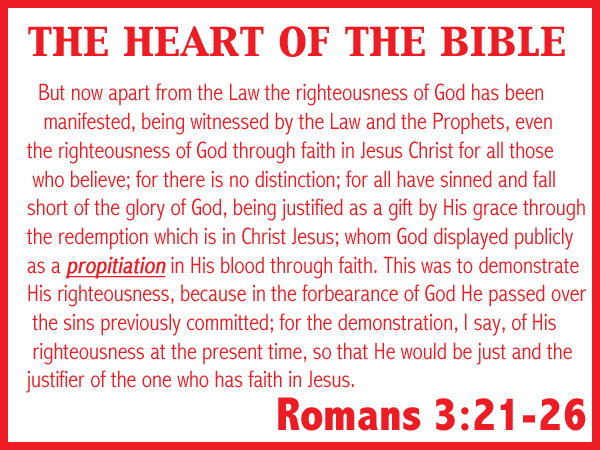


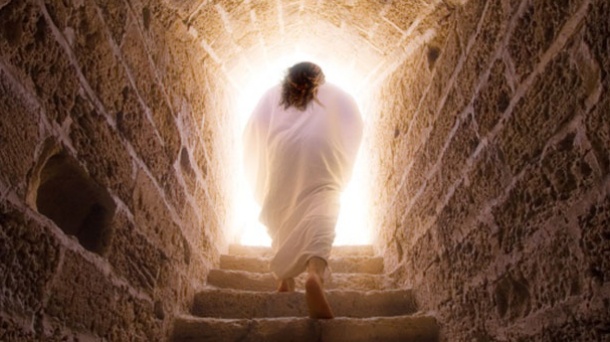





 Loving God, Living God, Loving Hope, Living Hope, Loving Living Life His Way! "Many things are possible for the person who has hope. Even more is possible for the person who has faith. And still more is possible for the person who knows how to love. But everything is possible for the person who practices all three virtues." - Brother Lawrence (1605-1691), Practicing the Presence of God (1692).