When We Feel Stuck, When We Are Not At All Convinced We Can Still Make a Difference With Our Life. John 21:15-19

John 21:15-19 Amplified Bible

The Love Motivation

15 So when they had finished breakfast, Jesus said to Simon Peter, “Simon, son of John, do you love Me more than these [others do—with total commitment and devotion]?” He said to Him, “Yes, Lord; You know that I [a]love You [with a deep, personal affection, as for a close friend].” Jesus said to him, “Feed My lambs.” 16  Again He said to him a second time, “Simon, son of John, do you love Me [with total commitment and devotion]?” He said to Him, “Yes, Lord; You know that I love You [with a deep, personal affection, as for a close friend].” Jesus said to him, “Shepherd My sheep.” 17 He said to him the third time, “Simon, son of John, do you love Me [with a deep, personal affection for Me, as for a close friend]?” Peter was grieved that He asked him the third time, “Do you [really] [b]love Me [with a deep, personal affection, as for a close friend]?” And he said to Him, “Lord, You know everything; You know that I love You [with a deep, personal affection, as for a close friend].” Jesus said to him, “Feed My sheep.

Our Times Are in His Hand

18 I assure you and most solemnly say to you, when you were younger you dressed yourself and walked wherever you wished; but when you grow old, you will stretch out your hands and arms, and someone else will dress you, and carry you where you do not wish to go.” 19 Now He said this to indicate the [c]kind of death by which Peter would glorify God. And after saying this, He said to him, “Follow Me [walk the same path of life that I have walked]!”

The Word of God for the Children of God.

Adeste Fideles! Laeti Triumphantes! Venite Adoremus! Dominum.

Gloria! In Excelsis Deo! Alleluia, Alleluia, Alleluia, Amen.

(Psalm 144:4) Man is like a mere breath;
His days are like a shadow that passes away.

Perhaps there exists something so natural to us we take it too much for granted.

Perhaps that something which so very natural to us is our time alive, our time allotted to us by God to simply breathing and moving and living on this earth.

Do we take the time to ponder exactly how Time is so precious — time with our families, children, parents, friends, brothers and sisters in Christ – With God?

How do we invest our time?

When do we invest our time?

Where do we invest our time?

With whom do we invest our time?

Why do we invest our time with whomever we invest our times?

You know, when it comes right down to it, getting back to the basics of life, our time with God and each other is really more valuable than the money we invest.

Once the present time and its opportunities are gone, they can’t be reclaimed.

So as we begin each day, as we look at the sunshine through the rain, perhaps contemplate “time management” “thought management,” ask God we will be able to “know His time,” to see it for what it is, to use it for its greatest good.

Irretrievably so, time – God’s Time” passes quickly, like the shadows of early evening, it’s not long before it is absorbed into the gathering darkness of night.

When We Feel “Forever Stuck” In The Moment?

From time to time, while in the process of drafting a new devotional, I find myself in a deep mental conundrum – my mind and my spirit seem to go blank.

The kind of blankness I so desperately want to escape, but as every cliched movie villain always says, “escape is futile, resistance to change is futile”

Sometimes the same conundrum affects me on an emotional level, even spiritually – what difference is anything I write about a particular subject I believe the Holy Spirit provides, going to make in anyone I truly care about?

I feel a certain way and don’t want to, but the villain tells me yet again, escape is futile – In other words, I’m feeling stuck in my moment- or so I tell myself.

The first kind of hindrance is writer’s block, something every author eventually faces during his or her artistic pursuits.

Then there’s the kind of barrier we can all relate to, where we’re looking for a change on an emotional or spiritual level, but find ourselves confused, maybe even miserable – we are longing for answers but find none – That’s a life block.

We encounter them in our relationship with God, with each other.

We find them on the job and at home and on vacations.

We find them in ourselves and of ourselves.

In other words, we contend with a seemingly insurmountable problem; but only to us, the problem is not seemingly, but definitely perceived as insurmountable.

We’re stuck in a moment of time, or in a memory, or so we will take great pains to try to sell it that way to ourselves.

Escape is futile, we keep talking to ourselves and therefore we come to believe.

Yet, the reality is, deep down, we know the movie villain is 100% exaggerating.

For the dramatic effect and for their audiences, they will always exaggerate.

There is a way through the barrier, a way to get unstuck, a way back to writing those stories, transforming perspectives, having the right perspective of God.

Though the frustration and confusion may be too deep, ceaseless, unrelenting, too aggravating, too anger provoking, the solution is simple and two-fold.

First, take a break; not in the sense of giving up, but in the sense of ending your striving.

There’s only so much we can control in our lives.

The sooner we realize this, the more peace we will find.

After you take a break, either wait or look for inspiration.

Sometimes finishing a devotional requires that I stop writing for ten minutes so that I can go for a walk or have a quick moment to wander around my home.

Sometimes finishing a devotional requires me to temporarily set it aside, to pray to God and then as God will’s it, come back after a day or longer.

That time off from the writing effort is useful for conjuring up, discerning new ideas, letting the Holy Spirit work and gaining insight from God or other people.

Creating distance from the problem at hand often helps with developing a more objective perspective.

The same applies when we’re navigating relational conflict, battling addiction, battling mental health issues, family issues or just trying to discern God’s will.

After we take a break from all the struggles of doing things our own way, we can find “Father, Son and Holy Spirit” inspiration for tackling our circumstances.

Proverbs 16:1-4 Amplified Bible

Contrast the Upright and the Wicked

16 The plans and reflections of the heart belong to man,
But the [wise] answer of the tongue is from the Lord.

All the ways of a man are clean and innocent in his own eyes [and he may see nothing wrong with his actions],
But the Lord weighs and examines the motives and intents [of the heart and knows the truth].

[a]Commit your works to the Lord [submit and trust them to Him],
And your plans will succeed [if you respond to His will and guidance].

The Lord has made everything for its own purpose,

Even the wicked [according to their role] for the day of evil.

Inspiration comes only through our connection to God, sometimes through people, sometimes through nature, and sometimes through so much more.

Inspiration also finds us through God’s Word, the wisdom of the Cross, and a visit from Jesus helping us see with a perspective that doesn’t come naturally.

Stuck in His Guilt, Peter is Restored to Discipleship

John 21:18-19 Amplified Bible

Our Times Are in His Hand

18 I assure you and most solemnly say to you, when you were younger you dressed yourself and walked wherever you wished; but when you grow old, you will stretch out your hands and arms, and someone else will dress you, and carry you where you do not wish to go.” 19 Now He said this to indicate the [a]kind of death by which Peter would glorify God. And after saying this, He said to him, “Follow Me [walk the same path of life that I have walked]!”

On the night Jesus was arrested, Peter had instantly revoked his discipleship.

Under threat of arrest and exposure and potential death sentence, by those in the courtyard he had denied three times that he was a follower of Jesus – each time he publicly proclaimed his denials more desperate than the previous one.

Luke 22:54-62 Amplified Bible

Peter’s Denials

54 Then they seized Him, and led Him away and brought Him to the [elegant] house of the [Jewish] [a]high priest. And Peter was following at a [safe] distance. 55 After they had kindled a fire in the middle of the courtyard and had sat down together, Peter sat among them. 56 And a servant-girl, seeing him as he sat in the firelight and looking intently at him, said, “This man was with Him too.” 57 But Peter denied it, saying, “Woman, I do not know Him!” 58 A little later someone else saw him and said, “You are one of them too.” But Peter said, “Man, I am not!” 59 After about an hour had passed, another man began to insist, “This man was with Him, for he is a Galilean too.” 60 But Peter said, “Man, I do not know what you are talking about.” Immediately, while he was still speaking, a rooster crowed. 61 The Lord turned and looked at Peter. And Peter remembered the word of the Lord, how He had told him,  “Before a rooster crows today, you will deny Me three times.” 62 And he went out and wept bitterly [deeply grieved and distressed].

Again, to emphasis, the power of the moment, its deep significance, when he realized what he had done, he went out and wept bitterly (Matthew 26:69-75).

In that moment frozen forever in time, He was indescribably overwhelmed by incalculable shame and immeasurable guilt.

Luke 24:36-43 Amplified Bible

Other Appearances

36 While they were talking about this, Jesus Himself [suddenly] stood among them and said to them, “Peace be to you.” 37 But they were startled and terrified and thought that they were seeing a spirit. 38 And He said, “Why are you troubled, and why are doubts rising in your hearts? 39 Look at [the marks in] My hands and My feet, [and see] that it is I Myself. Touch Me and see; a spirit does not have flesh and bones, as you see that I have.” 40 After saying this, He showed them His hands and His feet. 41 While they still did not believe it because of their joy and amazement, He asked them, “Do you have anything here to eat?” 42 They gave Him a piece of broiled fish, 43 and He took it and ate it in front of them.

Even as Peter with the other disciples in the Upper Room, heard the words from the resurrected Jesus – “Peace be To You,” the question – “why are you troubled and why are doubts rising in your hearts,” having been offered the opportunity to look at the marks in His hands and feet, to even touch them for his own self,

We can say that Peter’s heart, despite all of the irrefutable evidence offered by the resurrected Jesus to the contrary, Peter kept significant doubts of himself.

He looked directly into his Messiah’s eyes when he betrayed Him and wept bitterly and inconsolably – only an exchange of words with eye to eye contact would make any significant and lasting difference which did not happen here.

Such a moment required utmost discretion couples with the utmost presence of God in Christ and the utmost intimacy and the utmost compassion, forgiveness.

Jesus comes to the lakeshore.

After breakfast, Jesus and Peter together, go much further down the beach.

Jesus quietly looked into Peter’s eyes and quietly asked Peter a few questions.

But the questions were not “What were you thinking?” “Why did you abandon me when I needed you?” or “Why didn’t you have the guts to stick up for me?”

It was simply “Do you love me?”

Jesus had died on the cross for Peter’s sins.

What Jesus wanted to know now was only whether or not Peter still loved him.

Peter’s sins were in the past; Peter’s expression of love would shape his future.

When Peter said, “Yes, Lord, you know that I love you,”

Jesus, the conqueror of sin and death and the Lord of life, graciously invited him to take up his discipleship again and forgiven, follow him into the future.

Doing the same with us, Jesus is astonishingly gracious.

He doesn’t bring up our past sins, betrayals, or infidelities.

He simply wants to know if we love him.

He simply wants to know, to hear He can still make a difference in Peter’s life.

He simply wants to hear Peter acknowledge he still believed in himself, in his ability to move through and beyond his transgressions, to make a difference in the lives he will come to engage with until his own death at some future point.

Did Peter believe, though still being stuck in the brutality of his mistakes, he could still make a significant difference, significant impact in God’s kingdom?

Forward through the Ages for Christ’s sake – for that makes all the difference.

Whatever horrendous mess you might be stuck in now, are you seeking Jesus?

Forward in His Forgiveness, Forward through the Ages,

Do you Still love Him as He still loves you?

Will you still serve Him as He first Served you (Mark 10:35-45, Luke 19:9-10)?

Micah 6:6-8 Amplified Bible

What God Requires of Man


With what shall I come before the Lord [to honor Him]
And bow myself before God on high?
Shall I come before Him with burnt offerings,
With yearling calves?


Will the Lord be delighted with thousands of rams,
Or with ten thousand rivers of oil?
Shall I present my firstborn for my acts of rebellion,
The fruit of my body for the sin of my soul?


He has told you, O man, what is good;
And what does the Lord require of you
Except to be just, and to love [and to diligently practice] kindness (compassion),
And to walk humbly with your God [setting aside any overblown sense of importance or self-righteousness]?

He invites us to go out and serve him today!

Steadfast and Immovable Gracious and Compassionate In Him.

In the name of God, the Father and God the Son and God the Holy Spirit,

Let us Pray,

Eternal God, please give me the wisdom to use the time given me today to do what is best, right, good, and profitable for Your Kingdom. I want to better invest my time in what is truly enduring and redemptive and transformative, living in and loving out from the depths of resurrection, from the depths of your mercy and forgiveness for all my sins. Please help me use my time to influence and bless all those with whom I may interact with so that they too are brought closer to you. In Jesus’ name, I pray.

Adeste Fideles! Laeti Triumphantes! Venite Adoremus! Dominum.

Gloria! In Excelsis Deo! Alleluia, Alleluia, Alleluia, Amen.
https://translate.google.com/

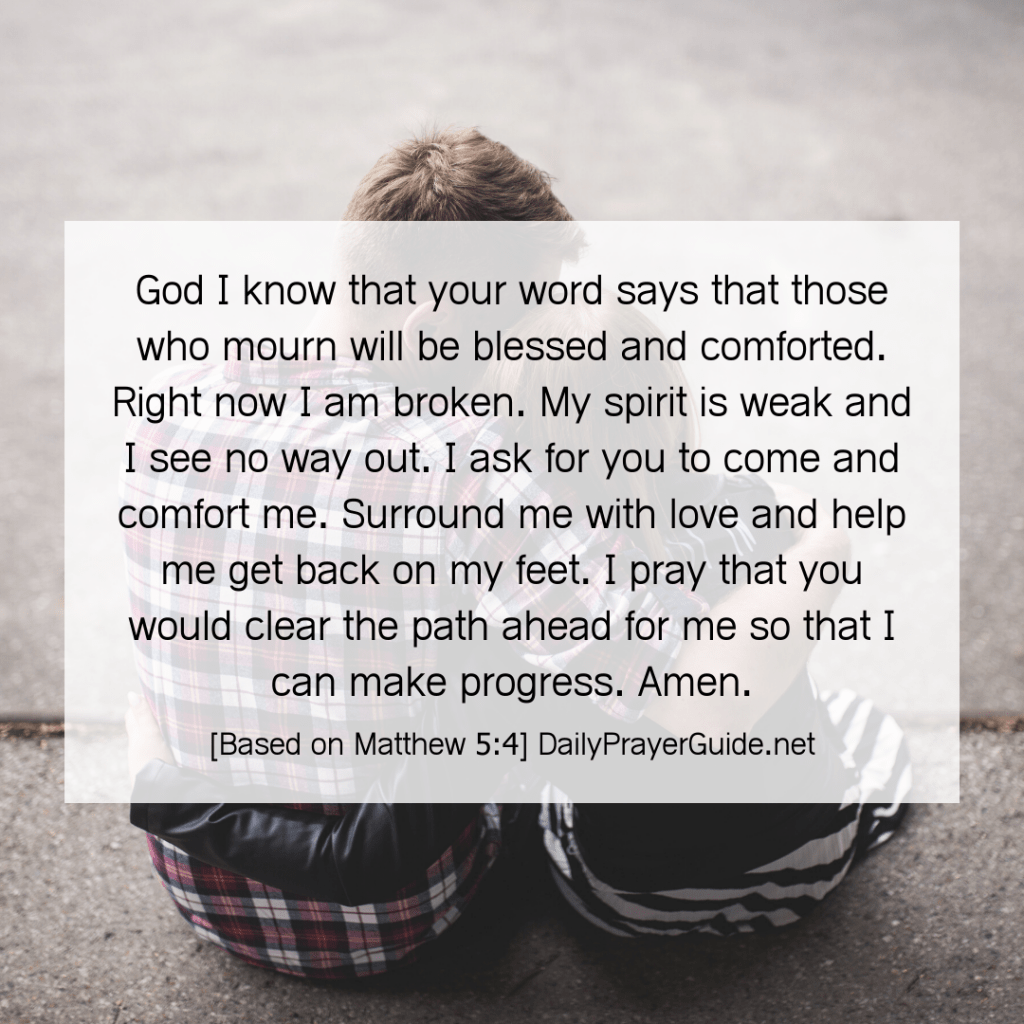
What Jesus Did! ‘Beyond Mourning’ ‘Beyond our Grieving’— Matthew 5:4

The Apostle Paul wrote to the Christians at Rome, at the very center of greatest human sufferings, where Christians were subject to great, sudden persecution, where they could be randomly arrested, separated from their families, arrested as whole families and thrown into prison. A prison which all too often would result in their being a part of the “gladiatorial spectacle” Christians versus Gladiators, Christians versus wild animals, Christians versus fiery Crucifixion.

He wrote in the midst of all that: Romans 12:9-13 Amplified, 9 Love is to be sincere and active [the real thing—without guile and hypocrisy]. Hate what is evil [detest all ungodliness, do not tolerate wickedness]; hold on tightly to what is good. 10 Be devoted to one another with [authentic] brotherly affection [as members of one family], give preference to one another in honor; 11 never lagging behind in diligence; aglow in the Spirit, enthusiastically serving the Lord; 12 constantly rejoicing in hope [because of our confidence in Christ], steadfast and patient in distress, devoted to prayer [continually seeking wisdom, guidance, and strength], 13 contributing to the needs of God’s people, pursuing [the practice of] hospitality.

Paul told Christians in Rome, “Weep with those who weep” (Romans 12:15).

Mankind faces sadness and suffering from every which direction. Disciples face great sadness for many reasons. Discipleship is not about always being happy.

It’s about following the path of Jesus who was “a man of sorrows, acquainted with deepest grief” (Isaiah 53:3). He surrendered his rights in order to bless others. He surrendered his life in order to forgive the very ones crucifying him. He saw through the facades of his culture and felt the indescribably real needs of people whether they were ill, possessed, or simply blind or lame to the truth.

To be a Christian — a disciple of Jesus — means to care about people, their problems, and to “weep with those who weep.” Such mourning means comfort. Our sufferings, hardships, and struggles will melt away in the eternal light of God’s presence and grace. Our heartbreak for those broken in our world will be replaced with rejoicing when many we love to join us at God’s side eternally. Those who mourn, who are deeply sad, they will be immeasurably comforted!

Matthew 5:4Amplified Bible

“Blessed [forgiven, refreshed by God’s grace] are those who mourn [over their sins and repent], for they will be comforted [when the burden of sin is lifted].

The Word of God for the Children of God. Gloria! In Excelsis Deo! Alleluia! Amen.

God cares about you and me with an unmatchable intensity.

God loves you and me with an unmatchable intensity.

God cries with you and me with an unmatchable intensity.

God collects yours and mine tears in a bottle against the day we meet Him.

Jesus cries with you and me with an intensity we cannot match.

Jesus cries the tears we cannot cry but long to cry with an unmatchable intensity.

Jesus mourns over you and me with an intensity we cannot ever hope to match.

God the Holy Spirit grieves with you, and alongside of you, intercedes on your behalf with unmatchable intensity.

What won’t the Father, Son and Holy Spirit do to demonstrate their unmatchable, unequivocal capacity to absolutely care, have absolute compassion for you and me?

You mourn and I mourn with an intensity that longs to be unleashed, and unmatchable.

What won’t we do to return that unmatchable, unequivocal compassion toward us?

God, our Father Cares,

Our Savior Jesus Cares,

God the Holy Spirit Cares,

We care too – there is never to be any question about “Christian” measures of caring. Our desired measure is to care and have compassion for others on God’s level. This is not achievable nor even reachable, but it is still the struggle of our struggles to care for all others as God, the Father, God the Son and God the Holy Spirit the same way, with the same unmatchable intensity as He cares for us all.

O’ for the grace to Love God More!

O’ for the Grace to Love our neighbors as we Love God before we love ourselves.

O’ for the grace to have uncompromising, unyielding, unmatchable compassion on our fellow man as God has uncompromising, unyielding compassion for us.

Matthew 5:4 Amplified Bible

“Blessed [forgiven, refreshed by God’s grace] are those who mourn [over their sins and repent], for they will be comforted [when the burden of sin is lifted].

The prerequisite to receiving God’s comfort is that we mourn. It’s not wrong to grieve and we need to give ourselves permission to feel the pain of our losses.

Yet we don’t mourn “like the rest of men, who have no hope” (1 Thessalonians 4:13). Our mourning is different because of our hope in Jesus who has overcome the power of death. And also, because Jesus is our High Priest who has shared our humanity and is able to sympathize with us (Hebrews 4:15). At Lazarus’ graveside, Jesus entered into the pain of the moment, and wept. He showed us that tears and grief are part of the process of coming to terms with our losses.

Even when we experience smaller losses, we still need to acknowledge the pain and mourn. The “stiff-upper-lip mentality” isn’t God’s idea. I once heard a worship leader make this comment, “Let the hurts of a lifetime flow into his nail-scarred hands.” Once we have felt the pain, we are then free to let it go. Even then it’s a marathon process of navigating between a level ground and “vehicle swallowing” potholes and pitfalls and is never an instant painkiller.

Being a Christian doesn’t guarantee us a life without tragedy but being a Christian means we have access to God’s resources. He promises us his comfort when we mourn, but if we don’t mourn, we can’t receive God’s comfort.

God encourages us to come to his “throne of grace with confidence so that we may receive mercy and find grace to help us in our time of need” (Hebrews 4:16).

We mourn with an unmatched intensity for those not in covenant relationship with Father, Son and Holy Spirit. We grieve, we cry for those who God cried for.

Psalm 130 The Message

130 1-2 Help, God—I’ve hit rock bottom!
    Master, hear my cry for help!
Listen hard! Open your ears!
    Listen to my cries for mercy.

3-4 If you, God, kept records on wrongdoings,
    who would stand a chance?
As it turns out, forgiveness is your habit,
    and that’s why you’re worshiped.

5-6 I pray to God—my life a prayer—
    and wait for what he’ll say and do.
My life’s on the line before God, my Lord,
    waiting and watching till morning,
    waiting and watching till morning.

7-8 O Israel, wait and watch for God—
    with God’s arrival comes love,
    with God’s arrival comes generous redemption.
No doubt about it—he’ll redeem Israel,
    buy back Israel from captivity to sin.

Blessed Are the Mourners

What is the type of mourning that Jesus is looking for as characteristics of people who enter into the kingdom of heaven?

Is God saying that we all just need to be sad all of the time to be citizens of his kingdom? Sadness is not the concept that we see in the scriptures. There is a time and season of mourning that is needed but it is not being sad for sadness’ sake. The scriptures give us a clear picture of the mourning that Jesus desires.

Draw near to God, and he will draw near to you. Cleanse your hands, you sinners, and purify your hearts, you double-minded. Be wretched and mourn and weep. Let your laughter be turned to mourning and your joy to gloom. (James 4:8–9 ESV)

My eyes shed streams of tears, because people do not keep your law. (Psalm 119:136 ESV)

God wants a mourning over sin.

The first statement of blessing in the Sermon on the Mount was the blessed were those who were poor in spirit. These are people who recognize their sinfulness. These are people who see their sin and know that there is nothing they can do before God to redeem themselves. They are the people like the tax collector who simply say, “God, be merciful to me, a sinner!”

Those who are in the kingdom of heaven are those who are stripped of all self-righteousness, self-sufficiency, and self-security. Now let us consider for a moment: if we are doomed because of our sins with nothing that we can offer to God to save ourselves or redeem ourselves, then what does God desires but those who mourn over their sinfulness.

When someone comes to me and they have done something wrong, it matters greatly if they are sorrowful for what they have done. If they do not care about their violation, then that will receive a very different response from me as a parent than if the children 1000% care about their violation and is remorseful.

This is the kind of mourning that God desires of his people. Notice again that the Beatitudes follow Isaiah 61, a prophecy about the coming Messiah and what he would do.

The Spirit of the Lord God is upon me, because the Lord has anointed me to bring good news to the poor; he has sent me to bind up the brokenhearted, to proclaim liberty to the captives, and the opening of the prison to those who are bound; to proclaim the year of the Lord’s favor, and the day of vengeance of our God; to comfort all who mourn; to grant to those who mourn in Zion— to give them a beautiful headdress instead of ashes, the oil of gladness instead of mourning, the garment of praise instead of a faint spirit; that they may be called oaks of righteousness, the planting of the Lord, that he may be glorified. (Isaiah 61:1–3 ESV)

Notice that Christ has come to “bind up the brokenhearted” and “to comfort all who mourn.” The grace of God is to melt our hearts in the face of our sins, causing us to be sorrowful and full of shame. True mourning focuses on what we have done to our God, how we have violated his very nature and character.

We mourn because we grasp the profound loss in our lives because we have separated ourselves from God because of our sins. Think about the faithful people of God that we read about in and throughout the scriptures. Think about some of the powerful confessions of sin contained in the Psalms. These people do not excuse their sins. They do not belittle their sins or ignore their sins. They cry with an unmatched remorse over their sins. They do not make excuses but deeply mourn over what they have done. This is what God has always wanted.

The sacrifices of God are a broken spirit; a broken and contrite heart, O God, you will not despise. (Psalm 51:17 ESV)

All that God has wanted was for people to recognize their sinfulness (poor in spirit) and then mourn over those sins. Listen how God declared this truth through the prophecy of Jeremiah.

Also, on your skirts is found the lifeblood of the guiltless poor; you did not find them breaking in. Yet in spite of all these things you say, ‘I am innocent; surely his anger has turned from me.’ Behold, I will bring you to judgment for saying, ‘I have not sinned.’ (Jeremiah 2:34–35 ESV)

Go, and proclaim these words toward the north, and say, “’Return, faithless Israel, declares the Lord. I will not look on you in anger, for I am merciful, declares the Lord; I will not be angry forever. Only acknowledge your guilt, that you rebelled against the Lord your God and scattered your favors among foreigners under every green tree, and that you have not obeyed my voice, declares the Lord. (Jeremiah 3:12–13 ESV)

Notice what Jeremiah says the problem was. In Jeremiah 2 God says he will bring them into judgment, not because they have sinned, but because they refuse to acknowledge that they have sinned. The same plea is made in Jeremiah 3. They just needed to acknowledge their guilt and rebellion and God would be merciful toward them. But they refused to mourn over their sins.

You will notice that the mourning over sins is tied very closely with confession of sins and repentance. Listen to Ezekiel’s prophecy and then Joel’s prophecy.

And the Lord said to him, “Pass through the city, through Jerusalem, and put a mark on the foreheads of the men who sigh and groan over all the abominations that are committed in it.” (Ezekiel 9:4 ESV)

“Yet even now,” declares the Lord, “return to me with all your heart, with fasting, with weeping, and with mourning; and rend your hearts and not your garments.” Return to the Lord your God, for he is gracious and merciful, slow to anger, and abounding in steadfast love; and he relents over disaster. (Joel 2:12–13 ESV)

God gave the same message in Ezekiel and Joel. In Ezekiel, the people who are mourning over the sins of the city are marked for spiritual protection, but the rest are doomed. In Joel, God tells the people to tear their hearts!

Come to God in mourning, weeping, and fasting and God will receive you.

Jesus is teaching the same principle of the kingdom in Matthew 5:4.

In Dr. Luke’s account, Jesus taught what happens to those who do not mourn over their sins now. Woe to you who laugh now, for you shall mourn and weep. (Luke 6:25 ESV) If you will not be broken by your sins and weep for them now but take pleasure in your sins now, you will be made to mourn and weep in the coming judgment.

Blessed, For They Shall Surely Be Comforted

Rather than ignoring our sins or excusing our sins, God wants mourning for our sins. God does not want fake contrition, but heart wrenching pain over our sins. But notice the blessing that comes to those who truly mourn over their sins. They shall be comforted. If we return to Isaiah’s prophecy we see this imagery.

The Spirit of the Lord God is upon me, because the Lord has anointed me to bring good news to the poor; he has sent me to bind up the brokenhearted, to proclaim liberty to the captives, and the opening of the prison to those who are bound; to proclaim the year of the Lord’s favor, and the day of vengeance of our God; to comfort all who mourn; to grant to those who mourn in Zion— to give them a beautiful headdress instead of ashes, the oil of gladness instead of mourning, the garment of praise instead of a faint spirit; that they may be called oaks of righteousness, the planting of the Lord, that he may be glorified. (Isaiah 61:1–3 ESV)

The brokenhearted are healed. The mourners are comforted. The mourners are granted a beautiful headdress or crown and the oil of gladness. They are given the garment of praise and called oaks of righteousness that are planted by the Lord. Jesus’ purpose is to come with comfort for those who are crushed by their sins. Notice this point was made when baby Jesus was brought into the temple.

Now there was a man in Jerusalem, whose name was Simeon, and this man was righteous and devout, waiting for the consolation of Israel, and the Holy Spirit was upon him. (Luke 2:25 ESV)

Jesus came to bring comfort and consolation to sinners. There is no comfort to those who deny their sins. There is no consolation to those who act like their sins are no big deal. Comfort is to those who are broken by sins.

Think about Luke 7:36-50 where we see the sinful woman weeping over the feet of Jesus. Jesus said to her, “Your sins are forgiven.” To the woman caught in adultery in John 8 Jesus said to her, “Neither do I condemn you. Go and from now on sin no more.” Do you see that Jesus is the comfort to the sinners?

Christian maturity is a growing and maturing sorrow over our sins. We do not deny our weakness or our sinfulness.

Rather, we accept our guilt, confess our sins, and mourn over our actions. The mourners are comforted because only they will have their sins forgiven.

Understanding the unyielding grace of God will only lead us to a greater sorrow over our sins. It is our sins that caused Jesus to go to the cross and die for us.

We mourn our sinfulness and then stand amazed at the grace of God to comfort us with forgiveness because we love him so much. Forgiveness is given to the brokenhearted. Forgiveness is offered to the contrite. Forgiveness is extended to those who are crushed by their sins. Mercy and Compassion are all available.

What is it we mourn as God mourns over today?

What is it which causes us to cry with an unmatched intensity?

Ponder the words: Beyond Grieved, Beyond Mourning, Beyond Blessed, Beyond Comforted, Echelons Beyond my tears …. Beyond my perceived hopelessness ….

Bring Christ your broken life today and submit to his sovereignty and ways.

In the name of God, the Father and God the Son and God the Holy Spirit,

Let us Pray,

Heavenly Father, I have just been diagnosed with an incurable disease called ‘sin’. I am worn out, long scared, and depressed from fighting against it. I don’t know where to turn to, but I know you’re with me always. Fight my battles, dear Lord rescue me from this pit and help me to walk in the divine health that Jesus died on the cross for me to have. Uproot fear from my heart and help me to walk in boldness, knowing that the final report comes only from You. In Jesus’ name, I grieve! I mourn! I plead and cry unto You and I want to believe and pray, Amen

https://translate.google.com/