Governor Pilate, The Gathering Mobs, Almighty God: Please Choose This Day What You Will Do Now With My Jesus! Luke 23:13-25

For the Roman governor Pilate, it was not that he might have known better if he’d just had more information. It was not that he might have acted differently if he’d had a better understanding of how things worked among the people he ruled in the province of Judea. The case that confronted Pilate was not vague or unclear.

Several times Pilate gave the Jewish high priests the chance to submit all the evidence they could. Repeatedly Pilate recognized that the evidence added up to no case at all under Roman law.

Pilate had personally interrogated Jesus. Perhaps he figured that something Jesus might say would prove incriminating, even if the priests’ evidence had not. After these thorough reviews, Pilate returned each time with the same judgment. There has been no crime; there is no basis for charges, no reason for a sentence of any kind. The obvious legal outcome of this case was to release the defendant.

But Pilate sentenced Jesus to death by crucifixion. Why? Because he recognized the power of the priests. They could make or break his governorship; they could cooperate in keeping things running smoothly in Judea, or they could make things difficult. Jesus had no power that mattered to Pilate. Jesus could be discarded, dispensed with.

And so he was, and in God’s design, for the sake of all of us.

Luke 23:13-25 The Message

13-16 Then Pilate called in the high priests, rulers, and the others and said, “You brought this man to me as a disturber of the peace. I examined him in front of all of you and found there was nothing to your charge. And neither did Herod, for he has sent him back here with a clean bill of health. It’s clear that he’s done nothing wrong, let alone anything deserving death. I’m going to warn him to watch his step and let him go.”

18-20 At that, the crowd went wild: “Kill him! Give us Barabbas!” (Barabbas had been thrown in prison for starting a riot in the city and for murder.) Pilate still wanted to let Jesus go, and so spoke out again.

21 But they kept shouting back, “Crucify! Crucify him!”

22 He tried a third time. “But for what crime? I’ve found nothing in him deserving death. I’m going to warn him to watch his step and let him go.”

23-25 But they kept at it, a shouting mob, demanding that he be crucified. And finally they shouted him down. Pilate caved in and gave them what they wanted. He released the man thrown in prison for rioting and murder, and gave them Jesus to do whatever they wanted.

The Word of God for the Children of God.

Adeste Fideles! Laeti Triumphantes! Venite Adoremus! Dominum.

Gloria! In Excelsis Deo! Alleluia, Alleluia, Alleluia, Amen.
Imagine a Moment: When a Decision Has to Be Made

As governor over Judea, Pontius Pilate was responsible for maintaining order and quelling civil disruption within his jurisdiction.

He was accustomed to using and wielding his power and influence to determine the outcome for any issue brought before him, those awaiting their sentence.

But imagine if you can the undeniable tension of Jesus’ arrival in his courtroom which immediately confronted Gov. Pilate with the greatest dilemma of his life.

Accompanied by a large crowd of religious officials, with the gathering of the mob of people curious at what is going on, Jesus was now brought before Pilate.

When Pilate pressed the mob and asked them explicitly, “What evil has he done?” all they seemed able to do was to raise their chorus of voices louder.

Now, I have always been taught that a raised voice is often indicative of a weak or non existent argument.

King Herod had examined Jesus and found Jesus was no threat and sent him back to Pilate for his final judgement.

Governor Pilate knew that Jesus was innocent, there were no charges to be brought against Jesus and so he essentially declared to all those assembled, 

“I find no guilt in this man. 

But the cries of the Temple Authorities and the crowd grew more demanding and more insistent, and more threatening to the authority of Pilate and Peace in the land and I can hear how Pilate must have started big time doubting himself, asking himself, “I have to decide now, What can I do with this Jesus of Nazareth?

“Not Guilty” But Being Sentenced to Die Anyway

Essentially, Governor Pilate, the chief political authority had to decide in that exact moment; “What do I do now with this wild mob, this innocent man Jesus?”

“Yield to the obviously right thing to do – to release an innocent Man?”

“Yield to the Temple Authorities whom he must still peacefully govern Judea?”

“Yield to the growing unrest of the gathered mob who were probably unaware or generally uninformed or minimally educated of the whole purpose of the gathering or like the Temple Authorities, wanted Jesus to be gone from their midst because they were more afraid of Caesar and his well trained Armies?”

“Yield to the Ultimate Authority and absolute Sovereignty of God without whom Governor Pontius Pilate would have no authority over anyone (John 19:11)?”

Pilate wanted to release Jesus.

He knew that he should release Jesus.

The Political Pilate had all the political authority he needed to release Jesus.

But Pilate instead capitulated to his desire to placate the crowd and to maintain favor with the religious leaders, and the voices of the frenzied throng prevailed.

Governor Pilate’s dilemma is not unfamiliar to us.

In fact, it is the great dilemma that confronts men and women in authority: having that authority, wielding that power, what to do with Jesus of Nazareth.

Pilate came face-to-face with the Son of God and heard His testimony from His own lips—and still he chose the world, all of the noise of that rising crescendo attached to the “mob mentality” over bending his knee to the King of kings.

Political Decisions made at the highest levels of Government swaying to those who make the loudest noise, threaten the greatest violence to peace in the land.

“100% Pro” God, the Father and God the Son and God the Holy Spirit?

“100% Crucify” God, the Father, God the Son and God the Holy Spirit?

Who do we fear the most?

The Authority and the Armies of Caesar?

What do we value the most?

The loss of our own authority, the loss of our control, the loss of our jobs?

What becomes our Steadfast and Immovable, Unyielding Affirmation of Faith?

No matter what or who may come, we value the Lord our God over everything?

Deuteronomy 6:4-9 The Message

Attention, Israel!

God, our God! God the one and only!

Love God, your God, with your whole heart: love him with all that’s in you, love him with all you’ve got!

6-9 Write these commandments that I’ve given you today on your hearts. Get them inside of you and then get them inside your children. Talk about them wherever you are, sitting at home or walking in the street; talk about them from the time you get up in the morning to when you fall into bed at night. Tie them on your hands and foreheads as a reminder; inscribe them on the doorposts of your homes and on your city gates.

Or we let the political authorities and the noise of every single mob who comes to threaten our peace, threaten our belief systems with shouts of “crucify him?”

What was God Doing in that “Pressure Cooker?”

Even with and within all of that adverse pressure of the moment, In Jesus’ sentencing, God’s eternal plan of salvation unfolded in a moment in time.

Jesus always claimed the absolute sovereignty of God over him and everything else including the weight of the politics and the violent intentions of the mob.

Jesus was unwavering in his stated beliefs that God absolutely remained God.

No matter what else happened to him, God was always in absolute command.

Jesus knew he had no reason to be afraid of what would happen to him.

The Temple Authorities were not ever going to change their minds.

The mob was not going to lessen their call for crucifixion one tiny bit.

If anything, the mob would only get bigger and even significantly louder.

Jesus knew the truth, the whole truth ,nothing but the truth of Almighty God.

Jesus was not accused and condemned for His own sin.

He was not dying for Himself.

He was dying for us.

He who was totally innocent became totally guilty in order that we who are totally guilty might be declared completely innocent. (2 Corinthians 5:21)

All of Pilate’s attempts to dismiss Jesus, to turn Him over for other officials to pass judgment, to wipe his hands clean of the matter, didn’t work.

All of the scorning and violence of the gathered mobs did not compel Jesus to put down his cross and renounce his Father in Heaven, and walk off the stage.

Neither will anyone’s politics.

Neither will anyone’s polling or winning vote count.

Neither will anyone’s Governing political authority or influence cause a believer to renounce their steadfast, immovable, unyielding faith, in their Savior Jesus.

Neither will anyone’s efforts to use the battering ram of “mob mentality.”

Neither will anyone else’s efforts at censorship to dismiss the resurrection.

Our only authentic hope, our only genuinely living hope in life and in our death is to praise, respond in our hearts to the glory of what happened on the cross.

Like Governor Pontius Pilate, we face a choice: either we bow our knee to Christ and His lordship or we capitulate to the pressures of the surrounding culture.

And while that is a choice, decision we make in the privacy of our hearts, it is one that ultimately reveals itself, as it did with Pilate, in what we say when all those around us are urging us to deny the rule or goodness of our Savior Christ.

However loud those voices become,

We too will always have our private and public choices to make,

We will always be pressured by the politics of the moment and the politicians and every single sway and nuances of their political ideologies, to sway us into some range of similar thinking that we would continue to vote then into office.

But ultimately, if you and I are God’s Children, then be ready to stand for Him!

I believe in God,
the Father almighty,
Creator of heaven and earth,
and in Jesus Christ, his only Son, our Lord,
who was conceived by the Holy Spirit,
born of the Virgin Mary,
suffered under Pontius Pilate,
was crucified, died and was buried;
he descended into hell;
on the third day he rose again from the dead;
he ascended into heaven,
and is seated at the right hand of God the Father almighty;
from there he will come to judge the living and the dead.

I believe in the Holy Spirit,
the holy catholic Church,
the communion of saints,
the forgiveness of sins,
the resurrection of the body,
and life everlasting.

Amen.

In the name of God, the Father and God the Son and God the Holy Spirit,

Let us Affirm our Faith and Pray,

Affirmation

I refuse to believe that we are unable to influence the events around us.

I refuse to believe we are bound by the politics of racism, war, and injustice.

I believe those around me are my brother and my sister in Christ Jesus.

I believe in dignity every day and that our brokenness can be healed.

I believe in integrity every day and that God is the Way, the Truth, the Life.

I believe we can overcome oppression and violence, without resorting to it.

This means I seek to know more of God, to reject revenge and retaliation.

I remember, “Hate cannot drive out hate: only the light, love of God can.”

Here we are Lord, 

on our knees,
Crying mercy;
Mercy for our souls,
Mercy for one another,
Mercy for our churches,
Mercy for our nation,
mercy for our world.


Here we are again
Standing in your presence
in awe of you your holiness,
your otherness,
your mystery,
and your incarnation


We stand bringing the needs of our friends, family, church,

community, nation and world to lay at your feet.
We cry out in pain for the struggles of the world.
We cry out for those who are in pain, sick, in the hospital, rehab,

homebound, nursing homes and those on their death bead.
We cry out for the divisions and conflict that seems to be in our lives,

our families, our churches, our communities, our nation and our world.
We cry out for those who live in poverty, those who are starving,

those who are in prisons, and those who live under oppression.

Lord, pour out your mercy
like healing, comforting rain.
Amen. 

Adeste Fideles! Laeti Triumphantes! Venite Adoremus! Dominum.

Gloria! In Excelsis Deo! Alleluia, Alleluia, Alleluia, Amen.

https://translate.google.com/

“and in Jesus Christ, His only Son, our Lord,” Just Who Do We Say Jesus Is? John 1:1-5

When Christians answer the question “Who is Jesus Christ?” they build their answer on the Bible – on things Jesus said about Himself, on prophecies from the Old Testament that foretold His coming, and the doctrines laid out about Jesus Christ and His Church through the rest of the New Testament.

There is little historical question that Jesus Christ existed, but people do often wonder about everything else: His divine nature, His miracles, God’s offer of eternal salvation by grace through Jesus Christ “first to the Jew and also to the Gentile” (Romans 1:16)… in other words, to all of mankind who would believe.

Because the love Jesus offers comes in the form of an “intimately personal relationship, intimately connectional relationship” with Him, many believers have particular definitions, understandings about who Jesus Christ is to them.

I want to try to give you the Biblical basics about this amazing, paradoxical Savior who purports to be simultaneously the Son of God and Son of Man.

The gospel of Jesus is literally “good news,” so we hope you enjoy exploring the miracle and wonder of what the God of all creation did for you through His Son.

John 1:1-5 Amplified Bible

The Deity of Jesus Christ

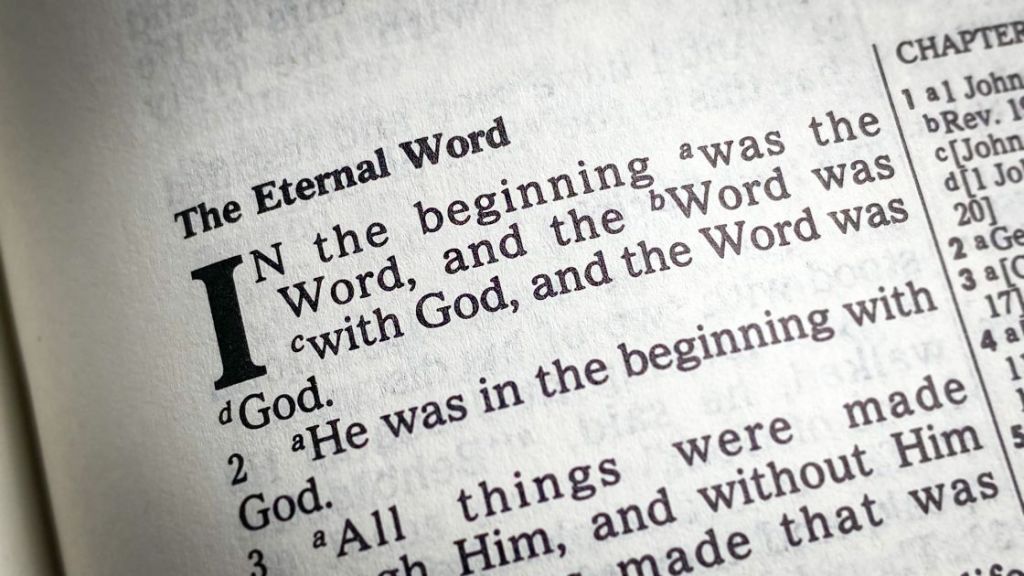
In the beginning [before all time] was the Word ([a]Christ), and the Word was with God, and [b]the Word was God Himself. He was [continually existing] in the beginning [co-eternally] with God. All things were made and came into existence through Him; and without Him not even one thing was made that has come into being. In Him was life [and the power to bestow life], and the life was the Light of men. The Light shines on in the [c]darkness, and the darkness did not understand it or overpower it or appropriate it or absorb it [and is unreceptive to it].

The Word of God for the Children of God.

Adeste Fideles! Laeti Triumphantes! Venite Adoremus! Dominum.

Gloria! In Excelsis Deo! Alleluia, Alleluia, Alleluia, Amen.

I believe in God,
the Father Almighty,
Creator of heaven and earth,
and in Jesus Christ, his only Son, our Lord,

Who is Jesus?

The Deity of Jesus Christ

In the beginning [before all time] was the Word ([a]Christ), and the Word was with God, and [b]the Word was God Himself. He was [continually existing] in the beginning [co-eternally] with God. All things were made and came into existence through Him; and without Him not even one thing was made that has come into being.

John’s Gospel Narrative says without any doubt that Jesus is God.

He declares that Jesus is the Creator of all things.

This accounts for Jesus’ singularly unique and remarkable personality.

He is the originator of all things.

Eight times in the opening chapter of Genesis it says, And God said.” 

God said, Let there be light, and there was light. 

God said, Let there be a firmament between the heavens and the earth and there was. 

God said, Let the earth bring forth trees and vegetation, and these sprang into being.

The Son of God, was speaking into being, what the Father had designed in that amazingly, incredibly, indescribably and also infinitely complex mind of his.

Any scientist who gears their education, who directs their lives into the studies in the natural realm always seem to be astonished when they come to conclude the complexity of life, the marvelous symmetry of things, what lies behind all visible matter, the molecules, the atom, the make-up of a flower or of a star.

The obvious order, design and symmetry of every created thing is astonishing.

We have all sat back at one time or another and wondered at what we have seen through some of the discoveries of science, looked at the stars thru a telescope.

All of that and more was in the thoughts of God, but it never would have been expressed until the Son said it; He spoke and all these things came into being.

So this amazing Man, Jesus of Nazareth, in the mystery of his being, was not only a human being here on earth with us, John’s narrative says, but was the One who in the beginning spoke the very universe we “see” into its existence.

He understands it!

He knows exactly how it functions!

He is able to direct it!

He is able to guard it and to guide it!

He spoke it into being!

Furthermore, John says, Jesus sustains it: 

Without him was not anything made that was made. 

He is essential to it;!

He is what keeps it going!

He is who holds it in existence!

In the first chapter of John, we immediately read: “In the beginning was the Word, and the Word was with God, and the Word was God” (John 1:1).

Throughout the centuries, many have pondered this statement.

What does this mean?

How can somebody be with someone and also be that someone?

So the Overarching Question: Who is Jesus?

Immanuel God with us … Christ the Messiah… The Prince of Peace… The Word made Man… Savior and Lord… The King of Kings… The Lion of Judah… The Lamb of God

When Christians answer the question “Who is Jesus Christ?” they build their answer on the Bible – on things Jesus said about Himself, on prophecies from the Old Testament that foretold His coming, and the doctrines laid out about Jesus Christ and His Church through the rest of the New Testament.

There is little historical question that Jesus Christ existed, but people do often wonder about everything else: His divine nature, His miracles, God’s offer of eternal salvation by grace through Jesus Christ “first to the Jew and also to the Gentile” (Romans 1:16)… in other words, to all of mankind who would believe.

Because the love Jesus offers comes in the form of an “intimately personal relationship, intimately connectional relationship” with Him, many believers have particular definitions, understandings about who Jesus Christ is to them.

I want to try to give you the Biblical basics about this amazing, paradoxical Savior who purports to be simultaneously the Son of God and Son of Man.

The gospel of Jesus is literally “good news,” so we hope you enjoy exploring the miracle and wonder of what the God of all creation did for you through His Son.

Who do we say Jesus Christ is?

Matthew 16:13-17 Amplified Bible

Peter’s Confession of Christ

13 Now when Jesus went into the [a]region of Caesarea Philippi, He asked His disciples, “Who do people say that the Son of Man is?” 14 And they answered, “Some say John the Baptist; others, Elijah; and still others, Jeremiah, or [just] one of the prophets.” 15 He said to them, “But who do you say that I am?” 16  Simon Peter replied, “You are the Christ (the Messiah, the Anointed), the Son of the living God.” 17 Then Jesus answered him, “Blessed [happy, spiritually secure, favored by God] are you, Simon son of Jonah, because flesh and blood (mortal man) did not reveal this to you, but My Father who is in heaven.

The same questions are being asked to this day:

Who does everyone else say Jesus Christ is, but then, who do we say He is?

We must ultimately decide.

It is the perhaps the most important question to settle during our lifetimes, for reasons we will try to examine shortly.

The New Testament book of Hebrews is another source that attempted to answer the same question.

As the Ryrie Study Bible states, “The theme of the book is the superiority of Jesus Christ and thus of Christianity.”

Superior to what?

Among other things: prophets, angels, Moses/The Law, priests, and other powers.

In other words, Jesus Christ is supreme among any thing or any one – even things and people that issue from or are beloved of God.

“For this reason we must pay much closer attention to what we have heard, lest we drift away from it,” says Hebrews 2:1 about the nature of the Messiah’s identity.

This is why even Christians of all theologies continually study these precepts.

It is not merely skeptics, seekers, and unbelievers who benefit from asking the question, “Who is Jesus Christ?”

The Apostle Paul, before his sudden Damascus Road conversion, was known as Saul, a very legalistic Jew who persecuted Christians… until he was confronted with the answer to our question in a most dramatic way, a way that changed his life and the course of history (Please read and study about it in Acts Chapter 9).

After that miraculous conversion experience, Paul would then often refer to himself as a “bond-servant of Christ Jesus,” someone who is little more than a voluntary slave, but one sharing in the same servitude.

In Philippians 1:21 Paul would express his secure devotion to the Lord as well as give another clue towards answering our question when he would write: “For to me, to live is Christ, and to die is gain.” 

You see, finding the answer to “Who Jesus Is to us?” can be an incredibly jarring, topsy-turvy, and life-altering experience – one that sends us back on our heels.

It can also be one which will fill what has always seemed to be missing inside you, since the Father sent His Son to reconcile you to your original purpose – communion with a wonderful, holy Creator.

So as you pursue knowledge of the Savior, consider yourself joyfully warned.

Who Jesus Said He Was

1. He claimed to be the Son of God, equal with God, and with authority from the Father.

“Then they all said, ‘Are You then the Son of God?’ So He said to them, ‘You rightly say that I am’” (Luke 22:70).

“For whoever does the will of My Father in heaven is My brother and sister and mother” (Matthew 12:50).

“Jesus came and spoke to them, saying, ‘All authority has been given to Me in heaven and on earth’” (Matthew 28:18).

“Therefore the Jews sought all the more to kill Him, because He not only broke the Sabbath, but also said that God was His Father, making Himself equal with God” (John 5:17-22).

27 The sheep that are My own hear My voice and listen to Me; I know them, and they follow Me. 28 And I give them eternal life, and they will never, ever [by any means] perish; and no one will ever snatch them out of My hand. 29 [a]My Father, who has given them to Me, is greater and mightier than all; and no one is able to snatch them out of the Father’s hand. 30 I and the Father are One [in essence and nature].” (John 10:27-30)

Bear in mind that while a man claiming to be God is a radical thought, Jesus is the only leader of a world religion to have made the claim – not to mention to have also completely, fully and utterly backed it up.

How?

2. Incredibly, He claimed to live a sinless life.

“Can any one of you convict me of a single misleading word, a single sinful act? But if I’m telling the truth, why don’t you believe me?” (John 8:46, The Message).

Jesus had the ability to sin; if He weren’t able to sin, He could not have been tempted genuinely and would be unable to be our sympathetic High Priest (Hebrews 4:15).

When He was tempted by the devil, He always rebuked the thought with scripture. (Matthew 4:1-11)

Because He didn’t sin, God was able to accept His sacrifice. 

1 Peter 3:18 says, “Christ also suffered once for sins, the just for the unjust, that He might bring us to God, being put to death in the flesh but made alive by the Spirit.”

3. He claimed to be the one and only way to God.

“I am the way, the truth, and the life. No one comes to the Father but by me” (John 14:6).

It’s also interesting to me to note that Jesus did not call himself the destination, but the way, indicating that our Christian walk is a journey.

4. He claimed He had the power to forgive sins and provide everlasting life

“Jesus said to her, ‘I am the resurrection and the life. He who believes in me will live, even though he dies; and whoever lives and believes in me will never die” (John 11:25).

“When Jesus saw their faith, He said, ‘Friend, your sins are forgiven.’ The Pharisees and the teachers of the law began thinking to themselves, ‘Who is this fellow who speaks blasphemy? Who can forgive sins but God alone?’” (Luke 5:20-21).

“For my Father’s will is that everyone who looks to the Son and believes in him shall have eternal life, and I will raise him up at the last day.” John 6:40

“I tell you the truth, he who believes has everlasting life.” (John 6:47).

5. He predicted his own death and resurrection.

“Jesus took the Twelve aside and told them, ‘We are going up into Jerusalem, and everything that is written by the prophets about the Son of Man will be fulfilled. He will be handed over to the Gentiles. They will mock him, insult him, spit on him, flog him and kill him. On the third day he will rise again’” (Luke 18:31-33).

6. He’s said He would come back.

Matthew 24:27-30 “So as the lightening comes from the east and flashes to the west, so will be the coming of the Son of Man… At that time the sign of the Son of Man will appear in the sky, and all the nations of the earth will mourn. They will see the Son of Man coming on the clouds of the sky, with power and great glory.” 

Mark 14:61-62 “Again the high priest asked him, ‘Are you the Christ, the Son of the Blessed One?’ ‘I am,’ said Jesus. ‘And you will see the Son of Man sitting at the right hand of the Mighty One and coming on the clouds of heaven.'” 

Jesus clearly knew He was the Lamb of God, the Messiah spoken of in the Old Testament.

He knew He had to live a life without sin, no matter what.

When He returns, He will judge the sins of the world… except for those who have already acknowledged conviction, entered a plea of guilty, and sought His forgiveness and mercy by believing on Christ. (Psalms 32, 51, Romans 10:9-13)

How the New Testament Answers “Who Is Jesus?”

“So Jesus tried again. ‘When you raise up the Son of Man, then you will know who I am – that I’m not making this up, but speaking only what the Father taught Me. The One who sent Me stays with Me. He doesn’t abandon Me. He sees how much joy I take in pleasing Him’” (John 8:28-29, The Message).

“In the beginning was the Word, and the Word was with God, and the Word was God. He was in the beginning with God. All things came into being by Him, and apart from Him nothing came into being that has come into being” (John 1:1-3, NASB).

“For God so loved the world that he gave his only Son, so that everyone who believes in him will not perish but have eternal life” (John 3:16, NLT).

From The Book of Acts

The Book of the Acts of the Apostles describes how Christianity moved from being seen as a new radical fringe sect of Judaism now into a world religion because the spirit of God moved in the lives of those who had physically witnessed Jesus, and who now carried His message of salvation for all into all the world.

At Pentecost, Peter preaches,

“Let all the house of Israel know for certain that God has made Him both Lord and Christ – this Jesus whom you crucified” (Acts 2:22-36).

From Paul’s Letters

The Apostle Paul wrote numerous letters to the churches he helped establish in southern Europe and Asia Minor, helping to answer questions or solve disputes over Christian theology.

“Therefore having been justified by faith, we have peace with God through our Lord Jesus Christ” (Romans 5:1).

“For no man can lay a foundation other than the one which is laid, which is Jesus Christ” (1 Corinthians 3:11).

“Just as the sufferings of Christ are ours in abundance, so also our comfort is abundant through Christ” (2 Corinthians 1:5).

“It was for freedom that Christ set us free” (Galatians 5:1).

“Husbands, love your wives, just as Christ also loved the church and gave Himself up for her” (Ephesians 5:25).

“Have this attitude in yourselves which was also in Christ Jesus, who, although He existed in the form of God, did not regard equality with God a thing to be grasped, but emptied Himself, taking the form of a bond-servant, and being made in the likeness of men” (Philippians 2:5-7).

“And He is the image of the invisible God, the first-born of all creation” (Colossians 1:15).

From The Book of Hebrews

The Book of Hebrews is about the superiority of Christ – over prophets, angels, Moses, and priests.

He made Himself our High Priest, so that we can all become priests with our own access to the Father.

“God… has spoken to us in His Son, whom He appointed heir of all things” (Hebrews 1:1-2).

From The Book of Revelation

“Jesus Christ, the faithful witness, the first-born of the dead, and the ruler of the kings of the earth” (Revelation 1:5).

The Significance of Christ’s Humanity

Living on earth for 33 years, Jesus experienced every temptation we face, which is why “the Lord knows how to rescue the godly from temptation” (2 Peter 2:9).

He also showed us how to model our behavior. 

1 Peter 2:21 says, “Christ also suffered for you, leaving you an example for you to follow in His steps.”

So, He knows what we go through.

A God-Savior could forgive sins but would not be able to relate to the sinners.

A man-savior would be able to relate to our humanity but would not have the authority or power to forgive sins or return from the dead.

It was necessary that Jesus be both.

In doing so, he became “the New Adam.” 

“For as in Adam [the first man, through whom sin entered the world] all die, so also in Christ all shall be made alive. So also it is written, ‘The first man, Adam, became a living soul.’ The last Adam became a life-giving spirit” (1 Corinthians 15:22, 45; NASB).

To All Who Believe

John 1:14-18Amplified Bible
The Word Made Flesh

14 And the Word (Christ) became flesh, and lived among us; and we [actually] saw His glory, glory as belongs to the [One and] only begotten Son of the Father, [the Son who is truly unique, the only One of His kind, who is] full of grace and truth (absolutely free of deception). 15 John testified [repeatedly] about Him and [a]has cried out [testifying officially for the record, with validity and relevance], “This was He of whom I said, ‘He who comes after me [b]has a higher rank than I and has priority over me, for He existed before me.’” 16 For out of His fullness [the superabundance of His grace and truth] we have all received grace upon grace [spiritual blessing upon spiritual blessing, favor upon favor, and gift heaped upon gift]. 17 For the Law was given through Moses, but grace [the unearned, undeserved favor of God] and truth came through Jesus Christ. 18 No one has seen God [His essence, His divine nature] at any time; the [One and] only begotten God [that is, the unique Son] who is in the intimate presence of the Father, He has explained Him [and interpreted and revealed the awesome wonder of the Father].

As we have seen, a major part of the story of Jesus is the shocking, history of how the Son of God is despised, rejected, and betrayed, crucified, dead, buried.

But, as each of today’s verses also remind us, from the beginning, God’s light shone in the darkness, and (good news!) “the darkness has not overcome it.”

Instead, the reverse is true: the light overcomes the darkness.

And the darkness was clueless as to what to do about it.

Amazingly, the Holy Spirit can use darkness to lead us to the light.

This is the light that brings us back into God’s presence as his loved children—the light of life that lasts forever.

At the end of John’s gospel, after he tells the story of Jesus’ life, suffering, death, and resurrection, John clarifies why he has told Jesus’ story:

“that you may believe that Jesus is the Messiah, the Son of God, and that by believing you may have life in his name” (John 20:31).

That opportunity to receive Jesus, to believe in him, is for everyone. 

Revelation 7:9 describes “a great multitude. . . from every nation, tribe, people and language, standing before the throne and before the Lamb.”

Will we be a part of that vast uncountable multitude on the day when our Savior Christ returns, or when our Shepherd calls each of unto our eternal homes?

So, we all, as sinners, have to turn to God for forgiveness of sin, and trust Jesus died to give us new life that we may be “born again” (John 3:3; 1 Peter 1:23). 

Faith is the key.

It’s the cause and effect of our hope for salvation.

If there is truly “no other name under heaven that has been given among men, by which we must be saved” (Acts 4:12), then our acceptance of God’s gift, our own admission that we are a sinner, our repentance (changing mind), and our faith in the real and alive saving Lord is all that can bring eternal and abundant life.

If knowing about Jesus has stirred your heart to read, study, hear even more, receive forgiveness for your sins, renew your Christian walk, receive a fresh anointing of the Holy Spirit and get involved in mission and in ministry.

In the name of God the Father and God the Son and God the Holy Spirit,

Let us Pray,

Lord God, thank you for loving me enough to send your one and only Son to die for me. I know I am a sinner, and that Jesus was crucified and raised to life to pay a debt I was unable to pay, in order that I may live with You forever. I want to turn from my way of life and follow Jesus. I invite Jesus into my heart as the Lord of my life. Thank you muchly, Father, for giving me new life in the name of my Savior Jesus. Amen!

Lord Jesus, I receive you as my God; I believe in you as my Savior; I embrace your Father as my Father, through the power of the Holy Spirit. Amen.

Adeste Fideles! Laeti Triumphantes! Venite Adoremus! Dominum.

Gloria! In Excelsis Deo! Alleluia, Alleluia, Alleluia, Amen.

https://translate.google.com/